3,000 Solar Streetlights Installed Across Greater Accra to Boost Safety and Visibility
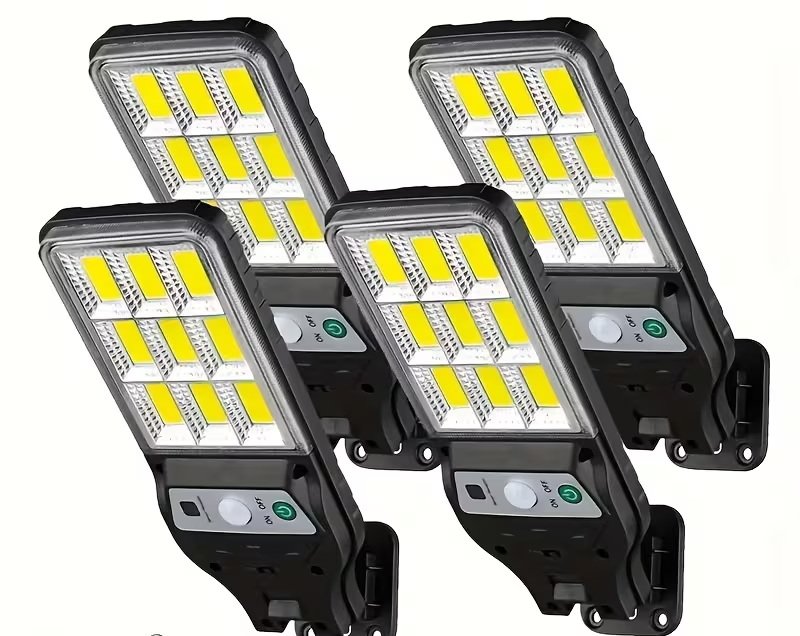
The Greater Accra Regional Coordinating Council has installed 3,000 solar-powered streetlights along major roads across the capital region, a move Regional Minister Linda Obenewaa Ocloo says is aimed at improving public visibility and reducing cable theft during the rainy season.
Speaking at a press conference on May 28, Mrs. Ocloo said the project was carried out in collaboration with the Ministry of Energy and Green Transition. The streetlights have been deployed along key corridors including the Katamanso School Junction to Botwe School Junction stretch, Ntreh Avenue, Amankani Avenue, Adjei Onanor Street, Ashyie Fulani Road, and the Amanfrom to Katamanso route, among others.
A Response to Rainy-Season Vulnerabilities
The timing of the installation is deliberate. Greater Accra is currently on high flood alert, with meteorological forecasts pointing to more intense rainfall than in previous years. Mrs. Ocloo had earlier this week warned residents across the capital to brace for a difficult rainy season and announced a suite of emergency response measures.
Poor street lighting has long been identified as both a safety hazard and an enabler of criminal activity in Accra’s sprawling suburbs. Darkened roads make it harder for motorists to navigate flooded sections and create cover for the theft of electrical cables — a chronic problem that has left entire neighbourhoods without power for weeks at a time.
The use of solar-powered units addresses another vulnerability: dependence on the national grid. Traditional streetlights connected to the Electricity Company of Ghana’s network go dark whenever outages occur, which in parts of Accra can happen with frustrating regularity. Solar units operate independently, drawing power from built-in panels that charge during the day and illuminate automatically at dusk.
A Call for Local Accountability
Mrs. Ocloo used the press conference to issue a pointed directive to Metropolitan, Municipal and District Chief Executives across Greater Accra. “These are not normal times,” she said. “I therefore charge my MMDCEs to be on the alert and constantly be on the roads, markets, schools, etc. to ensure our people are safe. No more sitting in the office, because the work is on the ground.”
The instruction reflects a broader frustration among residents and civil society groups that local government officials are often absent during emergencies, leaving community-level response to overstretched agencies like NADMO and volunteer groups.
The minister expressed appreciation to the National Disaster Management Organisation, security services, metropolitan assemblies, sanitation workers and community volunteers for their ongoing efforts. She called for sustained collaboration among all stakeholders to ensure a safer, cleaner and more flood-resilient Greater Accra.
The Bigger Picture
The streetlight project is modest in scale relative to the region’s needs — Greater Accra is home to more than five million people and hundreds of kilometres of major roads that remain poorly lit after dark. But it represents a tangible, visible intervention that residents can point to as evidence that government is acting, not merely planning.
Whether 3,000 lights prove sufficient will depend on how well they are maintained and whether additional deployments follow. Solar streetlights require periodic cleaning of panels and eventual battery replacement — tasks that have historically been neglected by municipal authorities across West Africa. The true test of this initiative will not be the launch day photo opportunity but whether the lights are still shining in two years’ time.
Image Source: MYJOYONLINE