US Iran Strikes Rock Strait of Hormuz Amid Fragile Peace Talks: 5 Critical Developments
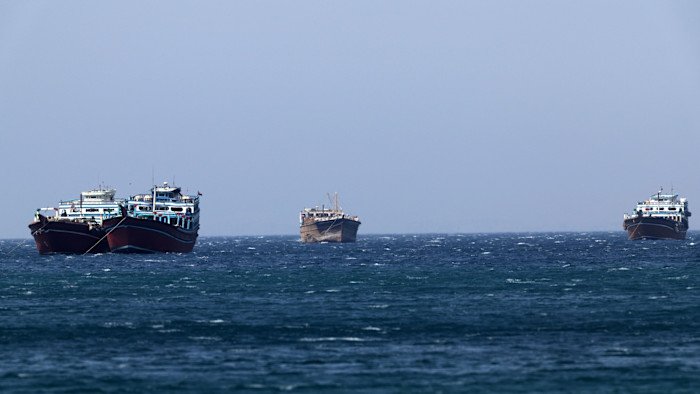
The US Iran strikes that rattled southern Iran near the Strait of Hormuz on Monday have injected dangerous new volatility into an already fragile ceasefire, even as high-level diplomatic negotiations continue in Qatar to end the wider conflict.
The United States military launched targeted airstrikes near the port city of Bandar Abbas, hitting missile launch pads and naval vessels that American officials alleged were attempting to deploy maritime mines in the vital energy corridor. The operation, characterised by U.S. Central Command as defensive in nature, has reignited fears that the carefully constructed diplomatic framework between Washington and Tehran may collapse under the weight of escalating military confrontation.
With roughly 25 percent of the world’s maritime oil trade flowing through the Strait of Hormuz, the US Iran strikes carry implications far beyond the battlefield. For Ghana and other African economies dependent on stable fuel prices, the disruption threatens to prolong the economic shockwaves that have gripped global energy markets since the conflict began earlier this year.
US Iran Strikes Characterised as Self-Defence by Pentagon
U.S. Central Command confirmed the operation in an official statement, asserting that the US Iran strikes were executed in self-defence and were specifically designed to protect American troops from threats posed by Iranian forces. The targets included missile launch sites and Iranian boats that officials said were attempting to emplace mines in the shipping lanes.
“U.S. forces conducted self-defence strikes in southern Iran today to protect our troops from threats posed by Iranian forces,” said Navy Captain Tim Hawkins, a Central Command spokesperson. He added that the engagement does not cancel out the temporary truce held since April 8, and that U.S. forces continue to exercise restraint during the ongoing ceasefire.
The Pentagon noted that these engagements follow previous bouts of friction. In early May, American forces targeted Iranian military sites tied to what officials described as unprovoked missile, drone, and small-boat actions against U.S. warships navigating the strait. The pattern of tit-for-tat military action alongside diplomatic overtures has become a defining feature of this conflict, raising questions about whether either side can sustain both tracks simultaneously.
US Iran Strikes Trigger Explosions and Air Defence Activation
The Islamic Revolutionary Guard Corps reported that three distinct explosions were heard in Bandar Abbas, followed by subsequent detonations near the local airport. Air defence systems in the sector were promptly activated to counter what local military officials labelled hostile targets.
Before the activation of the air defences, Iran’s armed forces stated they had successfully intercepted and destroyed a hostile drone operating over the Persian Gulf. Iranian state media reported that municipal and military officials in Bandar Abbas were actively investigating the immediate aftermath of the blasts. Similar acoustic disturbances were reported by witnesses further along the coast near Sirik and Jask.
Despite the military tension, the broader domestic posture inside Iran shows signs of internal shifts. Iranian President Masoud Pezeshkian ordered the Ministry of Communications to begin restoring domestic internet access after a near-total digital disconnection that began in late December 2025 to suppress widespread protests linked to severe economic inflation. Independent monitoring networks like NetBlocks noted the blackout surpassed 2,064 hours.
US Iran Strikes Complicate Nuclear Negotiations in Qatar
The military friction occurred concurrently with high-stakes diplomatic deliberations in Doha. A high-level Iranian delegation, featuring chief negotiator Mohammad Bagher Ghalibaf, Foreign Minister Abbas Araghchi, and Central Bank Governor Abdolnaser Hemmati, met with Qatari mediators to review a potential memorandum of understanding with the United States.
The framework under review includes a 60-day extension of the current ceasefire, mechanisms to ensure the permanent reopening of the Strait of Hormuz, and an explicit roadmap for future negotiations regarding Iran’s nuclear profile. However, senior diplomats cautioned that a definitive peace treaty remains distant.
“It is correct to say that we have reached a conclusion on a large portion of the issues under discussion… But to say that this means the signing of an agreement is imminent — no one can make such a claim,” said Iranian Foreign Ministry spokesman Esmail Baqai.
United States Secretary of State Marco Rubio had previously suggested a formal framework agreement could materialise as early as Monday, a timeline initially echoed by President Donald Trump before he adjusted his rhetoric, noting that he had instructed American diplomatic envoys “not to rush into” an immediate settlement.
US Iran Strikes Spotlight Uranium Stockpile as Central Sticking Point
The main diplomatic barrier centres on the status of Iran’s highly enriched uranium stockpile. When the conflict began following coordinated U.S. and Israeli strikes on February 28, Iran held an estimated 440 kilograms of uranium enriched to 60 percent purity, according to Western intelligence agencies.
This inventory requires only minimal additional processing to reach the 90 percent weapons-grade threshold needed for an atomic bomb. White House officials have adopted a strict negotiating posture summarised by the internal phrase, “No dust, no dollars” — blocking all economic sanctions relief and frozen asset releases until the nuclear material is permanently neutralised.
President Trump detailed these non-negotiable terms on social media on Monday, stating that the enriched uranium would “either be immediately turned over to the United States to be brought home and destroyed or, preferably, in conjunction and coordination with the Islamic Republic of Iran, destroyed in place.” The updated language introduces the option of destroying the material on Iranian soil under international oversight, though senior White House aides clarified this is not a new demand but simply a public reminder of terms already delivered to Iranian intermediaries.
US Iran Strikes Fuel Broader Regional Escalation
The deep friction between Washington and Tehran is fuelled by a hard-line consensus within Iran’s security apparatus. Mohammad Bagher Zolghadr, who recently took over as head of Iran’s Supreme National Security Council, promised an uncompromising approach to Western pressure in his first public address since taking office.
“There will be no retreat,” declared Zolghadr, a veteran Revolutionary Guard commander who stepped into the role following the wartime death of his predecessor, Ali Larijani.
Meanwhile, the wider regional war continues to expand along Israel’s northern border. Despite a U.S.-brokered ceasefire between Israel and Lebanon, the Israel Defence Forces spent Monday preparing to widen combat operations against Hezbollah infrastructure. Israeli Prime Minister Benjamin Netanyahu stated that Israel would “intensify the blows” and “increase the force” used against the group, adding: “We are not taking our foot off the gas pedal; on the contrary … we need to push the gas pedal even harder.” The IDF claimed it struck over 70 Hezbollah infrastructure targets on Monday, hitting command hubs and weapons caches across the Beqaa Valley and Tyre.
A U.S. official offered full support for Israel’s military response, stating that “Israel will never be expected to passively absorb attacks on its forces and civilians” and placing direct blame on Hezbollah for ongoing violence. The official noted that “since April 17, Hezbollah has fired over a thousand drones and over 700 rockets to try and derail ongoing negotiations between Lebanon and Israel. The status quo is untenable.”
At Arlington National Cemetery, President Trump dedicated much of his Memorial Day speech to honouring the American service members killed in the conflict, tying their sacrifices directly to the active nuclear negotiations with Tehran. “In Operation Epic Fury, we lost 13 wonderful souls,” Trump said, recognising the family of Captain Ariana G. Savino, a fallen service member who died when a military refuelling plane crashed in Iraq.
The overlapping realities of live combat and back-channel diplomacy underscore the volatile nature of the Middle Eastern theatre. The survival of any impending framework agreement has become a high-stakes race against time, with the ultimate success of any deal hinging on whether technical consensus regarding sanctions relief and nuclear dismantling can outpace the daily military friction destabilising the world’s most critical energy corridor.
Read more on Senegal’s new prime minister navigating economic challenges and the Senate’s bipartisan deal to avert a government shutdown.
Source: MyJoyOnline