Tafo Zongo Pins Hopes on New Abattoir to Transform Meat Processing and Create Jobs
For years, residents of Tafo Zongo and its surrounding communities on the outskirts of Kumasi have relied on makeshift slaughter points—often tucked behind corners and along open gutters—to prepare animals for weddings, funerals, naming ceremonies and religious festivals. A new privately funded abattoir now under construction promises to change that.
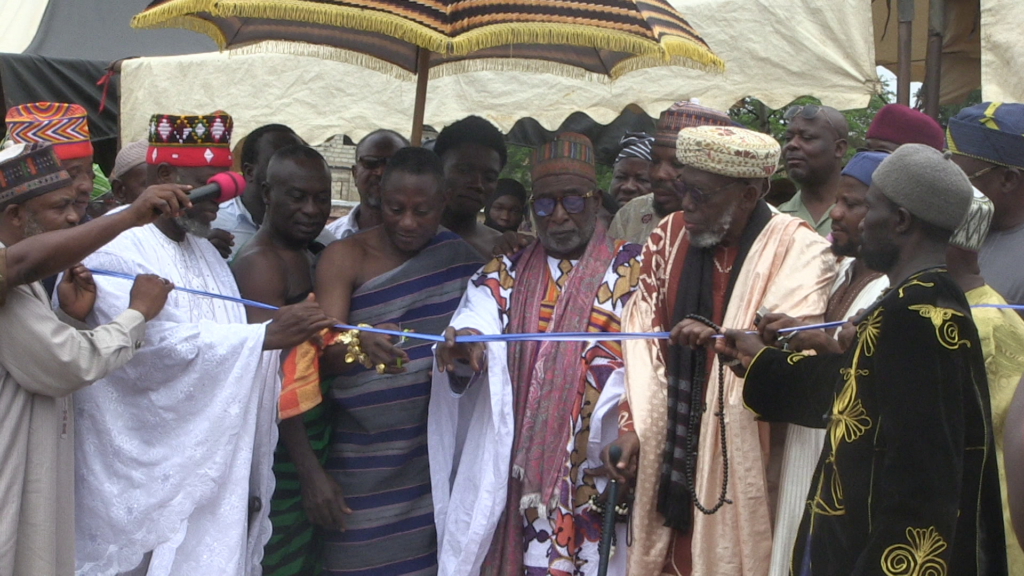
Businessman Abdul Hamid Kabore is investing an estimated GH⊢1 million of his own resources to build a facility on the outskirts of the community that will house an abattoir for cattle, sheep and goats, alongside a poultry processing centre. A sod-cutting ceremony on Monday drew elders, residents and guests, many of whom see the project as a turning point for a community where formal employment remains scarce.
“There is no job. That is one of the reasons we decided to start this project,” Mr Kabore said. Developers expect the facility to employ close to 200 people when completed, with the abattoir section providing opportunities primarily for men and the poultry processing centre creating jobs largely for women. “We want to balance everything,” Mr Kabore added.
The project is expected to serve not only Tafo Zongo but also neighbouring communities including Mamponteng, Pankrono, Aboaso and Jamasi. Apart from Kumasi and Kaase, residents say there are few large-scale meat processing facilities serving the area, a gap that has left households, butchers and livestock owners with limited options.
For Abdul-Basit Mohamed, who was born and raised in Tafo Zongo, the facility could strengthen a local economy built around cattle rearing and livestock trade. “A lot of people will benefit,” he said. “People who rear cattle, people who sell food and drinks, and many others.”
The timing is significant for a community where livestock plays a central role in social and religious life. From naming ceremonies and marriages to funerals and Eid celebrations, animals are routinely slaughtered for communal gatherings. During Eid festivals alone, residents say thousands of animals can be slaughtered within the Zongo community. “We have always needed a proper place for this,” Mr Mohamed said.
Others see the project as an opportunity to improve food safety. One resident noted that meat prepared at the proposed facility would be handled under more controlled and hygienic conditions than is often possible at home. “When people bring their animals here, they will be slaughtered properly and prepared neatly for consumption,” he said.
Not everyone expects the path to be smooth. A large drainage channel cuts across part of the site, presenting a major engineering challenge. Mr Kabore says contractors have estimated that dealing with the drain alone could cost about GH⊢800,000—nearly as much as the abattoir itself. He is hoping for external support to overcome that obstacle and keep construction on track.
Developers estimate the project could be completed within a year. For now, the land remains largely bare, but among those gathered for the sod-cutting ceremony, there is quiet optimism that the open space could eventually become a centre for meat processing, livestock trade and employment in one of Kumasi’s fastest-growing communities.
Image Source: MYJOYONLINE