Pregnant Ghanaian Woman and Young Son Detained for Over a Week at Washington Dulles Airport
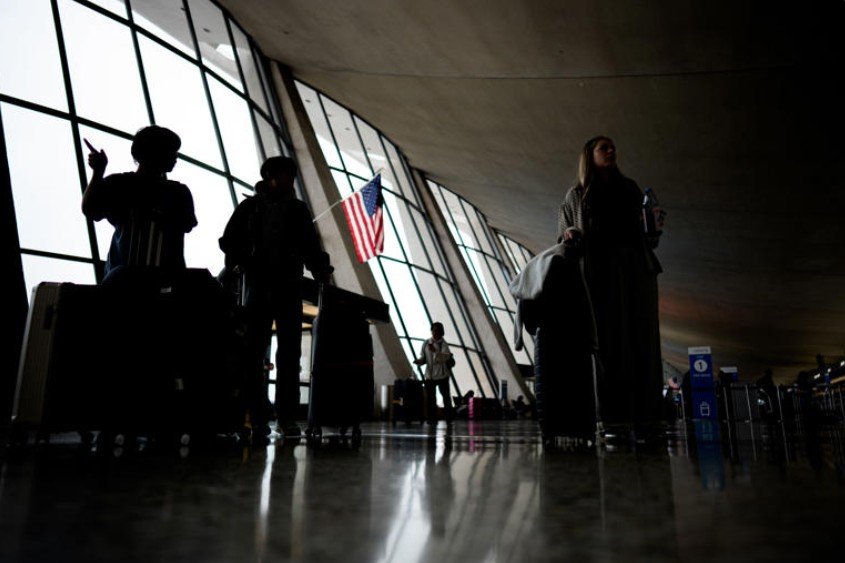
A pregnant Ghanaian woman and her four-year-old son have been held in a windowless holding room at Washington Dulles International Airport for more than a week, in a case that has drawn sharp criticism from the American Civil Liberties Union and reignited debate over US immigration enforcement practices.
Anabella Gyasi, 38, arrived in the United States on May 19 carrying a valid tourist visa and a confirmed medical appointment for her son at Akron Children’s Hospital in Ohio. The boy suffers from a physical abnormality affecting his hands, and Gyasi had secured the necessary documentation to seek treatment for him, according to court filings made by the ACLU.
What followed has become a case study in the consequences of a controversial State Department directive issued last month. When US Customs and Border Protection officers asked Gyasi whether she feared persecution in Ghana, she answered honestly that she did, citing her son’s disability. CBP officers then classified her as an asylum applicant and moved to nullify her tourist visa, effectively trapping her in legal limbo at the airport.
“If she hadn’t answered that question honestly, she would have been well on her way to her child’s doctor’s appointment,” said Eden Heilman, legal director of the ACLU’s Virginia branch.
The State Department instructed diplomatic missions last month to ask nonimmigrant visa applicants whether they fear returning home, and to refuse travel documents to those who say yes. It remains unclear whether that directive was directly applied in Gyasi’s case, but the policy has drawn widespread concern from immigration attorneys who argue it punishes honesty.
The conditions of Gyasi’s detention have compounded the distress. The ACLU alleges that she and her son are being held in a converted work area fitted with a single bed, a toilet and a sink. She has been taken to hospital twice since being detained. On one occasion, medical staff expressed concern that she was not being fed adequately. On Monday, she experienced vaginal bleeding, which doctors attributed to high stress.
The case has placed Gyasi in what the ACLU describes as an impossible position. She initially agreed to voluntarily depart the United States, after which CBP officers reportedly allowed her to request additional food and shower for the first time since her detention began. But on Monday she reversed course, telling officials she no longer wished to self-deport.
The broader pattern is troubling. Tens of thousands of immigrants have abandoned asylum claims and agreed to leave the United States voluntarily rather than endure prolonged detention. Critics argue that the conditions of detention are being used as a coercive tool to pressure vulnerable people into surrendering their legal rights.
The case adds to growing concerns about the treatment of African nationals at US ports of entry. Ghanaian citizens have faced increasing hostility abroad in recent months, with hundreds repatriated from South Africa earlier this year amid anti-immigrant protests. The Dulles detention underscores a wider pattern of Ghanaians encountering hostile environments far from home.
The ACLU filed an emergency petition in the US District Court for the Eastern District of Virginia on Tuesday, demanding the release of Gyasi and her son so they can access medical care. A judge on Wednesday ordered federal officials to demonstrate a legal basis for Gyasi’s detention by 9 a.m. Thursday.
The Department of Homeland Security has denied the allegations, stating that everyone in CBP custody has access to appropriate care including medical evaluation, medication and food. The department confirmed that Gyasi remains in custody pending her immigration hearing.
The case raises difficult questions about the intersection of immigration enforcement and basic humanitarian obligations. Ghana and the United States maintain longstanding diplomatic relations, and the treatment of Ghanaian nationals at US ports of entry will inevitably colour that relationship. For Gyasi and her son, the immediate concern is more pressing: a pregnant woman’s health, a child’s medical needs, and the slow grind of a legal system that holds their fate.
Image Source: MYJOYONLINE