In Ghana’s Upper West Region, a Long-Stalled School Project Finally Gains Momentum
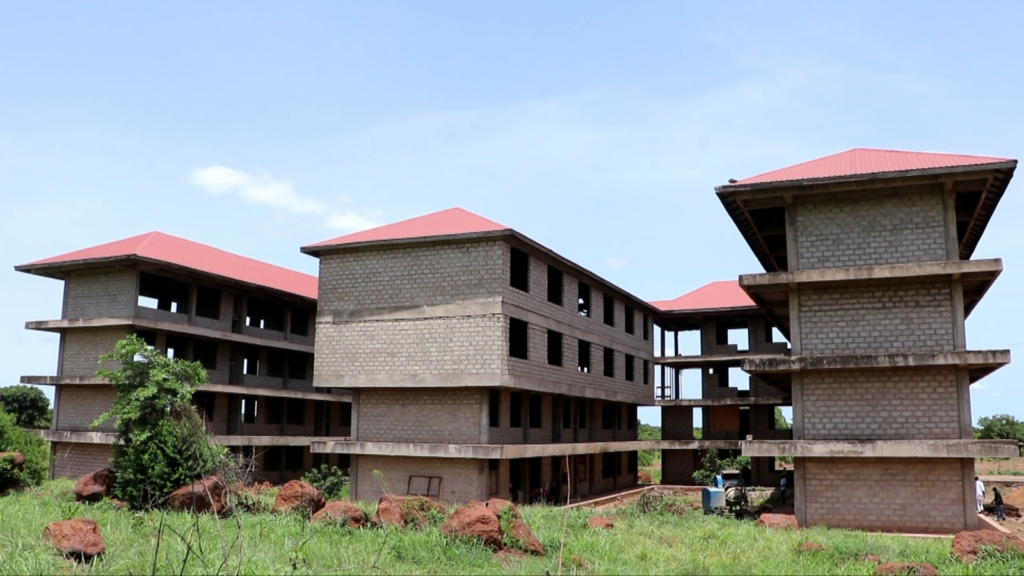
In Ghana’s Upper West Region, a long-stalled educational infrastructure project is finally gaining momentum, offering hope for improved learning conditions and broader economic benefits for rural communities.
The Dorimon E‑Block, a school building that has lain incomplete for a decade, is being fast‑tracked for completion before the 2026/2027 academic year. MP Peter Toobu Lanchene of Wa West, alongside District Chief Executive Richard Wullo, recently inspected the site and reported significant progress, with masons and tilers mobilised by contractors working to repair wind‑damaged roofs, rebuild collapsed walls, and replace stolen electrical components.
This revival addresses more than just bricks and mortar. At the adjacent Dorimon‑Oli Kindergarten, children have been forced to sit on the bare floor during lessons, a situation that hinders learning and damages educational materials. Teacher Sherine Klu explained that the lack of proper furniture makes writing difficult and leads to torn books. In response, the MP personally donated 40 plastic chairs to the school, a move that underscores the interconnectedness of educational access and economic opportunity.
The kindergarten serves as a vital entry point for formal education in the community, yet its current conditions undermine its potential. Without adequate seating and writing surfaces, young learners struggle to develop foundational skills, perpetuating cycles of poverty and limiting the region’s human capital potential. “Whether it’s under a tree, under a makeshift structure, or in a properly built classroom, the child must go to school,” the MP stated. “Education is transformational. Education brings hope to the people.” He highlighted that reliable early‑childhood care enables rural women to engage in income‑generating activities such as shea nut processing and market trading, making the intervention both an educational and economic priority.
The project’s acceleration comes amid broader efforts to address infrastructure decay in the region. Earlier this year, the Wa Regional Court Complex was reported to be over 90% complete, with plans for October commissioning after years of intermittent progress and a six‑month funding freeze (new-wa-court-complex-over-90-complete-as-justice-kulendi-pushes-for-october-commissioning). Both initiatives reflect a growing recognition that infrastructure investment must be paired with accountability and community‑specific needs.
Similar challenges have been seen in the region’s health infrastructure, where a recent fire destroyed the Wa West Hospital drug store (fire-guts-wa-west-hospital-drug-store-leaders-pledge-support), highlighting the urgent need for sustained investment and maintenance.
The MP has pledged to report progress directly to the Ministry of Education to ensure the school is commissioned on time, while contractors have been urged to review the original contract value to align with current economic realities — a request first raised during the NPP era and now being revisited under the NDC administration. This emphasis on contractual fairness and timely execution is critical to preventing further delays and ensuring that public funds deliver tangible results.
As Ghana continues to navigate infrastructure challenges across sectors, the Dorimon E‑Block initiative demonstrates how targeted interventions can yield multifaceted returns. By fixing a school building and providing basic furniture, the project not only improves immediate learning conditions but also supports broader economic participation, particularly for women in rural communities. This holistic approach — where educational infrastructure is viewed as both a social necessity and an economic catalyst — offers a model for future investments in Ghana’s development agenda, ensuring that investments in human capital are matched by the physical environments needed to nurture it. Such investments are essential for Ghana’s long‑term socioeconomic transformation.
Image Source: MYJOYONLINE