APSU 2002 Launches GH¢5.4 m Teachers’ Apartment Project (St Augustine’s 97th Anniversary)
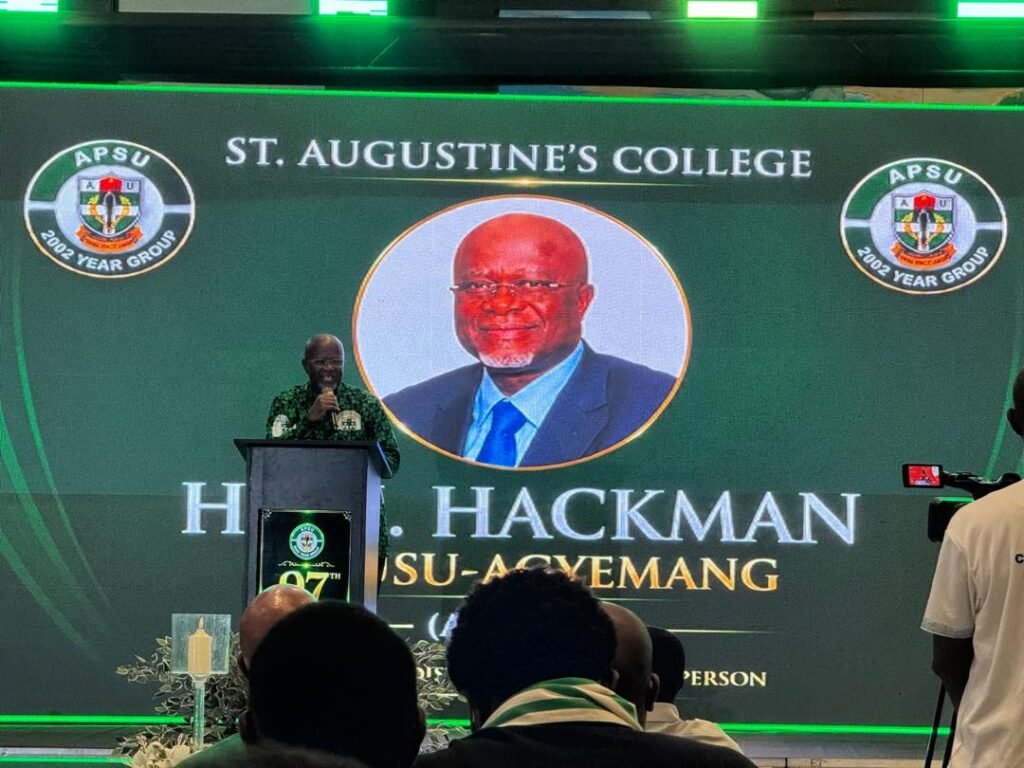
The APSU 2002 alumni group has unveiled a GH¢5.4 million teachers’ apartment project at St Augustine’s College in Cape Coast, aiming to alleviate accommodation challenges for faculty amid rising student enrolment under the Free Senior High School (Free SHS) programme. The initiative, launched on 19 June 2026 at the Mövenpick Ambassador Hotel in Accra, will construct a 14‑unit, one‑storey apartment block on the college campus, increasing on‑campus teacher housing from 60 to approximately 74 units.
Rev. Fr. Dr Patrick Godfred Appiah, Headmaster of St Augustine’s College, emphasised that the additional accommodation will enhance student supervision and promote discipline, particularly as enrolment continues to grow under the Free SHS policy. He noted that having more teachers reside on campus allows for greater mentorship and guidance beyond classroom hours, contributing to a safer and more focused learning environment.
Hackman Owusu‑Agyemang, chairman of the APSU 2002 committee and a former Cabinet Minister, urged alumni to embrace the college’s founding philosophy of national unity and diversity. He reminded fellow graduates that the principle of “one nation, one people” was instilled in them during their time at St Augustine’s, and that giving back should reflect appreciation for the institution that shaped their lives and careers.
Prof. Ernest Kofi Abotsi, Dean of the UPSA Law School and an APSU 93 alumnus, delivered the keynote address, framing alumni contributions as a form of service rather than competition. He encouraged graduates to regularise their dues to build stronger financial reserves for the college, stressing that sustained support enables long‑term projects like the teachers’ apartment block.
The project, branded under the acronym BOLT – Building Opportunities for Learning and Transformation – reflects the alumni’s commitment to improving both teaching and learning conditions. By increasing faculty residency, the college hopes to strengthen student‑teacher interaction, reduce commuting time for educators, and foster a more disciplined campus atmosphere.
This effort aligns with broader movements to upgrade educational infrastructure across Ghana. For instance, a long‑stalled school project in the Upper West Region recently gained momentum (In Ghana’s Upper West Region, a Long-Stalled School Project Finally Gains Momentum), demonstrating that targeted investments in school facilities can yield tangible benefits for communities.
As the fundraising campaign proceeds, donations can be made via the APSU 2002 website (
Image Source: MYJOYONLINE