Ghana Obstetric Fistula Crisis Deepens: 7,130 Women Suffer as Experts Demand Urgent Action Now
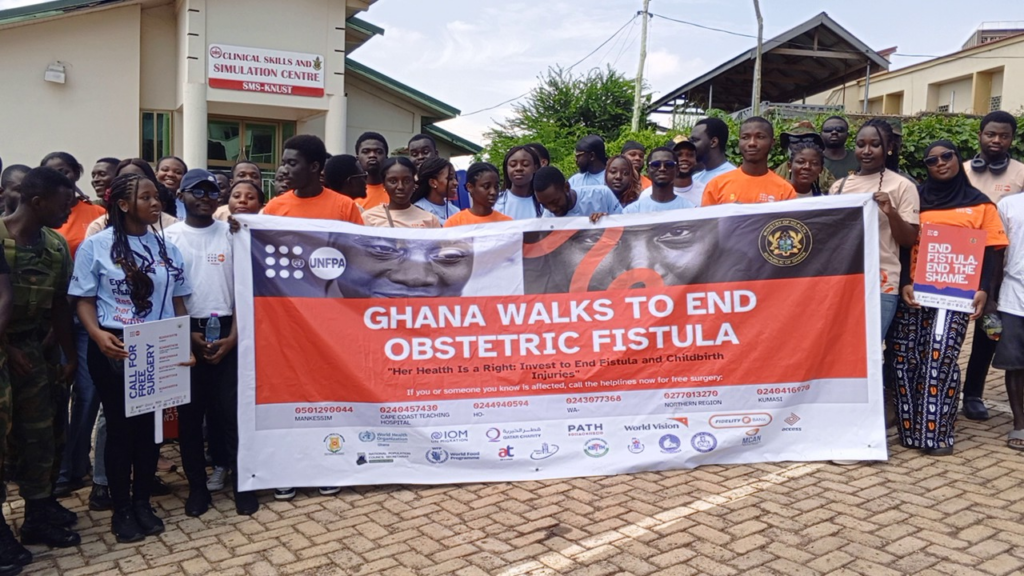
The Ghana obstetric fistula crisis has reached alarming proportions, with health experts revealing that more than 7,130 women are currently living with the devastating condition nationwide — a figure that demands urgent action from government, the private sector, and civil society alike.
The sobering statistics emerged during an awareness campaign in Kumasi to mark World Obstetric Fistula Day, held under the theme “Her Health Is a Right: Invest to End Fistula and Childbirth Injuries.” Medical professionals used the occasion to sound the alarm on a condition that leaves women isolated, stigmatised, and often abandoned by their communities.
Understanding the Ghana Obstetric Fistula Crisis
An obstetric fistula is caused primarily by prolonged and obstructed labour, typically when women are unable to access timely emergency healthcare services. Dr Adzi Kofi Gudugbe, an obstetric specialist with the United Nations Population Fund (UNFPA), explained the devastating mechanism behind the condition.
“When this happens, the baby’s head is pressed firmly against either the bladder or the rectum, and because of the prolonged pressure, the tissue in that area can die,” Dr Gudugbe said. The result is uncontrollable leakage of urine or stool — a condition that carries profound physical, psychological, and social consequences.
The Ghana obstetric fistula crisis is fundamentally a healthcare access problem. Women in rural and underserved communities who cannot reach a health facility with skilled birth attendants and emergency obstetric care are disproportionately affected. According to Dr Gudugbe, Ghana records nearly 800 new fistula cases annually, a figure that underscores the urgency of expanding maternal healthcare infrastructure.
How the Ghana Obstetric Fistula Crisis Destroys Lives
The human toll of the Ghana obstetric fistula crisis extends far beyond the physical symptoms. Dr Gudugbe painted a harrowing picture of the social destruction wrought by the condition.
“The stench is so strong that the woman withdraws from society. Even their partners sometimes leave them, and some communities wrongly believe they are witches,” he stated. Many women suffering from obstetric fistula are abandoned by their husbands, excluded from community life, and left to suffer in isolation without support or treatment.
The psychological impact is equally devastating. Women who develop fistula often experience depression, anxiety, and a profound sense of shame. The condition strikes during what should be one of life’s most celebrated moments — childbirth — turning joy into prolonged suffering.
For these women, the Ghana obstetric fistula crisis is not a statistic. It is a daily reality of pain, humiliation, and social death that demands a compassionate and comprehensive response from all sectors of society.
Why the Ghana Obstetric Fistula Crisis Requires Massive Investment
Addressing the Ghana obstetric fistula crisis requires a multi-pronged approach that combines prevention, treatment, and rehabilitation. Dr Gudugbe stressed that improving access to skilled delivery services and emergency obstetric care remains the most critical intervention.
“To achieve the target of eliminating obstetric fistula in Ghana, we need to repair close to 2,500 cases every year for the next four years,” he said. This represents a significant escalation from current repair rates and would require substantial investment in surgical capacity, trained personnel, and rehabilitation services.
As part of immediate efforts, health authorities and partner organisations have organised free fistula repair surgeries at several centres nationwide from now until mid-June 2026. These surgeries offer a lifeline to women who have suffered for years without access to treatment.
Dr Gudugbe appealed directly to the private sector, corporate institutions, and philanthropists to support the national campaign through funding and partnerships. The scale of the Ghana obstetric fistula crisis, he argued, is too great for the public health system to address alone.
Maternal Healthcare Reform Can End the Ghana Obstetric Fistula Crisis
Ultimately, eliminating the Ghana obstetric fistula crisis requires fundamental improvements in maternal healthcare infrastructure and delivery. This means investing in health facilities in rural areas, training more midwives and obstetric specialists, and ensuring that emergency obstetric care is available within reasonable distance of every community.
Ghana’s healthcare system has made significant strides in recent years, but the persistence of nearly 800 new fistula cases annually reveals critical gaps that must be closed. The condition is entirely preventable when women have access to quality care during pregnancy and childbirth.
The World Obstetric Fistula Day campaign served as a reminder that maternal health is not merely a medical issue — it is a human rights issue. Every woman who develops obstetric fistula represents a failure of the healthcare system to deliver on its most basic promise: safe care during the most vulnerable moments of life.
For the 7,130 women currently living with the condition, and for the hundreds more who will develop it each year, the call for urgent action cannot go unanswered. The Ghana obstetric fistula crisis demands a response commensurate with its scale — bold, sustained, and uncompromising in its commitment to ending preventable suffering.
Source: MyJoyOnline