Europe’s heatwave shifts east as France raises health alert to highest level
Europe’s heatwave shifts east as France raises health alert to highest level
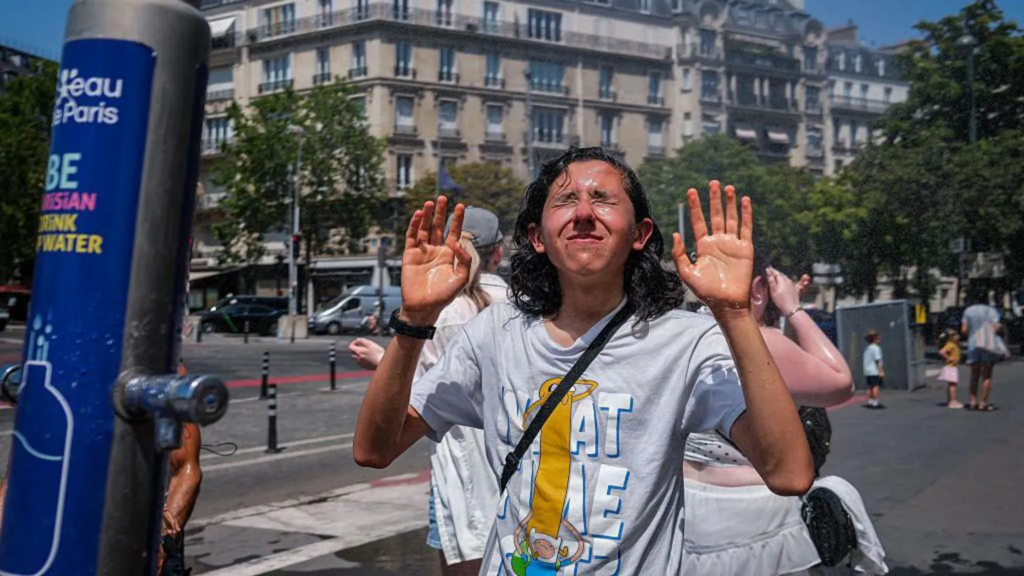
Paris, France — June 25, 2026 — A severe heatwave that has gripped Western Europe for several days is shifting eastward, bringing extreme temperatures to Germany, the Czech Republic, and other Central European nations. France has responded by raising its health alert to the highest level, mobilising additional resources to protect vulnerable populations.
The heatwave, which has already seen record-breaking temperatures in Spain, France, and the United Kingdom, is now moving east. Meteorologists in Germany warn that temperatures could reach 40°C in western and southwestern regions on Thursday, with nationwide highs expected on Friday. The Czech Republic has issued an extreme weather warning for much of its territory.
In France, Prime Minister Sébastien Lecornu announced the elevation of the health alert to its maximum level to boost hospital staffing and safeguard at-risk individuals, particularly the elderly and those with pre-existing conditions. Health Minister Stéphanie Rist reported an increase in heat-related fatalities, including cardiac arrests among young people and the elderly.
United Nations climate change chief Simon Stiell described the event as a clear sign of the climate crisis, urging accelerated transition to renewable energy, forest protection, and enhanced climate resilience. Météofrance noted that the average minimum temperature reached 22°C on Wednesday night, with Nantes recording 27.2°C in the northwest.
The impact has been severe: Paris ambulance services reported four times the usual number of cardiac arrests over a 24-hour period, although officials cautioned that no official death toll has been confirmed. Paris Mayor Emmanuel Grégoire acknowledged a rising mortality rate in the capital, urging residents to avoid strenuous outdoor activity during peak heat.
Tragically, a three-year-old child was found dead in a vehicle in the Paris region, following similar incidents in Carpentras where two young children died after being left in hot cars. In Rennes, the head of the Accident and Emergency department linked multiple deaths in homes to the extreme heat, noting that victims included individuals aged 60 and older.
French officials have activated the Orsan health emergency plan at level three to strengthen the healthcare system’s capacity to withstand prolonged strain. Nurses’ unions have announced strikes over what they describe as unsafe working conditions in hospitals amid the heatwave.
The extreme temperatures have disrupted infrastructure and events: three nuclear power plants in France have temporarily shut down due to cooling concerns, and the Garorock festival’s first day was cancelled in Lot-et-Garonne after forecasts predicted temperatures of 42°C. Gusts of up to 110 km/h are expected along France’s Atlantic coast.
Climate data underscores the trend: Europe is warming at twice the global average rate, according to the Copernicus climate service. This has intensified summer heatwaves, strained water resources, and increased wildfire risks. In Spain, despite temperatures peaking at 38-39°C, a cooler Atlantic air mass is expected to arrive after recording the highest June temperatures of the year, including 45.1°C in Andújar on Monday.
Spain’s MoMo mortality tracking system recorded 213 heat-related deaths between Sunday and Wednesday, with 95 occurring on Wednesday alone. In Germany, overnight temperatures in Bad Bergzabern remained above 26.2°C, matching a national heat record from 2019. Luxembourg extended its red alert for extreme thermal stress through Saturday night.
As the heatwave moves east, countries are implementing emergency measures. Hamburg cancelled its half marathon, and Deutsche Bahn offered free ticket cancellations for passengers unwilling to travel. Swiss authorities issued maximum-level warnings for large parts of the country due to drought risks, while Austrian forecasters predicted Vienna could reach 40°C over the weekend.
The situation highlights the growing urgency of climate adaptation strategies across Europe. Governments and health organisations are urging the public to stay hydrated, avoid unnecessary outdoor exertion, and check on vulnerable neighbours, particularly the elderly and those with chronic illnesses.
Image Source: MYJOYONLINE