EPA Warns Against Entering Abandoned Mines
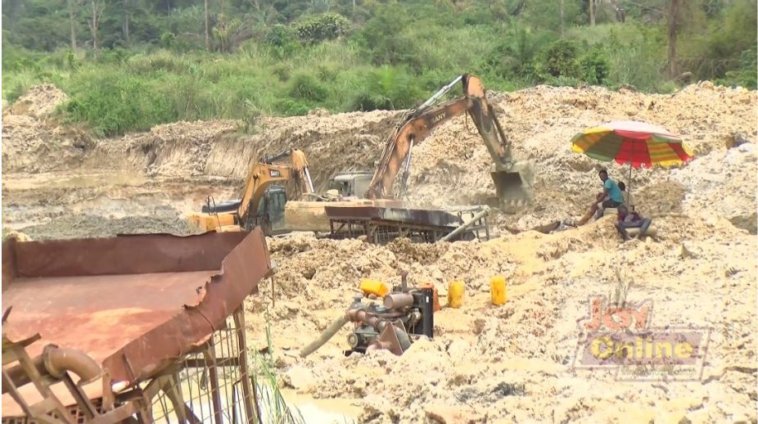
The Environmental Protection Authority (EPA) has issued a stern warning to communities across the country to stay away from abandoned and inactive mine sites. The agency says unauthorized entry into these areas poses significant dangers, including the risk of underground collapses and exposure to toxic air.
Michael Sandow Ali, Director of Mining at the EPA, delivered the caution during a three-day training workshop for editors and reporters. The workshop, held at Peduase in the Eastern Region, focused on green mining practices and responsible reporting.
Mr. Ali explained that many community members venture into abandoned mines hoping to find high-grade ore, but are often unaware of the hidden perils. He detailed how these mines typically rely on key support structures, known as pillars, to maintain stability.
“Illegal miners often remove these pillars and replace them with makeshift wooden props – a practice we call ‘robbing the pillars’,” Mr. Ali stated. “When these wooden structures become waterlogged, they rot and eventually collapse, leading to ground collapse. Once a pillar fails, an entire section of the mine can cave in.”
Beyond the risk of structural failure, Mr. Ali emphasized that unauthorized access also compromises critical ventilation systems. This not only endangers those entering the abandoned mines but also poses a threat to workers in nearby, legally operating concessions.
“Once openings are created in an abandoned mine, the ventilation system of a legitimate mine nearby begins to leak,” he explained. “This means workers won’t have access to fresh air, and no mine can operate safely under such conditions.”
The EPA Director also noted that some intruders are former mineworkers with specific knowledge of ore locations, making their activities even more dangerous.
The training, organized by the Ghana News Agency in partnership with the Association of China-Ghana Mining, aimed to equip journalists with a deeper understanding of green mining standards, environmental regulations, and the hazards associated with unsafe mining practices. Mr. Ali presented an overview of Ghana’s mineral resources, key environmental laws, and the EPA’s monitoring tools, which include field inspections, drones, and satellite imagery.
He underscored that responsible mining necessitates strict adherence to environmental management protocols, proper waste handling, water quality protection, land reclamation, and transparent community engagement. “Environmental management is a shared responsibility,” Mr. Ali said. “When communities understand the dangers and the laws, they are better positioned to protect themselves and the environment.”
The workshop is expected to enhance journalists’ ability to report on mining issues with accuracy, depth, and balance, fostering better communication between journalists, regulators, environmental experts, and industry stakeholders.
Image Source: MYJOYONLINE