Morocco beat Haiti to progress as runners-up
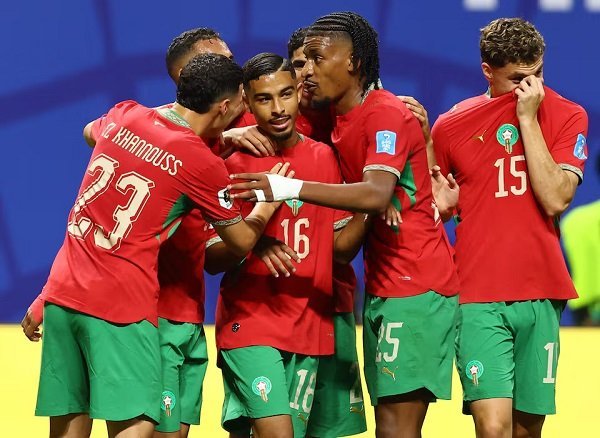
Morocco’s victory over Haiti in the 2026 FIFA World Cup group stage secured their progression as runners-up in Group C, but fell short of claiming the top spot. The match, held at the AT&T Stadium in Atlanta on June 26, 2026, saw Morocco overcome an early deficit twice before Soufiane Rahimi and Gessime Yassine scored late goals to seal a 3-2 win. Despite the triumph, Brazil’s dominant 4-0 victory against Scotland in the same group ensured Morocco finished second, setting up a last-32 clash with either the Netherlands, Japan or Sweden.
The game began with Haiti taking an early lead in the 10th minute through an own goal credited to Morocco’s Yassine Bounou, after Lenny Joseph’s flicked finish deflected off the goalkeeper and into the net. The goal ended a 52-year wait for Haiti to score at a World Cup, their last coming in 1974 through Emmanuel Sanon. Morocco responded swiftly, with Achraf Hakimi equalizing in the 39th minute by capitalizing on a hesitancy from Haiti’s Johny Placide, who failed to get a strong enough hand to Brahim Diaz’s strike from the edge of the box.
Haiti regained the lead just before halftime through Wilson Isidor’s stunning long-range strike from 25 yards, which flew into the top corner to spark jubilant scenes among the Haiti fans. However, Morocco levelled again in first-half stoppage time as Saibari got his third of the tournament when Hakimi pulled the ball back into his path in a slick move, finishing low past Placide.
The second half remained tightly contested, with both teams creating chances but failing to break the deadlock until the 78th minute. Substitute Rahimi collected the ball just inside the Haiti half, turned and drove forward before firing a low shot that deflected off Haiti defender Ricardo Ade and looped over the helpless Placide into the net. Yassine then turned home after Rahimi managed to just keep the ball in play, tapping in from close range to secure the victory with a minute remaining.
The result denied Haiti a historic first World Cup point, despite their early goals doubling their tournament goal tally to two. For Morocco, the win marked progress but underscored the challenges faced by African nations in converting performances into group-topping finishes. Having led twice, Haiti ultimately fell short, highlighting the gap between preparation and execution at the highest level. Their early goals, including Joseph’s flicked finish that resulted in an own goal, ended a long wait for a World Cup goal but came too late to alter their fate in the competition.
While the victory marked progress for Morocco, it underscored the challenges faced by African nations in converting performances into group-topping finishes. The result adds to the growing narrative of African teams making an impact at this year’s World Cup, following Ghana’s World Cup campaign which has sparked discussions about the region’s footballing future. Ghana’s own journey in the tournament has been marked by resilient performances and tactical discipline, offering a blueprint for other African sides aiming to make deep runs.
As Morocco prepares for the knockout stage, the focus shifts to sustaining this momentum against stronger opposition. Their ability to score late goals shows resilience, but they will need to improve their defensive consistency to advance further. For Haiti, the tournament ends with valuable lessons and the promise of building on this experience for future campaigns. Despite the loss, their performance showed flashes of brilliance, particularly in attack, and they will take confidence from their ability to compete with higher-ranked teams.
Looking ahead, Morocco’s last-32 opponent will be determined by the results of the other Group C matches. A potential matchup against the Netherlands would reprise their 2022 World Cup encounter, while Japan or Sweden would present new challenges. Regardless, the Atlas Lions will aim to build on this foundation and make a deeper run than in previous tournaments.