Eight sentenced to 450 years in prison over anti-ICE riot where officer was shot
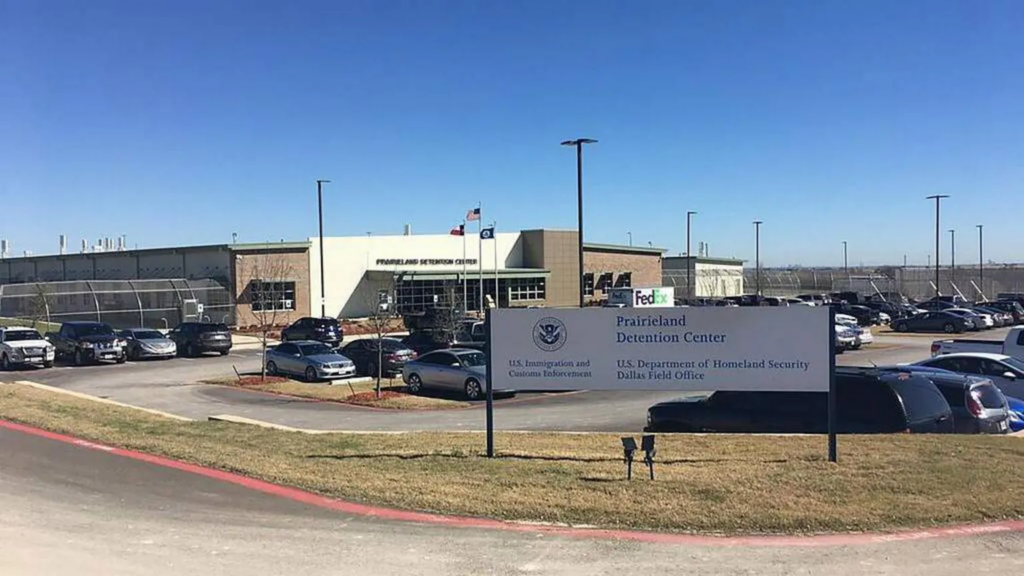
Eight individuals linked to the Antifa movement have been sentenced to a combined 450 years in prison for their roles in a violent riot outside an immigration detention centre in Texas, a case that underscores the United States’ increasingly aggressive stance toward perceived domestic threats.
The sentences, handed down by a federal court in Dallas on June 24, 2026, stem from an Independence Day protest in 2025 at the Prairieland facility just south of Dallas, where demonstrators clashed with law enforcement. Prosecutors asserted that the defendants, affiliated with a loose network self-styled as the North Texas Antifa Cell, engaged in rioting, used explosives and firearms, provided material support to terrorists, and obstructed justice.
Benjamin Hanil Song, identified by authorities as the group’s leader, received the harshest penalty: 100 years in prison for attempted murder of a law enforcement officer. His co-defendants faced sentences ranging from 30 to 70 years, with Maricela Rueda receiving 70 years, Cameron Arnold, Savanna Batten, Zachary Evetts, Bradford Morris, and Elizabeth Soto each receiving 50 years, and Daniel Rolando Sanchez-Estrada receiving 30 years.
The convictions occurred despite the defendants’ claims that they were peaceful protesters supporting detained immigrants, with Song maintaining he fired his weapon only after believing an officer was about to shoot a demonstrator—a narrative disputed by his family and contradicted by surveillance footage showing explosives being thrown at the facility and firefighters dousing flames.
The Department of Justice framed the verdict as a clear message that violence against federal facilities will not be tolerated, emphasizing that the defendants’ actions constituted an “assault on democracy.” This rhetoric aligns with the Trump administration’s 2020 designation of Antifa as a domestic terrorist organization, a move that has been widely criticized by civil liberties groups who argue that Antifa is an ideology rather than a structured entity and that ideology alone cannot be criminalized.
Legal experts note the case highlights the tension between prosecuting violent acts and penalizing political beliefs. While the defendants’ actions undeniably involved violence and illegal weapons use, the breadth of the charges—including providing material support to terrorists—has raised concerns about overreach, particularly given the lack of evidence tying the group to international terrorist organizations. The indictment relied heavily on the provision of advice and encouragement to others via social media, a factor that blurs the line between protected speech and criminal conspiracy.
As the sentencing echoes through activist circles, the case serves as a stark reminder of the fine line between upholding public safety and protecting constitutional rights to protest and dissent. With an additional defendant, Ines Soto, awaiting sentencing on July 1, and several others having pleaded guilty to related charges, the full legal fallout from the Prairieland incident continues to unfold. The prolonged legal process has kept the case in the public eye, sparking debates about the adequacy of mental health support for protesters and the role of law enforcement in managing large-scale demonstrations.
Critics of the sentence lengths argue that they are disproportionately harsh, especially when compared to penalties for similar offenses not linked to terrorism designations. They point to discrepancies in how federal prosecutors handle cases involving right-wing militias versus left-wing activists, suggesting a potential bias in the application of domestic terrorism statutes.
Conversely, supporters of the verdict emphasize the gravity of the offenses, noting that the use of explosives and firearms in a public setting poses an unequivocal threat to safety. They contend that the sentences reflect the seriousness with which the justice system views attacks on federal infrastructure, regardless of the perpetrators’ stated motivations.
As the nation grapples with the aftermath of the Prairieland riot, the case underscores the ongoing challenge of balancing security imperatives with civil liberties in an era of polarized political discourse. The outcome may well influence how future protests are policed and prosecuted, particularly those occurring near sensitive federal installations.
Ultimately, the sentence sends a clear signal about the federal government’s willingness to deploy the full arsenal of its criminal justice apparatus against perceived threats to national security—a development that warrants close scrutiny as the United States navigates the complex terrain of public order and political expression in the 21st century.