Congress passes war powers measure for first time, rebuking Trump’s war with Iran
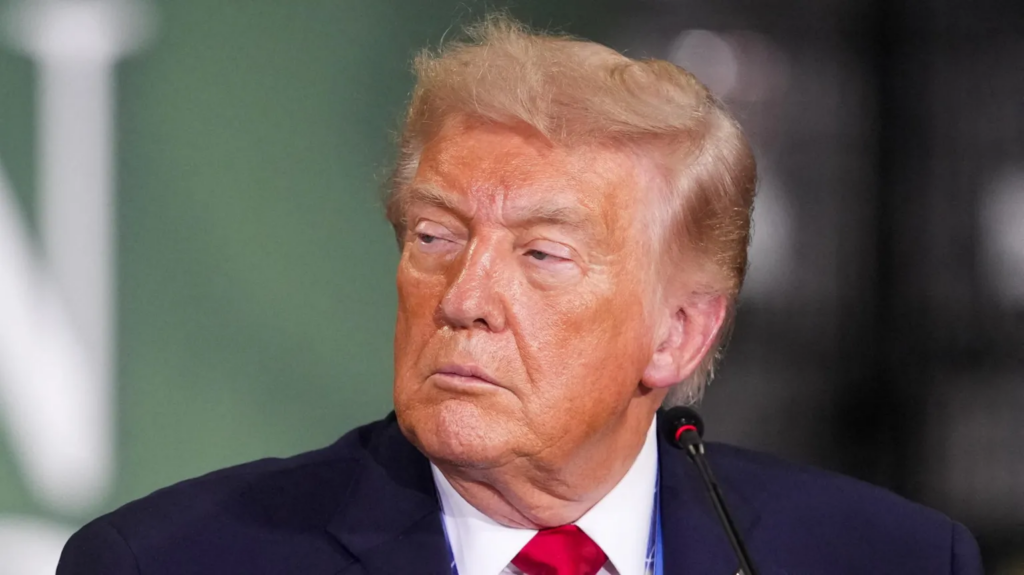
On Tuesday, the United States Senate passed a concurrent resolution directing President Donald Trump to cease hostilities in Iran or obtain congressional authorization for any continued military action. The vote, which passed 50-48, marked a rare bipartisan rebuke of the president’s Iran policy, with four Republicans joining all Democrats in support.
The resolution, which had previously been approved by the House of Representatives in a 215-208 vote, is largely symbolic in nature. It does not have the force of law and will not be presented to the president for his signature. Nevertheless, its passage represents the first time since the War Powers Resolution of 1973 that both chambers of Congress have united to direct a president to end a military engagement.
The War Powers Resolution, enacted in the aftermath of the Vietnam War, was designed to check the president’s power to commit the United States to an armed conflict without the consent of Congress. The law requires the president to notify Congress within 48 hours of committing armed forces to military action and forbids armed forces from remaining for more than 60 days without a congressional authorization for use of military force (AUMF) or a declaration of war. The resolution passed by Congress on Tuesday invokes this framework, signaling a renewed assertion of legislative authority over military engagements.
The vote underscores growing concern within Congress over the protracted conflict with Iran, which has contributed to rising fuel prices and increasing public opposition to the war. White House officials, however, downplayed the resolution’s significance, noting that a ceasefire agreement reached on April 7 has halted hostilities, leaving no active military actions from which to withdraw troops. One official told the BBC that the resolution only passed due to the absence of two Republican senators, Mitch McConnell and Dave McCormick, suggesting that their presence might have altered the outcome.
The four Republicans who crossed party lines to support the measure were Senators Rand Paul of Kentucky, Lisa Murkowski of Alaska, Susan Collins of Maine, and Bill Cassidy of Louisiana. Senator John Fetterman of Pennsylvania was the sole Democrat to vote against the resolution, citing concerns that the measure could undermine ongoing diplomatic efforts to resolve the crisis.
The outcome highlights the deepening divide within the Republican Party as lawmakers prepare for the November midterm elections, which will determine control of Congress. In recent months, several Republicans have broken with the president on issues ranging from his proposed $1.8 billion ‘anti-weaponisation’ fund, aimed at countering the spread of weapons of mass destruction, to his stance on Ukraine aid, reflecting a broader skepticism toward the administration’s foreign policy priorities.
Tuesday’s vote was the tenth occasion on which Senate Democrats have initiated a war powers resolution since the conflict with Iran began, underscoring their persistent efforts to assert congressional oversight of the military campaign. The timing coincided with a Pentagon request for approximately $80 billion in emergency funding, the majority of which is earmarked for the Iran war effort, including costs associated with troop deployments, equipment replenishment, and operational expenses in the Gulf of Oman and Strait of Hormuz region.
Under current federal law, the president must seek congressional approval to sustain military operations beyond 60 days. The initial strikes against Iran, conducted in coordination with Israel, commenced on February 28. The Trump administration has argued that the April ceasefire effectively reset this timeline, although the White House retains the option to extend the deadline by an additional 30 days on national security grounds, a provision that has been used in previous conflicts to prolong military engagements without explicit congressional approval.
Despite the ongoing diplomatic efforts, including a memorandum of understanding signed last week between the United States and Iran to negotiate a broader agreement on Iran’s nuclear program within 60 days, the resolution serves as a reminder of Congress’s constitutional authority over war and peace. The memo, which outlines a framework for discussions on limiting Iran’s uranium enrichment capabilities and establishing robust inspection mechanisms, represents a potential path toward de-escalation, though its success remains uncertain amid lingering mutual distrust.
The resolution’s passage also raises questions about the effectiveness of the War Powers Resolution as a tool for congressional oversight, given its history of limited enforcement. Presidents of both parties have occasionally circumvented its provisions, leading to ongoing debates about the balance of power between the executive and legislative branches in matters of national security.
As the midterm elections approach, the Iran conflict has emerged as a significant campaign issue, with candidates from both parties using the debate over military involvement to signal their positions on foreign policy and executive accountability. The outcome of the Senate vote may influence voter perceptions of the Republican Party’s willingness to challenge the president on national security matters, potentially affecting races in key swing districts.
Image Source: MYJOYONLINE