€106 Million Water Project Moves Closer as GWCL Launches Stakeholder Consultations in Savannah Region
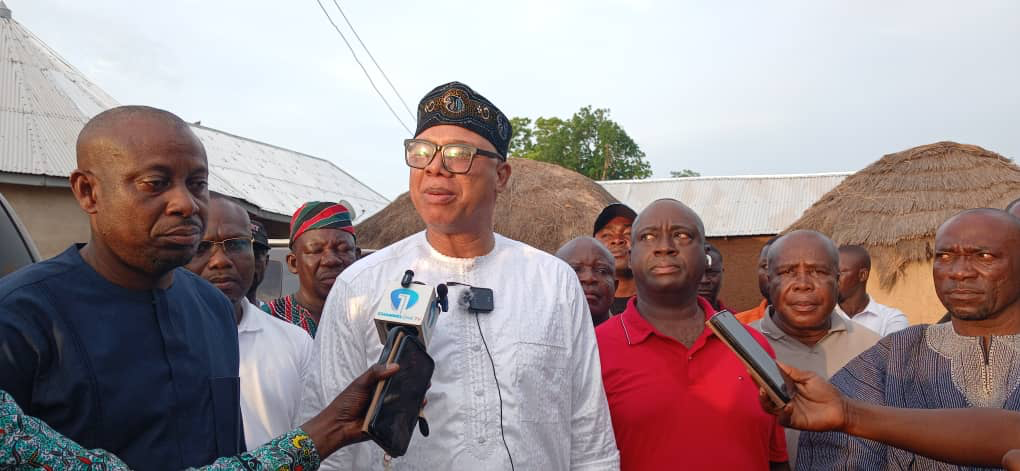
The Ghana Water Company Limited has begun formal stakeholder consultations in the Savannah Region, marking a critical early step toward the construction of a €106 million water supply project that promises to transform access to clean drinking water across northern Ghana.
The Damango–Tamale–Yendi Water Supply Project, funded through a grant from the European Union, the European Investment Bank, and Invest International, aims to deliver 135,000 cubic metres of treated water daily to communities that have long struggled with chronic water shortages. It is one of the largest water infrastructure investments in the country’s recent history.
GWCL Managing Director Adam Mutawakilu met with traditional leaders in the Savannah Region, including the Overlord of Gonja, to kick off consultations covering the Environmental Social Impact Assessment, right-of-way acquisition, and compensation for project-affected persons. The meetings represent the beginning of what officials describe as a thorough process designed to prevent costly delays once construction begins.
“President Mahama has been clear that he does not want work to start and then halt because people have not received their compensation,” Mutawakilu said during the consultations. “The moment you see compensation being paid, that means we have cleared all the necessary obstacles to pave the way for construction.”
The Ministry of Finance secured the €106 million funding commitment in April 2026, and a formal loan agreement is expected to be signed between September and October this year. Competitive procurement for the main construction contract is slated for the first half of 2027, with officials insisting that no sole-sourcing will be permitted.
Once construction begins, the project is expected to take approximately two and a half years to complete. The timeline, however, hinges on the successful completion of compensation payments and community consultations, which officials aim to finalise by the end of 2026.
The project arrives at a moment of acute need. Northern Ghana has endured decades of unreliable water supply, with ageing pipelines in Tamale prone to frequent bursts that result in significant non-revenue water losses. “If you still have old pipelines, the likelihood of them bursting is high, and when they burst we find ourselves denying the good people of Tamale drinking water,” Mutawakilu explained.
Parallel infrastructure upgrades are already underway in Tamale, including the replacement of ageing pipelines, installation of new pumps and motors, and repairs to treatment plants. These interim measures are intended to improve water reliability while the larger Damango–Tamale–Yendi system is built.
The water challenges facing northern Ghana echo broader infrastructure concerns across the country. In the south, scientists have warned that the McCarthy Hill dumping site poses a direct threat to the Weija Dam, the primary water source for the Greater Accra Region, underscoring how fragile Ghana’s water infrastructure remains in both urban and rural settings.
For communities in Damango, Tamale, Yendi and the surrounding areas, the €106 million project represents more than infrastructure. It is a promise of reliability — the assurance that turning on a tap will yield clean, safe water. The success of the stakeholder consultations now underway will determine how soon that promise becomes a reality.
Image Source: MYJOYONLINE