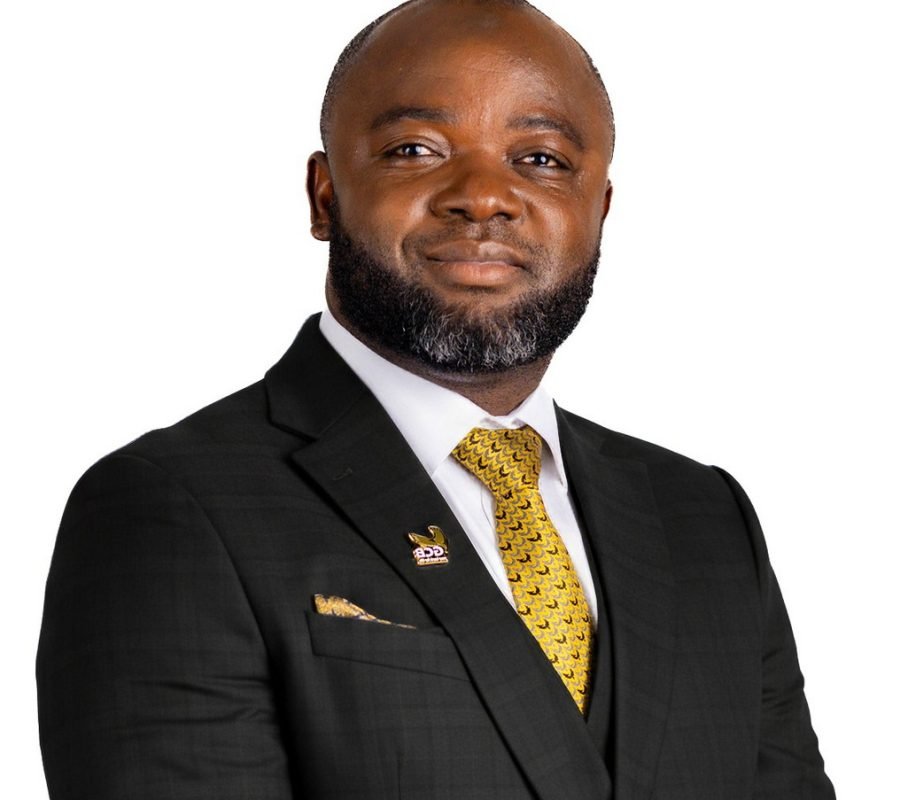
I watched my father being beaten up and jailed – Prof. Antwi opens up on childhood trauma

The journey to academic leadership often begins far from lecture halls and research laboratories, sometimes in the crucible of childhood adversity that shapes not just character but career trajectory. For Professor Enoch Opoku Antwi, Dean of Academic City University College, this formative period was marked by political persecution, economic hardship, and premature responsibility—a background that profoundly informs his perspective on education and opportunity.
In a rare personal interview on The Career Trail programme, Prof. Antwi detailed a childhood defined by the repeated arrest of his father under Ghana’s military regime. ‘I normally don’t talk about my childhood because I had a very awkward childhood,’ he began. ‘My father was taken because he voiced out his opinion. In those days, you dare not write about the military government, but he was a writer and spoke about the excesses of the regime.’
The descriptions of state violence are harrowing in their specificity. Soldiers would regularly surround the family home, subjecting his father to brutal beatings that sometimes resulted in coughing blood. ‘They were even slashing him with broken bottles,’ Prof. Antwi recalled, noting that he witnessed these assaults during visits to his father’s various imprisonments. This pattern of political targeting created an atmosphere of perpetual uncertainty that penetrated every aspect of family life.
With his father frequently absent due to imprisonment, the economic burden of survival fell disproportionately on young Enoch and his mother. He described assuming adult responsibilities at an age when most children are still in primary education: ‘My mother could not handle the pressure, so I had to do everything I could to support her and raise my siblings.’ His testimony reveals a childhood labor portfolio that would challenge many adults: foraging for snails, weaving baskets, sewing garments, selling secondhand clothing, and pounding fufu at local chop bars—a task that once moved his mother to tears upon witnessing his effort.
Yet amidst this hardship, Prof. Antwi identifies moments of dignity and self-worth earned through personal initiative. His recollection of purchasing his first Christmas dress through wages earned on a maize farm—working for a disabled landlord who paid him one-fifth of the harvest—speaks to a formative belief in the value of self-generated opportunity. ‘That was my best Christmas because it came from my own sweat,’ he noted, revealing an early understanding of the connection between effort and reward that would later shape his academic and professional pursuits.
The eventual release of his father did not bring unmitigated relief. Family tensions stemming from the trauma of persecution led to separation, after which Prof. Antwi remained with his mother and siblings. The subsequent passing of his father transferred the familial responsibility squarely onto his shoulders as the eldest child. ‘I remember my mother telling me, “Your father is no more. If you fail us as the first child, we all die,”‘ he stated, describing how this declaration intensified his sense of duty.
Reflecting on this trajectory, Prof. Antwi identifies two enduring virtues forged in childhood adversity: resilience and humility. His observation that ‘God has a sense of humour. When He has great things for you, He gives you a very humble beginning’ reframes hardship not as random misfortune but as potential preparation for future purpose—a perspective that allows him to view his struggles not as obstacles to overcome but as foundational experiences that informed his eventual leadership approach.
This personal narrative carries particular significance when considered alongside his contemporary critiques of community dynamics and educational systems. The professor who warns against successful individuals pulling up the ladder behind them learned resilience through literal family survival. The educator who advocates for opportunity-creating leadership knows firsthand what it means to build stability from nothing. His insistence that ‘if I have become a professor, anybody can also become something’ emerges not as empty optimism but as testimony born of verified experience.
In Ghana’s ongoing conversations about educational access, economic opportunity, and social mobility, such personal histories offer vital context. They remind policymakers and educators that behind every statistic on school completion or professional attainment lie individual narratives of perseverance—often involving challenges that extend far beyond academic difficulty. When institutions design interventions to support disadvantaged students, they would do well to remember that the most effective support sometimes addresses not just intellectual needs but the broader ecosystem of family stability, nutritional security, and psychological safety that enables learning to take place.
Furthermore, Prof. Antwi’s story speaks to the intergenerational transmission of values. Having witnessed his father’s persecution for speaking truth to power, he carries forward a commitment to expression and leadership that prioritizes communal benefit over personal gain—evident in his criticism of those who, having overcome barriers, then impede others’ advancement. His childhood lessons in survival and responsibility have translated into an adult philosophy of leadership as service rather than status.
For nations seeking to develop inclusive educational systems and equitable opportunity structures, narratives like Prof. Antwi’s provide more than inspirational anecdotes. They offer evidence-based insights into the types of support that actually enable disadvantaged youth to persist through adversity: recognition of non-traditional forms of competence, validation of self-generated achievement, and cultivation of resilience alongside academic skills. When educational policies focus solely on classroom instruction while neglecting the broader conditions that affect a child’s ability to learn, they risk missing precisely the factors that Prof. Antwi identifies as having shaped his own path to professorship.
This personal history informs Prof. Antwi’s critique of Ghana’s current educational assessment model, which he argues overemphasizes final examinations at the expense of measuring consistent effort and resilience. Having built his family’s survival through diverse small enterprises rather than academic performance alone, he understands that true capability often manifests in ways traditional testing fails to capture. His advocacy for educational systems that reward discipline, creativity, and problem-solving over rote memorization stems from lived experience: the skills that kept his family afloat—entrepreneurial initiative, persistent effort, adaptive thinking—were precisely those not measured by conventional school metrics of his era.
Moreover, his story illuminates why mentorship and opportunity creation resonate so deeply with him. Having benefited from informal learning arrangements—like the maize farm exchange that bought his Christmas dress—he recognizes that valuable education often occurs outside formal classrooms. This perspective underpins his belief that successful individuals bear responsibility to create similar pathways for others, rather than restricting access to the very mechanisms that aided their own advancement. When he advises students to ‘make it easier for others to rise,’ he speaks from knowledge of how temporary assistance and chance encounters can alter life trajectories—a lesson learned not in theory but through the kindness of a disabled landlord who valued his labor sufficiently to enable a meaningful purchase.
In addressing national development challenges, Ghana’s educational institutions would benefit from considering how to identify and nurture the forms of resilience, initiative, and adaptive thinking that Prof. Antwi’s childhood exemplifies. Rather than viewing adversity solely as a deficit to be compensated for, educational approaches might learn to recognize and build upon the strengths that emerge from overcoming hardship—precisely the qualities that enable individuals not just to succeed personally but to create opportunities that lift entire communities.