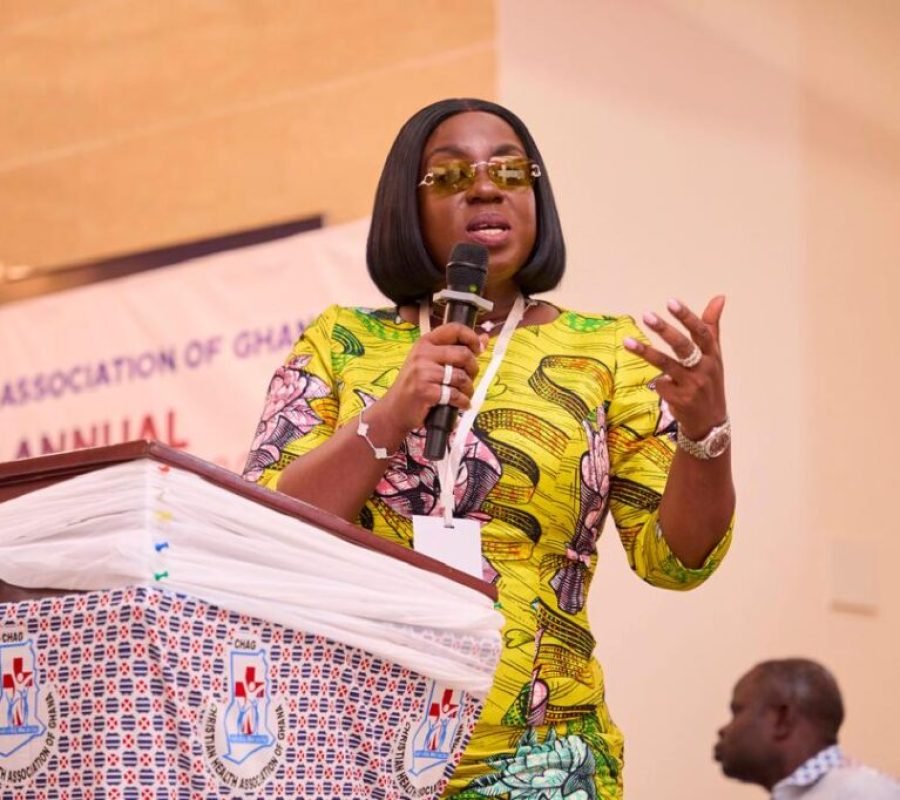
I returned to Ghana to make a difference in healthcare — Dr Naa Ashietey

When Dr. Naa Asheley Ashietey made the decision to leave her comfortable life in the United States and return to Ghana approximately 15 years ago, she wasn’t merely changing her geographical location. She was embarking on a mission to address a critical gap in her homeland’s healthcare landscape while challenging deeply entrenched perceptions about who could provide specialized medical care.
As the Chief Executive Officer of Nova Wellness Centre, Dr. Ashietey’s journey represents more than a personal career move—it embodies the broader narrative of skilled professionals choosing to contribute their expertise to national development. In a recent interview on Joy FM’s Personality Profile programme, she elucidated the motivations behind her return, describing them as stemming from “a combination of patriotism and a strong conviction that [she] could contribute meaningfully to the country’s healthcare system.”
What motivated this Ghanaian chiropractor was not abstract idealism but a concrete observation: upon her return, she found herself potentially the first Ghanaian woman to practice chiropractic care in the country. “At the time when I moved to Ghana, I don’t think there were any Ghanaian female chiropractors,” she recalled. This realization transformed her personal ambition into a pioneering endeavor, as she entered a field predominantly associated with expatriate practitioners—particularly white professionals and African-American specialists.
The early days of her practice were marked by a persistent misconception among patients. “People would come to the clinic then, and they’re looking for the ‘obroni’. That’s what everybody knew,” Dr. Ashietey explained, using the local term for foreigner. This perception created both a challenge and an opportunity—to not only provide care but to reshape understanding of who could deliver it.
However, Dr. Ashietey’s vision extended beyond establishing a successful practice. She recognized a fundamental disconnect between available healthcare solutions and public awareness. Many Ghanaians, she observed, remained unaware that spinal health could significantly influence overall wellbeing, with various ailments potentially traceable to spinal misalignment.
“I think knowing that I wanted to come home and come and speak the local language, I felt people needed to hear that, look, a lot of ailments can come from spinal misalignment,” she stated. This insight drove her commitment to public education—a component she considers as vital as clinical practice itself.
Central to her approach is the recognition that effective health communication requires cultural and linguistic accessibility. “Communicating health information in familiar languages and within local cultural contexts was essential to improving public understanding of chiropractic treatment,” she emphasized, highlighting the importance of meeting communities where they are rather than imposing external frameworks.
The philosophical foundation of her work resonates with a core tenet of chiropractic practice: “We move the bone, and God heals the body.” This perspective acknowledges the body’s innate capacity for self-repair when structural impediments are properly addressed, positioning the practitioner as a facilitator of natural healing processes rather than the primary source of healing.
Dr. Ashietey’s explanation of chiropractic care’s focus—correcting musculoskeletal and spinal dysfunctions that may affect nervous system functioning—reflects a sophisticated understanding of biomechanics that extends far beyond simple pain relief. She lamented that “many people continue to underestimate the impact of spinal health on general wellness,” a gap she has worked to bridge through both clinical practice and community education.
Over the years, she has witnessed gradual progress in her field’s recognition within Ghana. What began as a solitary practice has slowly evolved into a growing community of practitioners, though challenges remain in achieving widespread acceptance. Increasing numbers of practitioners have entered the profession, and public awareness of non-invasive treatment options for musculoskeletal conditions has expanded beyond urban centers to reach more communities nationwide.
Dr. Ashietey said she remains committed to expanding awareness about spinal health and wellness while encouraging more young Ghanaians, particularly women, to explore careers in specialised healthcare fields. Her outreach efforts have included school visits, community workshops, and collaborations with other healthcare providers to integrate spinal health assessments into routine check-ups.
Reflecting on her journey, Dr. Ashietey acknowledges the challenges inherent in pioneering a profession unfamiliar to many in her home country. Early skepticism from both patients and fellow healthcare providers required patience and persistent education efforts. Nevertheless, her conviction in the decision’s validity remains steadfast. “I just felt that need to come back home and educate people about how chiropractic can help in so many different ways because I felt we were not getting that information to a lot of people,” she affirmed.
Her story illustrates how individual initiative, when aligned with national needs, can catalyze meaningful change—not just in healthcare delivery but in expanding perceptions of expertise and possibility within Ghana’s professional landscape. By bridging international expertise with local context, she has helped establish a model for how specialized healthcare professionals can contribute to strengthening Ghana’s healthcare system while respecting and incorporating local cultural understanding.
Image Source: MYJOYONLINE