Ghana Courts Global Investors as It Positions Itself as Africa's Leading Outsourcing Hub
Ghana is making an aggressive play to become Africa’s premier destination for outsourcing and digital services, leveraging a young English-speaking workforce, expanding broadband infrastructure and a government-backed push to operate around the clock.
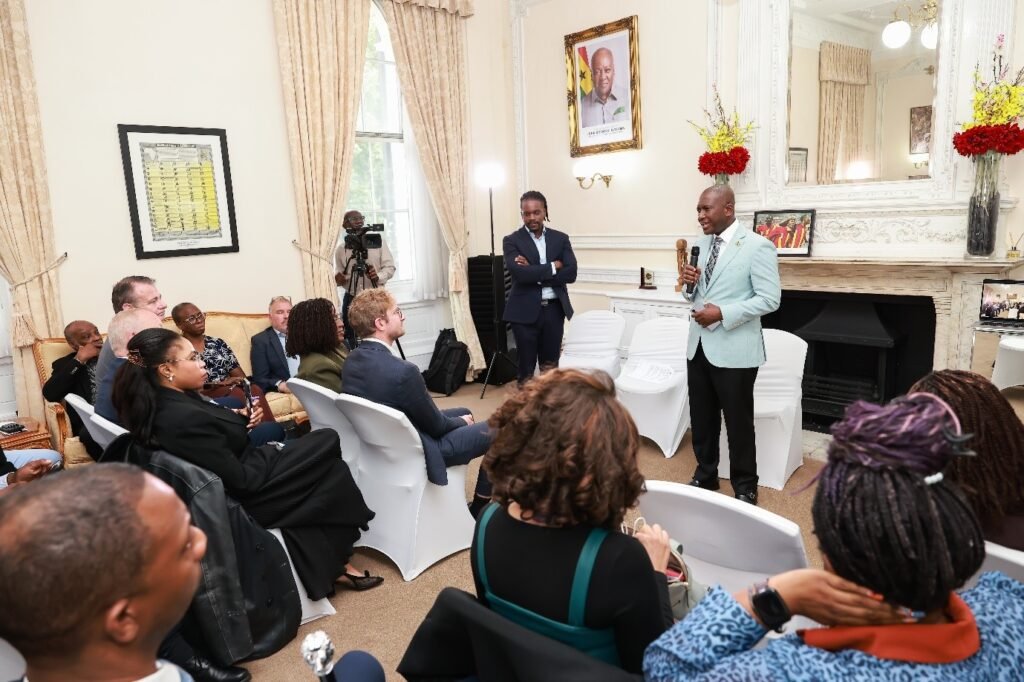
At an Executive Roundtable held at the Ghana High Commission in London on Sunday, senior officials and global industry leaders laid out a coordinated strategy to transform the country from a commodity-dependent economy into a scalable hub for business process outsourcing, technology services and knowledge work.
“Ghana stands at a pivotal moment in its economic evolution, shifting from reliance on primary commodities to a diversified, value-driven economy anchored in industrialisation and services exports,” said H.E. Aquinas Tawiah Quansah, Deputy High Commissioner at the Ghana High Commission in the UK.
The roundtable, jointly organised by the Business Outsourcing Services Association of Ghana (BOSAG), Ghana Digital Centres Limited (GDCL) and the Ghana High Commission, brought together government ministers, multinational executives and investors to map out the country’s next phase of digital economy growth.
A Digital Infrastructure That Can Deliver
Ghana’s case rests on hard numbers. The country now has more than 44 million mobile subscriptions and roughly 30 million active data subscriptions, underpinned by multiple submarine fibre cables and a competitive multi-operator telecoms environment. That digital backbone, officials argued, is more than sufficient to support large-scale outsourcing operations serving clients across time zones.
“From less than 10 per cent mobile penetration and roughly 2 per cent internet access in the early 2000s, Ghana now has a digital infrastructure that rivals many middle-income countries,” said Mavis Ampah Sintim-Misa, Board Chair of the National Communications Authority.
The talent pipeline adds weight to the pitch. More than 100,000 graduates enter the workforce each year, and the country can draw on over half a million English-proficient professionals. International firms including Concentrix and Teleperformance already operate in Ghana, and executives at the roundtable confirmed the country is delivering services for major global clients.
The 24-Hour Economy as an Enabler
Much of the government’s pitch is anchored in the 24-Hour Economy Agenda, a policy framework designed to extend productive activity beyond traditional working hours. For outsourcing, that means the ability to offer clients in Europe, the Americas and Asia continuous service coverage without relying on overnight shift premiums that erode cost competitiveness.
“Economic growth must translate into job creation,” said Abdul Nasser Alidu Suglo, Chief Programme Officer for the 24-Hour Economy. “The programme drives exports, expands productive capacity, and enables large-scale employment, with BPO parks as a core enabler.”
Ghana Digital Centres Limited, the government’s operational vehicle for the initiative, is developing integrated BPO park facilities designed to give investors turnkey access to office space, connectivity and trained staff. The goal is to reduce the friction that typically slows multinational entry into new markets.
Investor Confidence Takes Shape
The most concrete endorsement came from ADEC Innovations, a global technology-enabled services firm that selected Ghana after what its chief executive described as a rigorous global evaluation.
“Ghana emerged as a strong candidate; its talent, infrastructure, and ecosystem readiness make it a compelling investment opportunity for the next generation of technology-enabled, outcome-driven outsourcing,” said James Donovan, CEO of ADEC Innovations.
Samuel Nartey George, Minister for Communication, Digital Technology and Innovations, framed the opportunity in continental terms. With access to the African Continental Free Trade Area’s market of roughly 1.5 billion people, Ghana’s outsourcing sector could serve not just international clients but a rapidly integrating African market as well.
The roundtable represents a shift from promotional messaging to execution. Ghana’s digital economy ambitions have been discussed for years, but the convergence of infrastructure, policy and private-sector interest suggests the country may finally be turning rhetoric into results. The challenge now is sustaining momentum and delivering the institutional support that investors will require beyond the initial pitch.
The recent surge in Ghana’s mobile money ecosystem, which recorded GH¢1.7 billion in first-quarter revenue, underscores the depth of the country’s digital financial infrastructure — a foundation that outsourcing firms increasingly view as essential for integrated service delivery.
Image Source: MYJOYONLINE