Cracks Emerge on Tema Motorway Interchange as Motorists Raise Durability Concerns
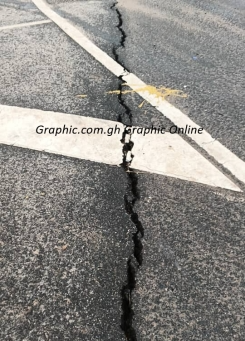
Motorists and commuters using the Tema Motorway Interchange have expressed alarm following the emergence of visible cracks on sections of the recently asphalted road surface at the facility, raising uncomfortable questions about the durability of one of Ghana’s most strategically important pieces of road infrastructure.
The cracks, which have appeared on portions of the interchange along the route towards the Afienya-Akosombo stretch, include a noticeable diagonal fissure on the asphalted surface. For daily users of the corridor, the deterioration is both visible and worrying, particularly given the volume of traffic that passes through the interchange every day.
“We use this road every day, and it is concerning to see cracks developing on the surface. We hope the authorities will assess the situation and address it before it worsens,” a commercial driver told Graphic Online, capturing the sentiment of many road users who depend on the route for their livelihoods.
The Tema Motorway Interchange occupies a critical position in Ghana’s transportation network. It serves as a major link between Tema, Accra, and the eastern corridor of the country, facilitating the movement of people, goods, and commercial traffic along the N1 Highway. The first phase of the interchange, which converted the old roundabout into a modern grade-separated facility, was officially opened to traffic in May 2020. Phase two, constructed with a high-quality steel girder bridge connecting Tema to the Akosombo stretch, was completed and opened to the public in December 2024.
The Deputy Transport Minister’s recent praise of Meridian Port Services’ investment at Tema Port as a model for West Africa underscores just how vital the Tema corridor is to Ghana’s economic infrastructure. A deteriorating interchange at the gateway to the country’s largest port is not merely a maintenance issue; it is a potential bottleneck for trade and commerce.
Road users have called on the relevant agencies to investigate the cause of the cracking and to take corrective action before the damage spreads. Any deterioration of the road surface could significantly affect traffic flow on a corridor that already handles heavy volumes of container trucks, commuter vehicles, and long-distance traffic.
The appearance of cracks so soon after the completion of phase two is particularly concerning because it raises questions about construction standards and the adequacy of quality control during the building process. Infrastructure of this scale and cost should be expected to withstand normal wear and tear for years, not show signs of distress within months of completion.
Commuters and transport operators have urged the authorities to implement regular monitoring and maintenance schedules for major road infrastructure. They argued that proactive upkeep would not only ensure safety but also prolong the lifespan of road assets and protect the significant public investment made in the country’s transportation network.
As of the time of reporting, neither the Ghana Highway Authority nor the Ministry of Roads and Highways had issued a formal statement on the cracking or announced any inspection or remediation plans. For the motorists who navigate the interchange daily, the silence is not reassuring.
Image Source: MYJOYONLINE