Agro-Processing Can Be A Capital Trap, Strategist Warns
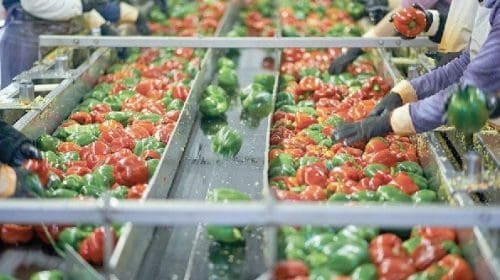
For years, governments and development agencies across Africa have championed agro-processing as the natural next step for farmers seeking to escape the volatility of raw commodity markets. The logic seems intuitive: if a farmer grows tomatoes, why not turn them into paste and capture the margin that processors and retailers currently pocket?
According to Augustine Adongo, a seasoned agriculture strategist and former chief executive of the Federation of Associations of Ghanaian Exporters (FAGE), that reasoning is dangerously flawed. Processing, he argues, is not an extension of farming. It is an entirely separate industry, one that demands capital discipline, infrastructure resilience, and a tolerance for risk that most smallholder operations simply cannot sustain.
“Promoting agro-processing as a guaranteed safety net for farmers is a trap that often destroys capital instead of adding value,” Adongo warns.
The Hidden Costs of Going Vertical
Adongo’s critique centres on the sheer weight of overheads that processing introduces. A farmer transitioning into manufacturing must acquire specialised machinery, secure regulatory approvals from the Food and Drugs Authority (FDA), obtain Hazard Analysis and Critical Control Points (HACCP) certification, and absorb heavy depreciation when seasonal plants sit idle for months at a time.
These are not marginal expenses. They represent a fundamental shift in the economics of the operation, from the relatively lean cost structure of primary agriculture to the fixed-cost rigour of industrial production. For an enterprise that still depends on the weather, soil conditions, and the unpredictable rhythms of harvest, that shift can be lethal.
Four Tests Before You Process
Adongo sets four tests that any processing venture must pass before an investor commits capital. First, the operation must have access to reliable raw materials for roughly ten months of the year. Second, it needs backup water and power supply, a non-trivial requirement in much of rural Ghana. Third, the business must hold enough working capital to absorb delayed retail payments, which can stretch for months. Fourth, the crop varieties used must be bred for manufacturing rather than the fresh market.
Failing even two of these conditions, Adongo says, signals a venture that will bleed cash rather than generate it. The implication is sobering: for the vast majority of Ghanaian farmers, the capital requirements and operational discipline needed for viable processing are simply out of reach.
Processing Can Magnify Risk
Far from cushioning farmers against market volatility, processing can actually amplify it. A poor harvest season or a fuel shortage can halt an entire plant while fixed costs continue to mount. Packaging introduces new risks: retail slotting fees, cold storage bills, and penalties for expired stock replace the straightforward risk of spoilage on the farm.
The transition from growing crops to manufacturing products swaps one set of uncertainties for another, arguably more punishing set. A farmer who loses a harvest to drought still has land and knowledge. A processor who loses a season of production still has machinery to maintain, certifications to renew, and creditors to satisfy.
Redefining Value Addition
Adongo challenges the prevailing definition of value addition that dominates policy discourse. Real value addition, he argues, is not merely changing a crop’s physical form. It is earning more per hectare. That distinction matters because it opens the door to lower-cost strategies that do not require factories or heavy machinery: better post-harvest handling, improved storage, direct access to premium markets, and contract farming arrangements that guarantee prices.
His core advice is blunt. Processing should be treated as a standalone investment, evaluated on its own merits rather than as a logical extension of farming. If a processing plant cannot buy raw materials at market prices from any supplier and still turn a profit, it is not viable. For most farmers, mastering primary production and pursuing low-cost value addition remains the sounder path.
The warning arrives at a critical moment. Across West Africa, governments are pouring subsidies and policy incentives into agro-processing parks and industrial zones. If Adongo is right, much of that capital may be flowing into ventures destined to fail, enriching equipment suppliers and consultants while leaving farmers worse off than before.
Image Source: GHANAMMA