In Kenya's Turkana Region, Elders Use Goat Intestines to Read the Skies and Predict Rain
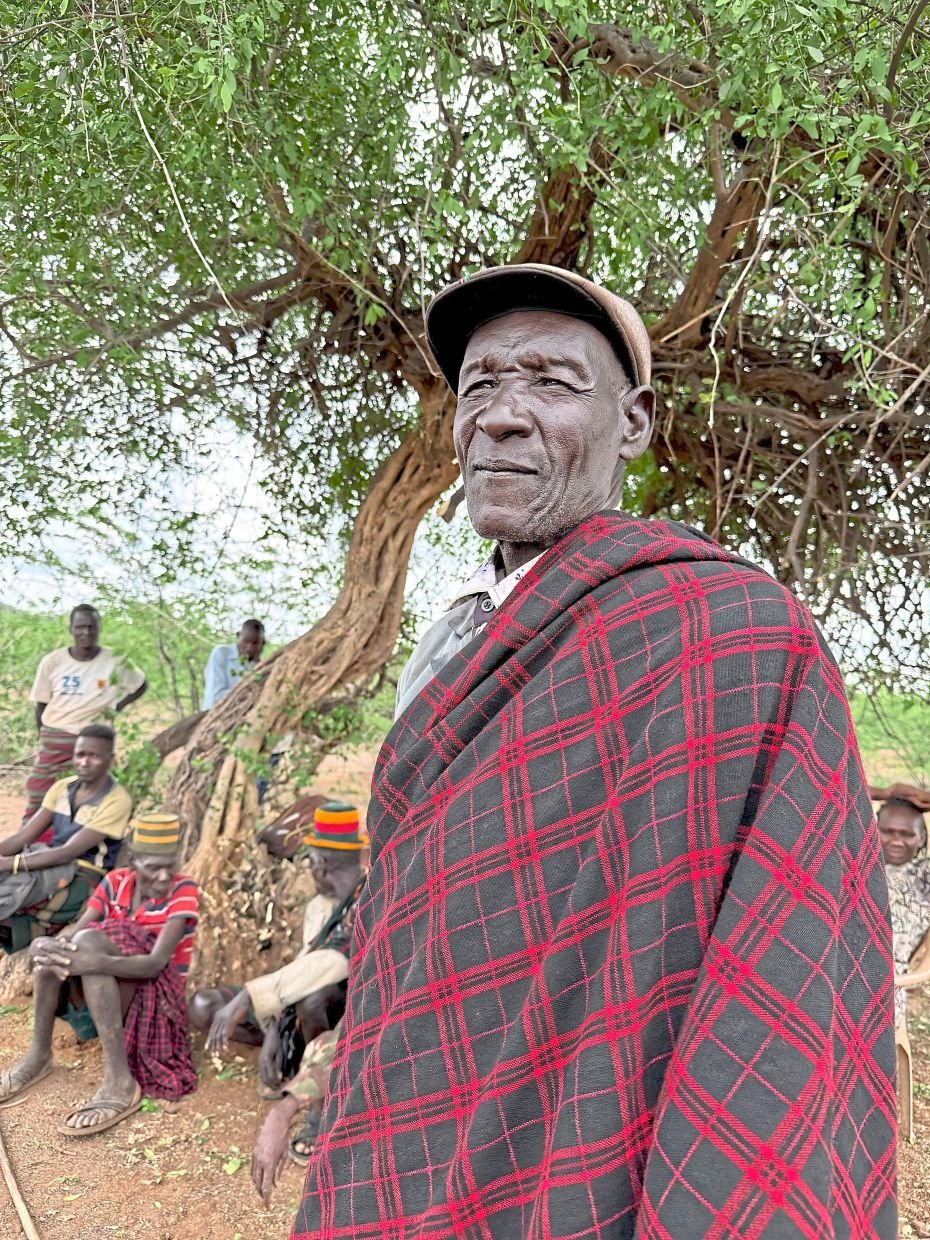
A few raindrops have fallen in recent days over Turkana, the drought-scarred region in northern Kenya where pastoralist communities have for generations measured survival against the reliability of the rains. But will the showers continue, feeding livestock and nourishing the fields of local farmers? Or will they prove, once again, to be a fleeting promise?
To answer that question, a group of community elders turned not to satellite imagery or meteorological charts, but to a practice older than any forecast model: they slaughtered a goat and examined its intestines.
An Ancient Practice in a Modern Crisis
The practice of divining weather patterns from the entrails of animals is deeply embedded in the cultural traditions of the Turkana people, one of Kenya’s largest pastoralist communities. For generations, elders have relied on the colour, texture, and moisture content of a goat’s internal organs to gauge whether the rains will come, and how long they might last.
The ritual is not mere superstition to those who perform it. Practitioners describe it as a sophisticated reading of environmental signals, honed over centuries of living in one of the world’s most unforgiving climates. The condition of the animal’s entrails, they say, reflects the broader state of the land, the health of the soil, and the moisture already present in the atmosphere.
In a region where annual rainfall is erratic and droughts have grown more frequent and severe, the practice carries enormous practical weight. A favourable reading might prompt a family to plant crops or move livestock to new grazing land. An unfavourable one could trigger early migration, the sale of animals before prices collapse, or the rationing of stored food.
When Science and Tradition Converge
The use of indigenous weather prediction methods in Turkana has drawn increasing attention from researchers and humanitarian organisations seeking to bridge the gap between modern meteorological science and the lived experience of pastoralist communities.
Several studies have noted that traditional forecasting methods in east African pastoralist societies often align closely with scientific predictions, particularly at the local level where satellite data may lack the granularity needed for hyper-local decisions.
This convergence has prompted calls for greater integration of indigenous knowledge into climate adaptation strategies, particularly in regions like Turkana where formal weather services have limited reach and where the consequences of a wrong forecast can mean the difference between livelihood and destitution.
A Region Under Pressure
Turkana, which borders South Sudan, Ethiopia, and Uganda, has long been one of Kenya’s most food-insecure regions. Climate change has intensified the cycle of drought and brief respite, pushing pastoralist communities to the margins of survival. Livestock deaths during prolonged dry spells have become increasingly common, and with them, the erosion of cultural practices that once formed the backbone of community resilience.
Against this backdrop, the continued practice of goat intestine reading is both a cultural anchor and a pragmatic response to uncertainty. It reflects a worldview in which humans remain in dialogue with the natural world, interpreting its signs rather than simply waiting for a forecast to arrive on a screen.
Whether or not the latest reading brings good news, the ritual endures, carried forward by elders who believe that the land still speaks to those who know how to listen.
Image Source: GHANAMMA