Eastern Region Health Authorities Tackle Menstrual Stigma as Schoolgirls Reveal Deep-Rooted Misconceptions
Across Ghana’s Eastern Region, adolescent girls continue to grow up believing that menstruation is a sign of witchcraft, that menstruating women are unhygienic, and that a girl on her period becomes a curse upon her household. These are not isolated beliefs held by a fringe few. They are widespread misconceptions that public health officials say are fueling school absenteeism, undermining girls’ education, and perpetuating cycles of shame that have persisted for generations.
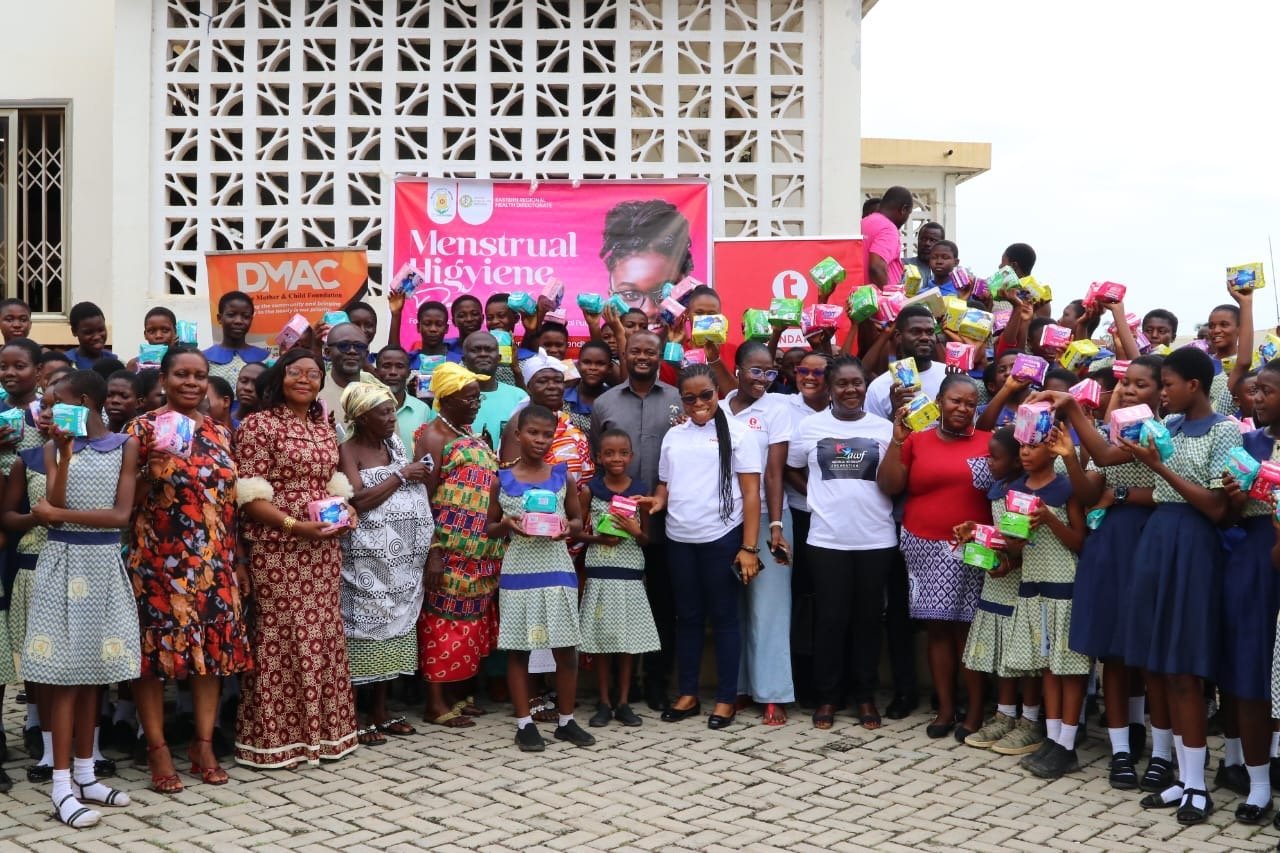
At the celebration of this year’s World Menstrual Hygiene Day on Thursday, May 28, 2026, at Koforidua Asokore, the Eastern Regional Health Directorate and the Ghana Education Service convened an event designed to confront these myths head-on. The programme brought together schoolgirls from across the municipality for frank conversations about what menstruation actually is — and what it is not.
The revelations were striking. One female student told facilitators that she had been led to believe menstruation was evidence of witchcraft. “They said when you menstruate it means you are a witch but now I have seen that when you menstruate it means you are grown up and you don’t have to fear, you don’t have to be embarrassed,” she said. Another recounted a similar experience: “I heard that if you have your period you are a witch. So I thought I am also a witch until I came here and then I heard that it is all some kind of myth.”
A third student described how cultural norms around menstruation differ sharply across ethnic lines. “I have a friend who is from a different tribe. The person actually told me that with their tribe you can’t cook when you are menstruating,” she said. These are not abstract cultural debates. They shape the daily lives of girls who, upon reaching puberty, are suddenly told they are unfit to participate in ordinary activities.
Public Health Nurse Edith Asiedua of the Eastern Regional Health Directorate said the programme’s reach would now extend beyond schools to parents and communities, recognising that much of the misinformation girls carry originates at home. “We need to address this at the family level,” she said, acknowledging that classroom education alone cannot dismantle beliefs that are reinforced in the household every day.
The event also drew attention to a practical barrier that keeps girls out of school: the cost and availability of sanitary pads. Yazz Personal Care Products has previously launched a nationwide school outreach campaign aimed at tackling period poverty, a challenge that remains acute in rural and peri-urban communities across the country.
Eastern Regional Girls Education Officer Patricia Brago Gyamfi disclosed that the government intends to procure reusable sanitary pads to supplement the disposable pads currently being distributed to adolescent girls. “The free sanitary pad distribution is a timely intervention made by the government because we all know that pads are expensive these days and most parents cannot afford,” she said. “And when girls are menstruating and they are not getting their pads, they absent themselves from school. The fact that they are even introducing the reusable pad is also a plus because the numbers that the girls get, I mean the pads may not be enough for them but with the reusable you can use it and wash it and still use it again.”
Samuel Adongo, the Municipal Chief Executive for New Juaben North, supported the celebration with quantities of sanitary pads and announced plans by the municipal assembly to construct modern toilet facilities and girls’ changing rooms in basic schools across the municipality. “If you go to most of the basic schools, the toilet facilities there are in a very bad state that it’s not even accessible at all,” he said, adding that the assembly had placed the project on its budget for the current year.
The event also highlighted the need for boys and men to be actively involved in menstrual hygiene education and support, rather than treating menstruation as a subject that concerns only girls. Improper disposal of sanitary pads was raised as an additional concern, with facilitators calling for better waste management infrastructure in schools and communities.
This year’s celebration received support from several organisations including Telecel, DMAC Foundation, and the New Juaben South Municipal Assembly, all of which donated sanitary pads for distribution to both male and female students present at the event. The CroxItOut High School Tour, a partnership between Yazz and MX24 TV, represents another effort to bring menstrual health education directly to Ghana’s secondary schools.
The persistence of menstrual stigma in Ghana’s communities underscores a broader challenge: reproductive health education remains inadequate at the household level, and without sustained engagement with parents, cultural leaders, and community members, the misconceptions that adolescent girls carry will continue to shape their self-image and their access to education.
Image Source: STARR FM