Queen Mother of Srafa-Aboano Distributes Sanitary Pads, Leads Menstrual Hygiene Campaign in Central Region
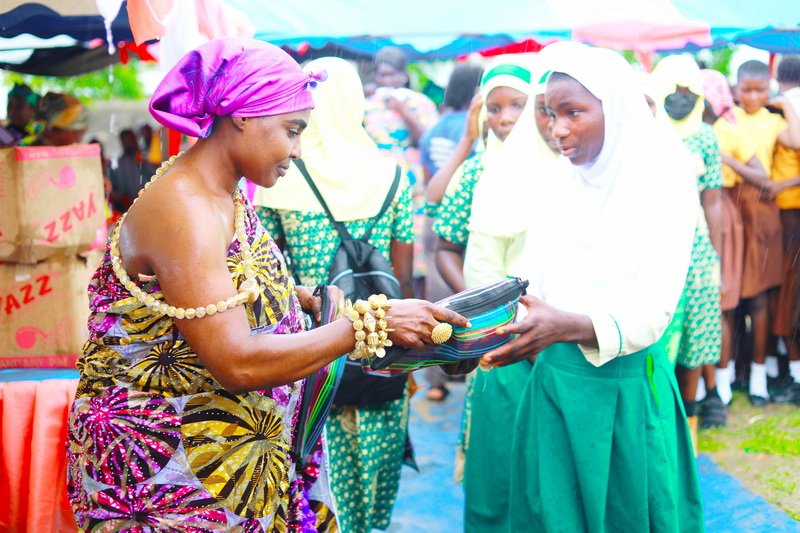
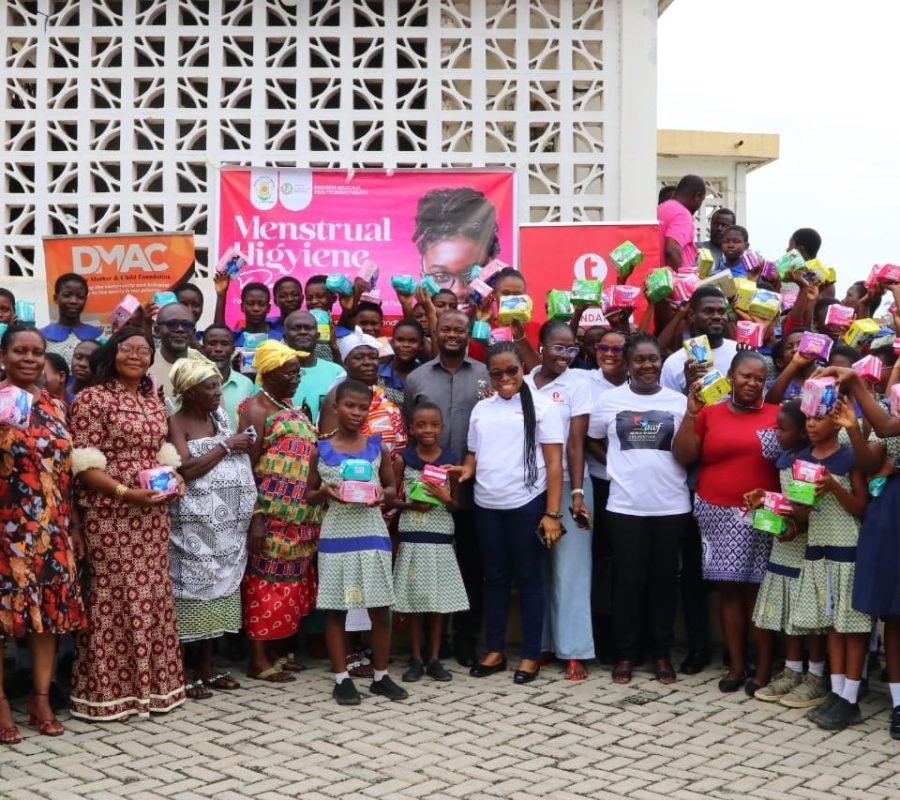
On a warm Wednesday afternoon in the Ekumfi District of Ghana’s Central Region, hundreds of schoolgirls gathered in the community of Srafa-Aboano for an event that many residents described as unprecedented. Nana Adjoa Amowah II, the Queen Mother of Srafa-Aboano, had organised a public health outreach to mark World Menstrual Hygiene Day — distributing free sanitary pads and exercise books while leading frank discussions about a subject long shrouded in stigma and silence.
The programme, held on 28 May, was the first of its kind in the community. Organised by the queen mother’s palace in collaboration with the Ekumfi Queen Mothers Association and the Ekumfi District Health Directorate, it combined the practical distribution of menstrual products with education sessions designed to dismantle taboos that continue to affect girls’ health and schooling across rural Ghana.
“Choosing this community gave schoolchildren and parents the opportunity to learn about menstrual hygiene in an open, supportive environment,” Nana Adjoa Amowah II said after the event. “Many families in rural areas do not have access to reliable information on reproductive health. When we bring these conversations home, we remove the shame and silence that keep girls from asking questions.”
Stella Opoku, a nursing officer from the Ekumfi District Health Directorate, led the education component of the outreach. She guided schoolgirls drawn from junior high schools in Srafa-Aboano and surrounding communities through proper menstrual hygiene practices, including the correct use and safe disposal of sanitary products, personal cleanliness, and the management of menstrual discomfort.
The outreach reflects a growing national movement to address period poverty — the inability of girls and women to afford or access menstrual hygiene products. Earlier this year, Yazz Personal Care Products launched an ambitious nationwide school outreach campaign specifically targeting adolescent girls in underserved communities, part of a broader effort by private companies and civil society organisations to close the gap in menstrual health education.
For many families in the Ekumfi District, the cost of sanitary products remains a monthly burden. Parents at the event said the programme filled a critical gap, noting that misinformation and cultural stigma continue to force some girls to miss school during their periods or resort to using unsafe materials. Community leaders described the outreach as timely and necessary.
Nana Adjoa Amowah II framed the initiative as part of a broader mission that extends beyond a single day’s event. “Today’s session was not just about giving out pads,” she said. “It was about giving our daughters knowledge, dignity, and the assurance that menstruation is normal and manageable. When a girl understands her body, she walks with confidence.”
By holding the programme at the community level and deliberately including boys, parents, and teachers in the conversation, the organisers sought to normalise discussions about menstruation as a shared public health concern rather than a private matter to be endured in silence.
World Menstrual Hygiene Day, observed globally on 28 May, focuses on raising awareness about the social and economic barriers that menstruation imposes on girls and women and promoting access to safe, hygienic menstrual management. In Ghana, the day has increasingly become a catalyst for grassroots action, with queen mothers, health workers, and advocacy organisations using it to push for lasting change in communities where stigma remains deeply entrenched.
Nana Adjoa Amowah II pledged that the Srafa-Aboano palace would continue partnering with health professionals and education stakeholders to run periodic sensitisation programmes, ensuring that no girl in the community is held back by menstruation. In a district where such conversations have historically been confined to whispers, the queen mother’s willingness to lead them publicly marks a significant step.
Image Source: MYJOYONLINE