Meet Emelia Naa Ayeley Aryee: The Ghanaian Journalist Fighting Infertility Stigma Through Action
In Ghana, as across much of Africa, a woman’s worth has long been measured by her ability to bear children. When conception does not come, the blame almost always falls on her regardless of the medical reality. The silence and shame that surround infertility have left countless couples suffering in isolation, their struggles invisible to a society that treats childlessness as a personal failing.
Emelia Naa Ayeley Aryee is trying to change that, not with speeches alone, but with medicine.
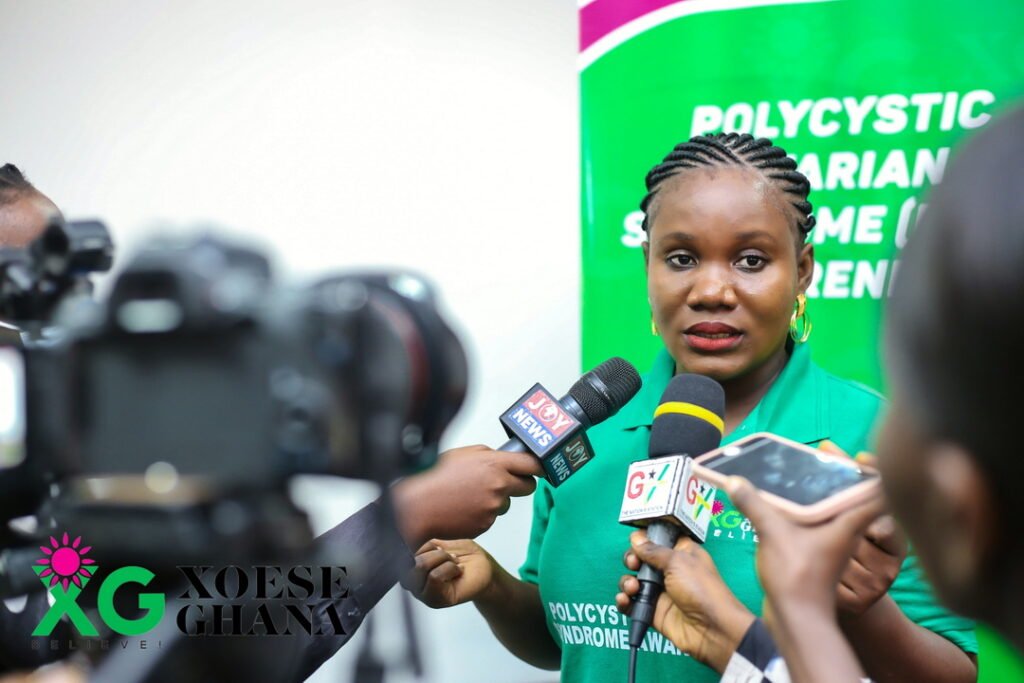
A multiple award-winning journalist with more than 15 years of experience, Ms Aryee is the Founder and Executive Director of Xoese Ghana, an NGO that has moved beyond awareness campaigns to deliver tangible outcomes for couples battling infertility. Since establishing the Xoese Fertility and Maternal Support virtual clinic in 2024, her organisation has helped bring five children into the world, three boys and two girls, each born to parents who had spent years grappling with the emotional weight of infertility.
From Advocacy to Intervention
The genesis of Xoese Ghana lies in a simple observation: advocacy, on its own, was not enough. Ms Aryee found that talking about infertility stigma, while necessary, did not address the fundamental reason women were ostracised, the absence of children.
“There is the need for a practical approach,” she explained. “We need medical intervention for the women to make the fight against infertility and the stigma meaningful. The women are stigmatised because of the absence of babies. Therefore, helping them get babies, where possible, is what would end the stigma.”
Through a partnership with Dr Samuel Gyedu Owusu, formerly of LEKMA Hospital in Accra and now at St Anthony’s Catholic Hospital in Dzodze in the Volta Region, the virtual clinic assesses patients’ health conditions, interprets laboratory results, and prescribes treatment. The conditions addressed range from hormonal imbalances and polycystic ovarian syndrome to low sperm viability and pelvic inflammatory disease, a reminder that infertility is not exclusively a women’s issue, even if society treats it as one.
To ease the financial burden, Ms Aryee secured discounted partnerships with fertility and healthcare institutions including Clarity Specialist Scan, Metropolis Healthcare, Tema Women’s Hospital, and Accra Fertility Centre.
Five Lives, Five Stories
The results have been striking. The first baby, a boy, was born in February 2025 to a 28-year-old woman in Tema who had spent five years trying to conceive. The second, also a boy, arrived in April 2025 for a 41-year-old mother in Ashaiman after 14 years of infertility. A third boy was born in December 2025 to a 38-year-old woman from Teshie who had tried for 12 years. The fourth child, the first girl, was born in February 2026 to a couple who had discovered the husband’s sperm was not viable; within six months of treatment, the condition had improved sufficiently for conception. A fifth baby followed in March 2026 to a woman experiencing secondary infertility.
Each birth represents not just a medical success, but the dismantling of years of social stigma.
The Cost of Compassion
Ms Aryee speaks candidly about the emotional toll of her work. Some beneficiaries, she says, never acknowledge the help they received, no thank-you call, no visit with the baby, no word at all. “This used to affect my mental health badly, but I have learned to overcome it,” she revealed.
It is a peculiar cruelty of the work: the very women whose suffering drove Ms Aryee to act sometimes disappear once their circumstances improve, perhaps eager to leave the chapter behind entirely. She persists nonetheless.
Beyond Infertility
Ms Aryee’s commitment to practical solutions extends beyond fertility. In 2022, she rescued a pregnant teenage girl from child marriage in the Eastern Region and supported her return to school after delivery. She has also partnered with pharmaceutical companies to donate medical supplies, including iron supplements and cough syrups, to facilities such as Tema Manhean Polyclinic and Mamprobi Polyclinic.
Her work has earned national and international recognition, including two Merck Foundation “More Than A Mother” Awards, first as runner-up in the English-speaking West Africa category in 2022, then as overall winner in 2023. She has spoken at the 2025 Global Black Infertility Agenda Symposium in the United States and the Merck Foundation Women’s Health Conference in Tanzania.
A Different Kind of Journalism
Ms Aryee’s career arc offers a model for how journalists can leverage their platforms for social change. Rather than simply reporting on infertility, she built an organisation that addresses it. Xoese Ghana, officially founded in 2023, now operates as a bridge between advocacy and healthcare, a space where women can access both information and treatment.
Globally, approximately one in six people experiences infertility. In Ghana and across West Africa, the cultural weight attached to motherhood means that women bear a disproportionate share of the stigma. Organisations like Xoese Ghana, led by people willing to move beyond awareness into action, represent a necessary shift in how societies confront deeply rooted prejudices.
Five children have been born through Ms Aryee’s intervention. For the women who carried them, the births were not just medical milestones, they were acts of liberation.
Image Source: MYJOYONLINE