Parliament Mini Parliament Initiative Gives 44,000 Children Powerful Voice in Ghana Decision-Making
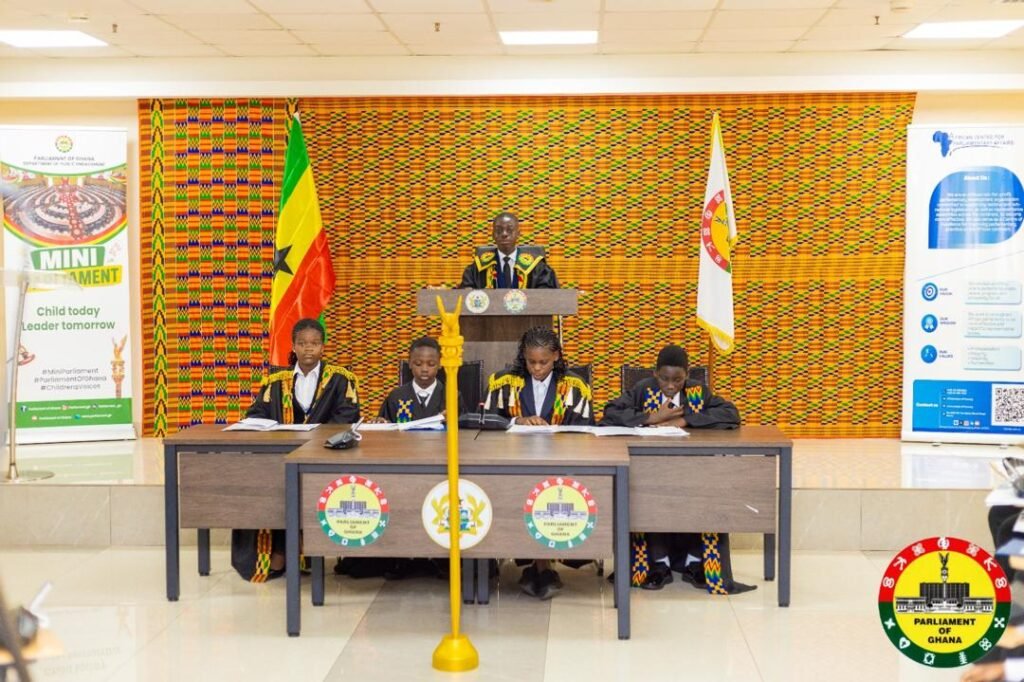
The Parliament Mini Parliament initiative has officially launched in Ghana, creating a groundbreaking platform that gives children a powerful and structured voice in national decision-making processes that directly affect their futures.
Unveiled at Parliament House in Accra, the maiden edition of the Mini Parliament represents a bold step by the Legislature to move beyond traditional top-down policymaking and include the very demographic most affected by governance decisions: Ghana’s youth. The initiative is a collaborative effort between the Parliament of Ghana, the African Centre for Parliamentary Affairs (ACEPA), UNICEF, and the Learning Tree Foundation.
Why the Parliament Mini Parliament Matters for Ghana’s Future
The Parliament Mini Parliament is more than a symbolic exercise. It is a practical, interactive platform that enables children to assume the roles of Members of Parliament and debate real national issues in a structured educational setting. According to the Chairperson of the Parliamentary Committee on Gender, Children and Social Protection, Madam Helen Ntosu, the NDC Member of Parliament for Krachi West, the era of policymaking for underrepresented groups without their input is over.
“Citizens, especially the youth, now seek platforms to be heard in decision-making processes,” Madam Ntosu said at the launch. “This shift reflects Ghana’s commitment to openness, transparency, and the building of public trust.”
The initiative arrives at a critical juncture. Ghana was the first country in the world to ratify the United Nations Convention on the Rights of the Child, yet meaningful child participation in governance has remained limited. The Parliament Mini Parliament seeks to bridge that gap between principle and practice, offering young Ghanaians a direct experience of parliamentary deliberation.
Parliament Mini Parliament Debuts with Technology and Online Safety Focus
At the inaugural sitting, participants debated the topic “Responsible Use of Technology by Children,” focusing on online safety, digital responsibility, and the impact of technology on well-being. Officials from the Cyber Security Authority led a dedicated session on internet safety, cyberbullying, and protecting personal information — issues that resonate deeply with a generation growing up in an increasingly digital world.
Paulina Sarvilahati, the Chief Social Policy and Inclusion Officer at UNICEF, underscored the importance of child participation, recalling Ghana’s historic role in championing children’s rights globally. “You deserve to be heard. You deserve to be protected. You deserve to go to school and achieve your dreams,” she told the young participants, urging them to be bold and confident in sharing their views.
The choice of technology as the first debate topic signals Parliament’s recognition that children face unique challenges in the digital age that demand legislative attention shaped by their own experiences and perspectives.
Over 44,000 Young Visitors Inspire Parliament Mini Parliament Launch
The Parliament Mini Parliament did not emerge in a vacuum. Superintendent (Retd.) Effia Tenge, Parliament’s Director of Public Engagement, revealed that the department had hosted over 44,000 visitors from 2023 to 2025, with more than 70 per cent being primary and junior high school pupils. However, many of these young visitors struggled to grasp parliamentary procedures, prompting the need for a more interactive and age-appropriate approach.
“The vision is to ensure that the Ghanaian of tomorrow is capable of making meaningful contributions to national progress,” Superintendent Tenge explained.
Dr Rasheed Draman, ACEPA Executive Director, reinforced this sentiment, stating that early exposure to governance structures would help nurture responsible and informed citizens. The Parliament Mini Parliament, he argued, provides exactly the kind of hands-on civic education that textbooks alone cannot deliver.
Kate Addo, the Divisional Head of Public Affairs, commended the children for their confidence and eloquence during the inaugural debate, urging them to remain disciplined and committed to academic excellence. Manye Naa Badu Diaba I, Queen Mother of the Dzorwulu Abelemkpe Subdivision Stool, also encouraged the children to uphold good moral values and listen to guidance from parents and teachers.
Parliament Mini Parliament Signals Broader Democratic Reform
The launch of the Parliament Mini Parliament carries significance beyond civic education. It reflects a growing recognition within Ghana’s political establishment that democratic legitimacy requires genuine inclusivity. By creating space for children to engage with governance, Parliament is investing in a culture of participation that could reshape the country’s political landscape for decades to come.
This initiative aligns with broader efforts to strengthen democratic institutions in Ghana. The country’s Parliament has been recognised as one of the most transparent in Africa, and the Mini Parliament represents a further evolution of that commitment to openness.
The programme also raises important questions about the future direction of Ghana’s legislative agenda. As children engage with issues like technology regulation, education policy, and environmental protection through the Mini Parliament, their insights could inform more responsive and evidence-based lawmaking.
What Next for the Parliament Mini Parliament Initiative?
Parliament has signalled that the Mini Parliament will continue as a permanent feature of its public engagement strategy, with future sessions expected to cover a wide range of topics relevant to young Ghanaians. The initiative will serve as a practical civic education tool, preparing the next generation of leaders through direct exposure to democratic processes.
The involvement of UNICEF, ACEPA, and the Learning Tree Foundation ensures that the programme will benefit from international best practices in child participation and democratic education. As Ghana continues to champion children’s rights on the global stage, the Parliament Mini Parliament offers a tangible demonstration of the country’s commitment to walking the talk.
For the children who participated in the inaugural sitting, the experience was transformative — a rare opportunity to step into the shoes of lawmakers and contribute meaningfully to conversations about their own futures. As the programme expands, thousands more young Ghanaians will have the chance to experience the power and responsibility of democratic participation firsthand.
Source: MyJoyOnline