Three Dead in Avenor Building Collapse as Fire Service Calls for Stricter Safety Enforcement
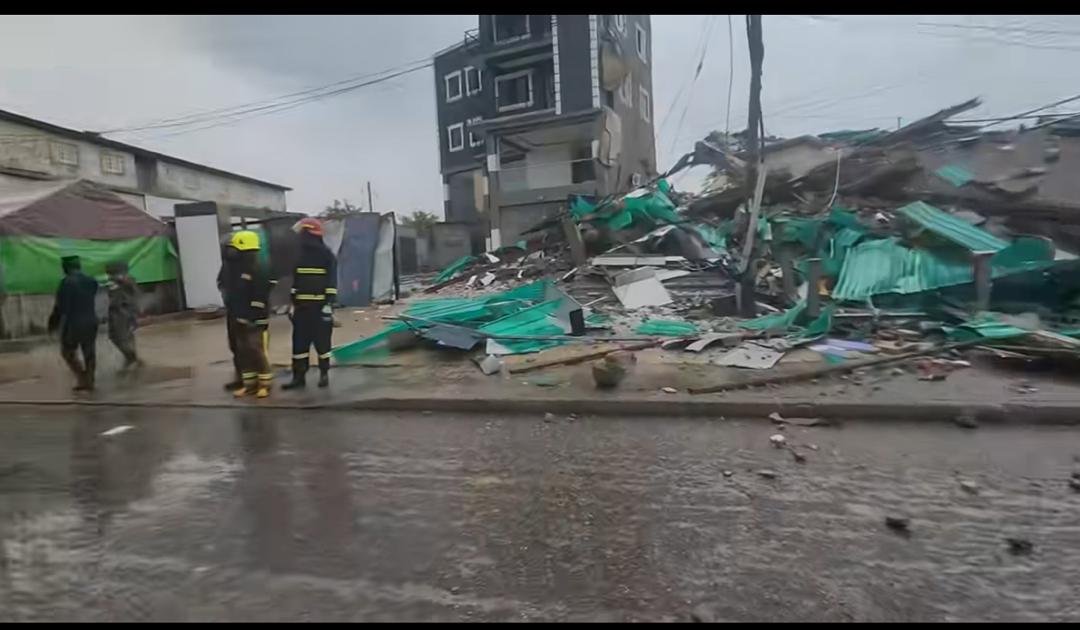
Three people have died following a building collapse at Avenor in Accra, while one survivor remains on admission receiving treatment, the Ghana National Fire Service has confirmed — a tragedy that has reignited urgent questions about structural safety standards across the capital.
The incident, which occurred on Sunday, saw four victims retrieved from the rubble during a coordinated rescue operation involving the Fire Service, the Ghana Police Service, the National Ambulance Service, and National Security personnel. Two of those pulled from the debris were found dead at the scene, while two others were rushed to hospital alive. One of the survivors subsequently died from injuries sustained in the collapse, leaving a single victim still undergoing treatment.
Divisional Officer Grade II Desmond Ackah, the GNFS Head of Public Relations, told the Ghana News Agency that authorities had since obtained a court order to facilitate the safe removal of the dangerous structure and prevent further harm to the public. He cautioned against speculation about the cause of the collapse, noting that investigations involving structural and engineering experts were underway.
“A lot of factors could contribute to structural collapse, including poor construction practices, the use of unqualified artisans, or issues relating to the load-bearing capacity of the soil. We do not want to pre-empt the outcome of investigations,” DO II Ackah said.
The Avenor disaster is the latest in a recurring pattern of building failures in Accra and other Ghanaian cities that exposes deep weaknesses in the country’s construction oversight regime. Poor enforcement of building codes, the use of substandard materials, and the engagement of unqualified workers have long been identified as systemic risks, yet remedial action has been slow and inconsistent.
The Fire Service officer placed particular responsibility on Metropolitan, Municipal and District Assemblies, calling on local authorities to proactively identify and take action against structurally compromised buildings before they pose a threat to lives and property. He appealed to residents to report buildings showing signs of structural failure to the nearest assembly or fire station.
“We should not wait until lives are lost. Once residents notice signs of imminent collapse, they must alert the appropriate authorities so that preventive measures can be taken,” he said.
Urban planning experts have long argued that Ghana’s building regulatory framework, while adequate on paper, suffers from a severe implementation deficit. The country’s rapid urbanisation has outpaced the capacity of local authorities to conduct routine inspections, and a culture of building without permits persists in many neighbourhoods. The result is a stock of structures across Accra and other cities whose structural integrity is unknown — and, in too many cases, dangerously compromised.
The GNFS reiterated its commitment to public safety and urged property owners to comply with building regulations and maintenance requirements to help prevent similar incidents. For the families of the three victims, however, those assurances come too late.
Image Source: GHANA BUSINESS NEWS