Powerful individuals using defamation suits to silence journalists – GJA General Secretary
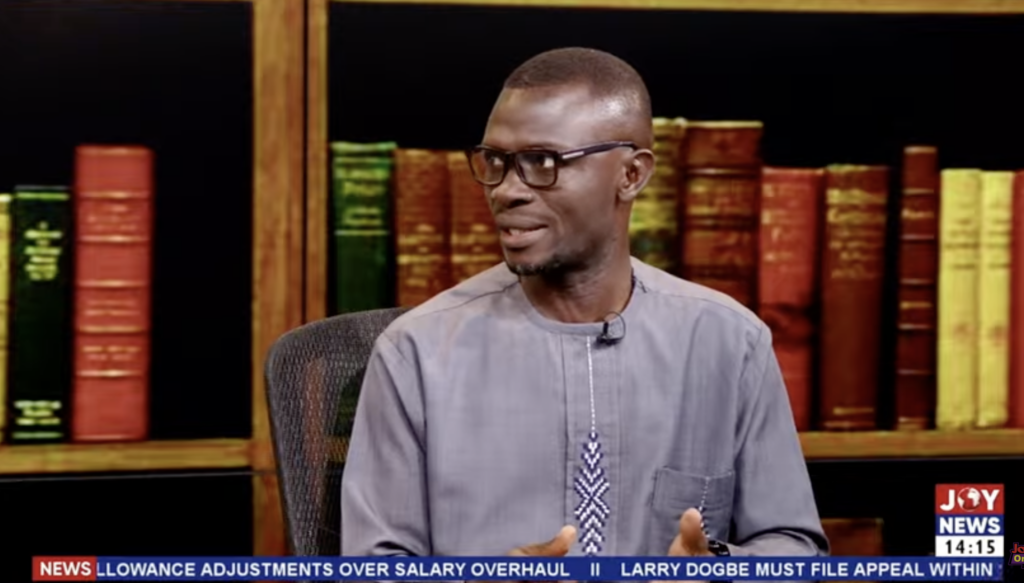
In Ghana, a troubling pattern has emerged where influential figures and institutions are leveraging defamation lawsuits not to vindicate reputations, but to silence critical journalism. This observation comes from Dominic Hlordze, General Secretary of the Ghana Journalists Association (GJA), who warns that the practice has evolved into a systematic tool of intimidation, particularly targeting reporters lacking the financial resilience to withstand prolonged legal battles.
Speaking on JoyNews, Hlordze articulated a stark reality: many of these lawsuits are strategically filed against journalists perceived as vulnerable, transforming the courtroom into a battleground where the mere threat of litigation suffices to chill investigative reporting. “The person realises that the journalist hasn’t got what it takes to meet me in court. And so he runs to court to put you down,” he stated, revealing a calculus where legal action becomes a weapon of financial and psychological attrition.
The GJA General Secretary disclosed that over 15 defamation cases are currently pending against journalists and media organisations nationwide, with him personally providing legal defence in 15 of these instances. He emphasized that the burden extends beyond the courtroom, forcing journalists to divert scarce resources from news gathering to legal defence, thereby undermining the very essence of their profession.
“A lot of journalists don’t have what it takes to even go to court. So if every day they are to go to the field to get stories, they now have to go to the courts to defend themselves,” Hlordze lamented. This divertive effect, he argued, is eroding the quality of journalism, with investigative reporting—described as the “lifeblood of journalism”—suffering as reporters withdraw from accountability work to avoid legal entanglements.
Crucially, Hlordze distinguished between legitimate defamation claims arising from genuine journalistic errors and strategic lawsuits designed to suppress public-interest reporting. The latter, he asserted, constitutes an abuse of legal process, as complainants often bypass available remedies like the right of rejoinder—a mechanism allowing subjects of coverage to respond directly in the same medium—in favour of litigation precisely because of its debilitating financial and emotional toll on journalists.
He reiterated the association’s call for [a dedicated defamation law to protect journalists](/gja-calls-for-dedicated-defamation-law-to-protect-journalists-and-clarify-media-litigation/) to provide clearer legal boundaries and prevent such abuses. He urged both parties to embrace the right of rejoinder, explaining that its observance fosters resolution without resorting to courts. “If you don’t publish it, what you mean is that I’m calling your bluff. Take me to court,” he said, noting that honouring this obligation prevents escalation. Yet, he understood why some aggrieved parties opt for litigation: “Why should I give you an easy way by sending you a rejoinder to publish? Because if you had done your work well, you would have gotten my side of the story.”
Hlordze cited a positive example where a former Attorney General submitted a rejoinder to the Graphic newspaper after disagreeing with a story, leading to swift resolution without litigation. He also stressed that strict adherence to the GJA Code of Ethics could significantly reduce legal vulnerability, noting that research shows nearly 40% of its provisions overlap with existing laws, meaning ethical breaches often constitute legal violations.
“All they need to do is adhere to the GJA Code of Ethics and I’m telling you they would never ever get into that problem,” he declared. However, he maintained that the GJA remains vigilant about the chilling effect of these lawsuits on aspiring journalists, who may be deterred from pursuing investigative careers due to fears of legal harassment.
As Ghana grapples with this surge in strategic litigation, the association’s alarm underscores a broader threat to democratic discourse: when journalists are cowed into silence by the prospect of ruinous legal costs, the public’s right to know suffers, and accountability weakens.