Oil prices are falling, but Ghana’s economic risks are far from over – BoG Governor
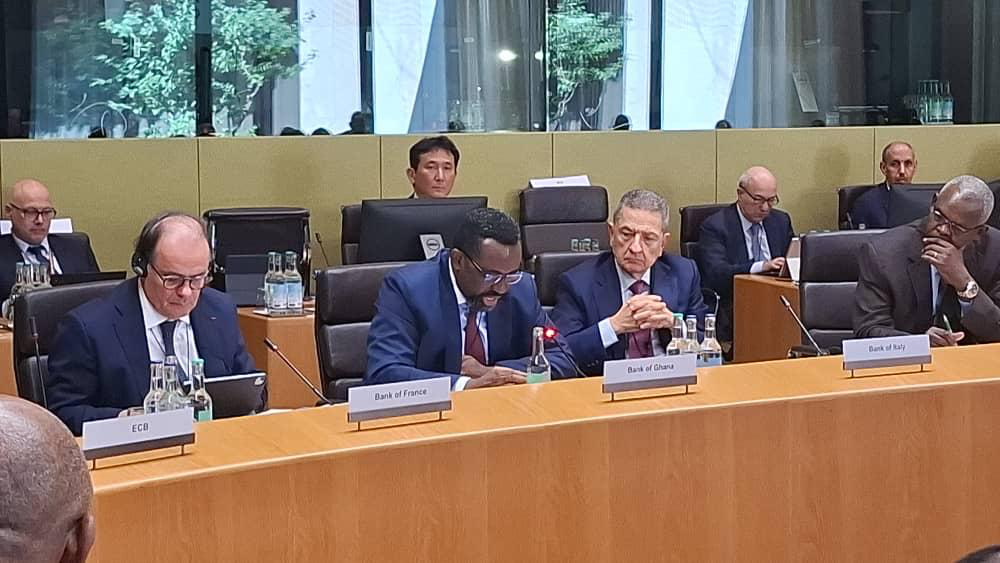
Despite the relief of falling oil prices following the Middle East ceasefire, Ghana’s economic vulnerabilities remain deeply entrenched, warned Bank of Ghana Governor Dr. Johnson Asiama at the Bank for International Settlements Roundtable of Governors in Basel last week.
Speaking against the backdrop of declining crude markets, Asiama cautioned against interpreting the price drop as a signal of economic security. Instead, he framed it as a temporary respite within a landscape of persistent external pressures that continue to threaten Ghana’s hard-won macroeconomic stability.
“The easing of crude oil prices should not create a false sense of security,” Asiama told the gathering of central bank governors. “While lower oil prices offer some relief, the global economy continues to face significant headwinds.”
His assessment identified three primary external risks: tightening global financial conditions, the enduring strength of the US dollar, and unresolved uncertainty in international economic dynamics. For central banks navigating these waters, the prescription was clear yet nuanced: maintain credible policy frameworks while preserving sufficient flexibility to respond as risks evolve.
The Governor’s remarks carry particular weight given Ghana’s recent economic trajectory. Having successfully curbed inflation from a staggering 54% in 2022 to a modest 3.7% in May 2026, the country has recorded a primary fiscal surplus and seen its gross international reserves swell to $14.4 billion. These achievements, Asiama attributed to “careful planning,” prudent economic management, domestic resource mobilization, and structural reforms that have become a model for fiscal discipline in West Africa.
This turnaround represents a remarkable reversal from just a few years ago, when Ghana was grappling with currency depreciation, soaring inflation, and dwindling reserves that necessitated an International Monetary Fund bailout. The current stability has been hard-won through painful adjustments, including subsidy removals, tax increases, and spending cuts that tested the social contract between government and citizens.
Yet beneath these positive indicators lies a strategic shift with potential complications. As external financing has become “more expensive, less predictable and, for some sovereigns, less accessible,” Ghana has increasingly turned to domestic borrowing to fund critical infrastructure. This approach, while reducing exchange rate exposure and diversifying funding sources, simultaneously transfers risk from external to local financial systems.
“What began as a response to tighter external financing is increasingly becoming a strategic policy choice,” Asiama observed. However, he immediately cautioned that “the next phase of reform must therefore focus on building domestic debt markets that are deeper, longer dated and more diversified, so that today’s solution does not become tomorrow’s vulnerability.”
This warning reflects growing concerns among economists about the potential crowding-out effect of government borrowing on private sector credit, particularly in an economy where access to finance remains a constraint for small and medium-sized enterprises. The shift to domestic markets also raises questions about interest rate volatility and the potential for fiscal dominance over monetary policy.
The Governor’s comments also touched on the geopolitical dimension of economic vulnerability, noting that “the recent Middle East conflict demonstrated how quickly external conditions can change things.” This observation serves as a reminder that Ghana’s economic fortunes remain intertwined with global events beyond its control, from commodity price fluctuations to international financial market sentiment.
With the Monetary Policy Committee set to convene from July 20-22 to determine the next policy rate (currently held at 14%), Asiama’s comments arrive at a critical juncture. The decisions made in the coming weeks will need to balance the temptation to ease policy in response to lower oil prices against the necessity of maintaining vigilance toward the complex web of external and internal risks that continue to shape Ghana’s economic destiny.
Internally, the country faces its own set of challenges. While inflation has been tamed, unemployment remains stubbornly high, particularly among youth. The transition to domestic borrowing for infrastructure financing must be accompanied by improvements in public investment efficiency to ensure that borrowed funds translate into productive assets that generate long-term returns. Recent calls for revitalizing industrial initiatives highlight the urgency of creating sustainable employment opportunities [here](/reviving-1d1f-takoradi-mps-plea-to-address-ghanas-youth-unemployment-crisis).
Externally, Ghana’s experience with debt restructuring offers insights for other emerging markets navigating similar waters. The country’s program under the IMF Extended Credit Facility combined traditional fiscal adjustment with innovative approaches to creditor engagement and institutional reform—a combination that Asiama suggested could be adapted elsewhere. Effective infrastructure development, meanwhile, requires not just financing but also rigorous implementation standards, as emphasized in recent directives regarding public works [here](/president-demands-strict-quality-checks-before-road-payments-2).
As Ghana looks toward the second half of 2026, the central bank’s challenge will be to maintain the delicate balance between supporting growth and preserving price stability, all while navigating an international environment characterized by uncertainty and potential volatility. The falling oil price may provide temporary relief, but as Asiama’s warning underscores, true economic resilience requires looking beyond short-term fluctuations to address the structural factors that determine a nation’s ability to withstand external shocks.
Image Source: MYJOYONLINE