NRSA Director-General outlines reforms to reduce road carnage
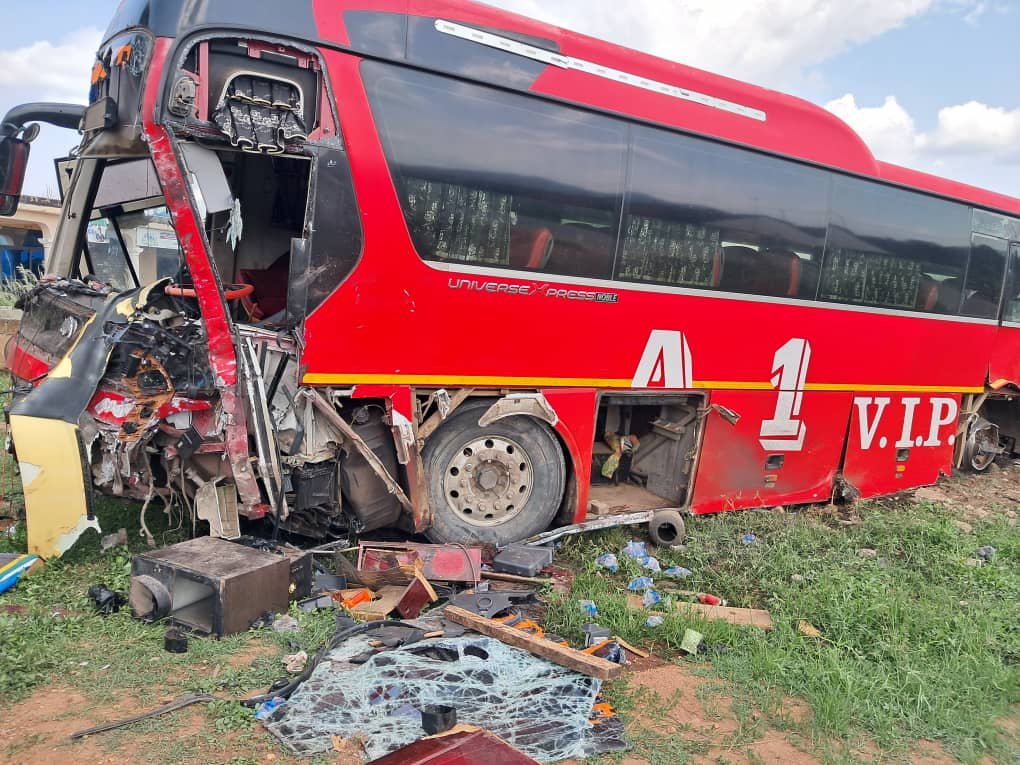
Ghana’s road safety crisis is set to confront a comprehensive reform agenda as the National Road Safety Authority (NRSA) prepares to implement a series of ambitious measures designed to curb the nation’s alarming rate of traffic fatalities and injuries.
NRSA Director-General Abraham Amaliba unveiled the initiative during a courtesy call on the Upper East Regional Minister in Bolgatanga, framing it as a necessary response to what he described as a neglected public health emergency. “We are aware of the rise in fatalities, and the numbers don’t look good. More people are dying through road traffic accidents than what happened during COVID. It appears we are not giving so much attention to road crashes,” Amaliba stated bluntly.
The reform package, slated for rollout beginning in 2027, represents a multifaceted attack on what officials acknowledge has become a severe and growing threat to public safety and economic productivity. Central to the strategy is the deployment of technology to minimize human discretion in traffic law enforcement—a move aimed at reducing corruption and inconsistent application of regulations.
Perhaps the most innovative component is the planned nationwide implementation of the Traffic Tech system, a technology-driven enforcement mechanism designed to replace traditional manual traffic control. Under this system, automated speed cameras will be deployed on roadsides, patrol vehicles, and tripods to detect violations such as overspeeding and running red lights. When an infraction is identified, offenders will receive an immediate text notification accompanied by a three-second video clip documenting the offense, followed by a prompt to pay the applicable penalty.
“We have noticed that stationary vehicles, when they break down, have caused so many accidents and increased the fatality rate. Immediately your car breaks down, you call your insurance company or your towing company to remove it. If that fails, we will remove it and surcharge you. That is a way to reduce the carnage on our roads,” Amaliba explained, describing another cornerstone of the reform: mandatory vehicle towing services mandated through Legislative Instrument (LI) 2519.
This provision will require all motorists to subscribe to either a private towing company or an insurance provider capable of retrieving broken-down vehicles—a measure intended to eliminate abandoned automobiles that pose hazards to other road users and contribute to secondary accidents.
Complementing these technological and regulatory measures, the NRSA plans an intensive six-month nationwide public education and sensitization campaign preceding the full implementation of the new systems. The goal is to ensure public understanding and cooperation with the enhanced enforcement mechanisms.
Innovation in institutional responsibility also features prominently in the reform agenda. Regional Ministers and Metropolitan, Municipal and District Chief Executives (MMDCEs) will be appointed as official Road Safety Ambassadors, creating a chain of accountability that extends from national policy to local implementation. This approach recognizes that effective road safety requires coordination across multiple levels of government.
The Upper East Regional Minister, who received the announcement, endorsed the initiative’s innovative character. “I am happy that you are thinking outside the box and trying to bring in innovations so that we can address the issue,” he stated, pledging the Regional Coordinating Council’s support for implementation while urging influential figures across society to refrain from interfering with traffic law enforcement.
Local officials also raised specific regional concerns that the national strategy must address. The Regional Minister appealed for urgent attention to faulty traffic lights in key municipal centers—Bolgatanga, Navrongo, Sandema, and Bawku—noting that malfunctioning signals significantly contribute to intersection collisions. Additionally, officials highlighted the persistent issue of helmet non-compliance among motorcyclists as a leading cause of fatal head injuries, urging the NRSA to strengthen enforcement provisions related to protective gear.
These localized concerns reflect broader patterns identified by road safety experts: effective injury prevention requires both systemic technological solutions and attention to specific environmental and behavioral risk factors. The NRSA’s approach appears to recognize this duality, combining nationwide technological standardization with mechanisms for local adaptation and accountability.
As Ghana prepares to implement these reforms, the initiative arrives at a critical juncture. Road traffic injuries impose substantial economic costs through lost productivity, healthcare expenditures, and long-term disability—burdens that disproportionately affect vulnerable populations and strain national resources. By targeting both the immediate symptoms and underlying systemic weaknesses in road safety management, the NRSA’s comprehensive strategy offers hope for meaningful reduction in preventable loss of life on Ghana’s roads.
Image Source: MYJOYONLINE