Jubilee House Tackles Corruption Amidst Shifts in Bribery Trends
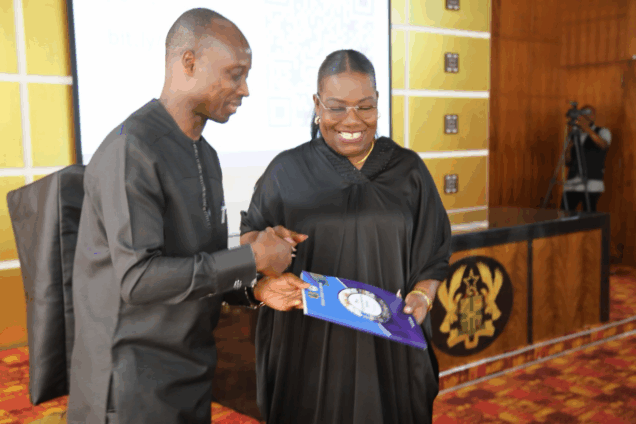
The Jubilee House hosted the Ghana Statistical Service (GSS) on Friday to unveil findings from the Governance Series Wave 2 survey, a crucial examination of bribery, corruption, and public sector accountability within the nation.
Presidential Advisor for the National Anti-Corruption Programme, Professor Francis Dodoo, emphasized the urgent need for enhanced collaboration among institutions to effectively tackle corruption. He stated that convening the session demonstrated a firm commitment to prioritizing the national interest.
The engagement, chaired by Deputy Chief of Staff (Administration), Nana Oye Bampoe Addo, was held as part of the commemoration of African Statistics Day. It drew together high-ranking officials from the Presidency, accountability bodies, civil society organizations, and key state agencies dedicated to bolstering transparency and evidence-based governance.
Nana Oye Bampoe Addo, in her address, highlighted the intensified anti-corruption measures implemented under President John Dramani Mahama. She cited initiatives such as the Operation Recover All Loot (ORAL) platform, more rigorous enforcement of Auditor-General’s reports, strengthened actions by the Public Accounts Committee, and the introduction of the 2025 Code of Conduct for Government Officials.
She further revealed that the Governance Advisory Council Bill, which received Cabinet approval in May 2025 following extensive consultations, has now been submitted to Parliament. “The bill is expected to further strengthen good governance and integrity,” she explained.
Ongoing consultations for the second National Anti-Corruption Action Plan (NACAP II) were also disclosed, with the final draft anticipated to be ready for validation by December 2025. Acknowledging public demands for swifter and more impactful action against corruption, Nana Oye Bampoe Addo asserted that the ongoing reforms are gradually rebuilding confidence in Ghana’s governance and anti-corruption systems.
She commended the GSS for conducting a thorough second wave of the National Anti-Corruption Survey. “The findings offer critical insights into citizen experiences, institutional performance and the structures shaping accountability nationwide,” she said, adding that the data accurately reflects the realities faced by Ghanaians and will serve as a vital guide for policy decisions.
Government Statistician Dr Alhassan Iddrissu, alongside the GSS team, presented evidence detailing citizen experiences and pinpointed areas particularly vulnerable to corruption. They also noted a decline in corruption within certain sectors when comparing the first and second survey waves, suggesting a positive trend towards reduced bribery and improved public sector responsiveness.
The programme concluded with discussions focused on practical reforms, a renewed emphasis on inter-agency cooperation, and the enhancement of reporting mechanisms. The Presidency reaffirmed its dedication to leveraging data-driven insights to strengthen accountability, promising to translate the survey’s findings into tangible reforms aimed at safeguarding the public purse, restoring trust in governance, and fostering sustainable national development.
Image Source: MYJOYONLINE