I advised Ofori-Atta to return home and face charges – Ansa-Asare
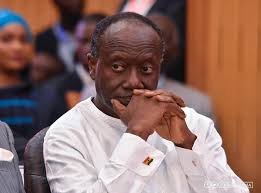
In a recent interview that has reignited public discourse, Kwaku Ansa‑Asare, Dean of the Faculty of Laws at Mountcrest University College, urged former Finance Minister Ken Ofori‑Atta to return to Ghana and confront the legal charges pending against him, warning that avoiding the process risks casting him as a fugitive from justice.
Speaking on a local radio programme, Ansa‑Asare recounted a direct conversation with Ofori‑Atta, during which he emphasized the civic duty to submit to legal proceedings. “I spoke to him on the phone, and I advised him to come home and face the charges, and he shouldn’t render himself as a fugitive of justice,” he stated. The advice, while seemingly straightforward, touches on deeper principles of accountability and the rule of law in Ghana’s democratic framework.
Ansa‑Asare’s counsel is grounded in two primary considerations. First, returning to face the allegations allows Ofori‑Atta to participate fully in his defence, ensuring that the judicial process runs its course without the shadow of evasion. Second, it safeguards his personal and professional reputation by demonstrating a willingness to clear his name through legitimate channels rather than through avoidance. This perspective aligns with the broader expectation that public officials, regardless of their stature, should be subject to the same legal scrutiny as any citizen.
Crucially, the dean reminded listeners of the constitutional presumption of innocence, a cornerstone of Ghana’s legal system. “First of all, our Constitution has enacted the presumption of innocence. So a person is presumed to be innocent until proven guilty,” he quoted, stressing that accusations alone do not establish guilt. This principle, he argued, should guide public perception and prevent prejudgment during ongoing legal processes.
The context of this advice is significant. Ofori‑Atta’s legal challenges have been a subject of intense media scrutiny and public debate. Recent reports indicate that a United States immigration court granted him permanent residency status, a development that has added complexity to discussions about his potential extradition or voluntary return. Despite this, Ansa‑Asare maintained that such immigration benefits do not negate the obligations tied to the charges filed in Ghana.
His remarks echo similar sentiments expressed by other commentators. For instance, private legal practitioner Clement Apaak has also called on Ofori-Atta to return and face the allegations if he has nothing to conceal. Meanwhile, the Office of the Special Prosecutor (OSP) has clarified that the U.S. green card decision does not invalidate the domestic charges, reinforcing the separation between immigration matters and criminal proceedings in Ghana.
The ongoing situation underscores a critical tension in Ghana’s governance: balancing the rights of individuals accused of wrongdoing with the imperative to uphold accountability for public office. As the legal proceedings continue—currently adjourned until July 30, as noted in a recent court update on the criminal trial involving the former finance minister—the advice from figures like Ansa‑Asare serves as a reminder that justice is best served through participation, not evasion.
The episode also highlights the role of civic leaders and academics in shaping public discourse on accountability. By leveraging his platform as a legal educator, Ansa‑Asare contributes to a nuanced conversation that moves beyond partisanship to focus on institutional integrity. Such interventions are vital in a democracy where the line between political allegiance and ethical obligation can often blur.
In recent years, Ghana has witnessed several instances where former officials have been called upon to address allegations ranging from financial mismanagement to corruption. The responses have varied, with some opting to confront the charges head-on, while others have pursued legal avenues to delay or avoid proceedings. The consistency of the message from figures like Ansa‑Asare reinforces a growing expectation that public servants should prioritize transparency and cooperation with investigative bodies, regardless of their political affiliations.
Looking ahead, the resolution of Ofori‑Atta’s case could influence how similar situations are handled in the future. If he chooses to return and engage with the legal process, it may strengthen public trust in the judiciary’s ability to treat high‑profile cases fairly. Conversely, a prolonged absence could fuel perceptions of impunity, undermining efforts to strengthen accountability mechanisms. As the July 30 court date approaches, the decision rests with Ofori‑Atta, but the advice from respected voices like Ansa‑Asare offers a clear path toward upholding the principles of justice and democratic governance.
Image Source: MYJOYONLINE