Governance expert urges state takeover of Tarkwa Mine after Gold Fields lease expires in 2027
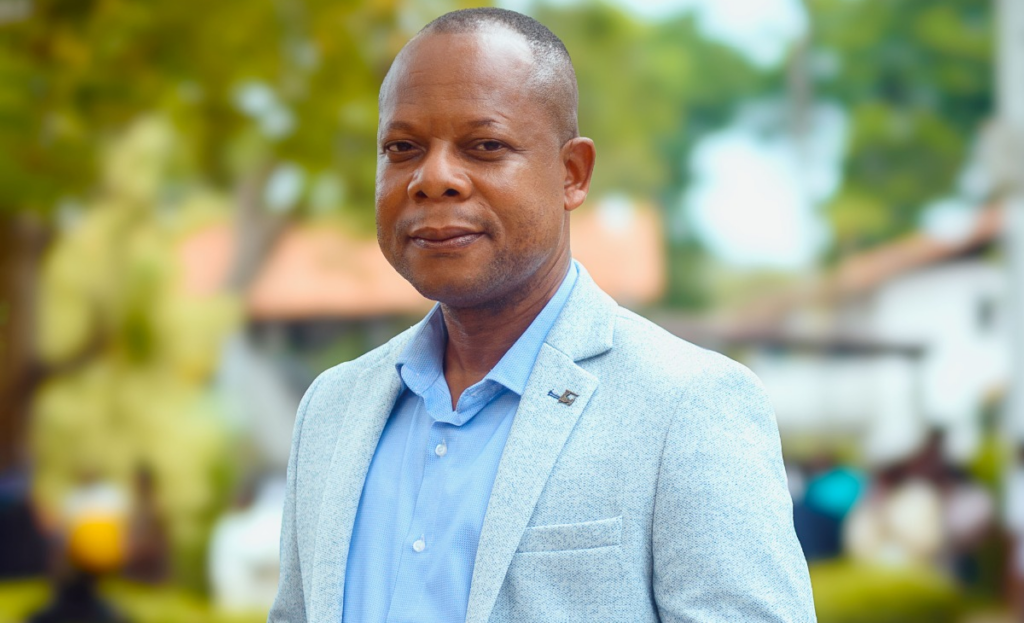
A governance, security and international relations expert has called on the Government of Ghana to assume majority ownership of the Tarkwa Gold Mine when the current lease held by Gold Fields Ghana Limited expires in 2027.
Dr David Agbee, in a formal policy proposal submitted to President John Dramani Mahama and relevant state institutions, argues that the state should take sovereign control of one of Africa’s most productive gold mines rather than renew the mining concession.
The proposal, titled “Sovereign Ownership and State-Led Development of the Tarkwa Gold Fields,” comes as Gold Fields Ghana Limited has formally applied for a 20-year extension of its lease over the Tarkwa concession in the Western Region.
Despite the mine’s significant output — producing between 427,000 and 550,000 troy ounces of gold annually and employing over 7,000 Ghanaians — Dr Agbee contends that the current fiscal arrangement fails to adequately compensate the nation for the depletion of its non-renewable mineral resources.
Under the existing framework, Ghana captures only a five percent royalty on revenue, supplemented by corporate taxes and a minority dividend stake through the Minerals Income Investment Fund (MIIF).
“The fiscal revenues Ghana receives do not adequately compensate the nation for the permanent depletion of its gold reserves. This structural deficit must be decisively corrected,” the proposal states.
Dr Agbee proposes a public-private partnership model in which the Government of Ghana, acting through MIIF or a newly established Ghana Gold Corporation (GGC), would hold a 60 percent equity stake in the mine’s capital assets and infrastructure.
The remaining 40 percent would be made available to qualified Ghanaian investors, pension funds and strategic foreign partners through a competitive bidding process designed to secure operational financing and technical expertise.
State financing for the acquisition would be sourced from the Ghana Heritage Fund (estimated at approximately US$1.376 billion), the Ghana Stabilisation Fund, sovereign bonds backed by projected gold revenues, and concessional financing from international institutions such as the African Development Bank and the International Finance Corporation.
The proposal grounds its legal basis in Article 257(6) of Ghana’s 1992 Constitution, which vests all minerals in their natural state in the President in trust for the people of Ghana, alongside the Minerals and Mining Act, 2006 (Act 703) and the Minerals Income Investment Fund Act, 2018 (Act 978).
“This is not reckless resource nationalism,” Dr Agbee emphasized. “It is a thoughtful, legally sound and commercially structured path to sovereign ownership — one in which Ghana takes its rightful place not as a landlord receiving rent, but as an owner building generational wealth.”
The plan draws inspiration from international models, including Botswana’s majority state ownership in Debswana, Chile’s state-owned mining company CODELCO, and Norway’s management of its oil wealth through Equinor and its sovereign wealth fund.
Dr Agbee also notes that countries such as Zambia and Tanzania have increased state participation in their extractive sectors, positioning Ghana — as Africa’s leading gold producer — to pursue a similar trajectory.
Beyond ownership structure, the proposal includes comprehensive community and environmental safeguards. It calls for the establishment of a mandatory Community Development Fund, ring-fenced at no less than three percent of gross gold revenue, to be governed by a board comprising traditional authorities and community representatives.
Additionally, it recommends a binding Environmental Management and Rehabilitation Plan, developed in collaboration with the Environmental Protection Agency, supported by an independently managed rehabilitation bond to ensure funding for mine closure and environmental restoration.
“This structural injustice is not merely a moral failure. It constitutes a political risk, a source of community unrest and a long-term threat to the social licence to mine. Any successor arrangement must reverse this historic inequity,” the document asserts.
The proposal outlines a three-phase transition plan spanning 2026 to 2028. The initial phase would focus on forming a High-Level Tarkwa Transition Committee under the Office of the President and enacting enabling legislation.
The second phase would center on asset acquisition, investor onboarding and ensuring a seamless operational handover without interrupting production.
The final phase would see the full operationalisation of the Ghana Gold Corporation and the commencement of Community Development Fund disbursements from 2028 onwards.
Dr Agbee has further advised that Ghana retain independent international legal counsel specializing in mining law and investor-state disputes before issuing any formal notice to Gold Fields regarding the lease expiration.
Describing the impending expiry of the mining lease as a “generational moment,” he urged the Presidency and Parliament to act with urgency.
“Ghana has the constitutional mandate, the legal instruments, the institutional capacity through MIIF and the Minerals Commission, and the moral authority rooted in decades of unfulfilled promises to Tarkwa communities to act decisively. The time to act is now,” he concluded.
Image Source: MYJOYONLINE