Geophagic Clay Sold in Kumasi Markets Found to Contain Dangerously High Lead Levels
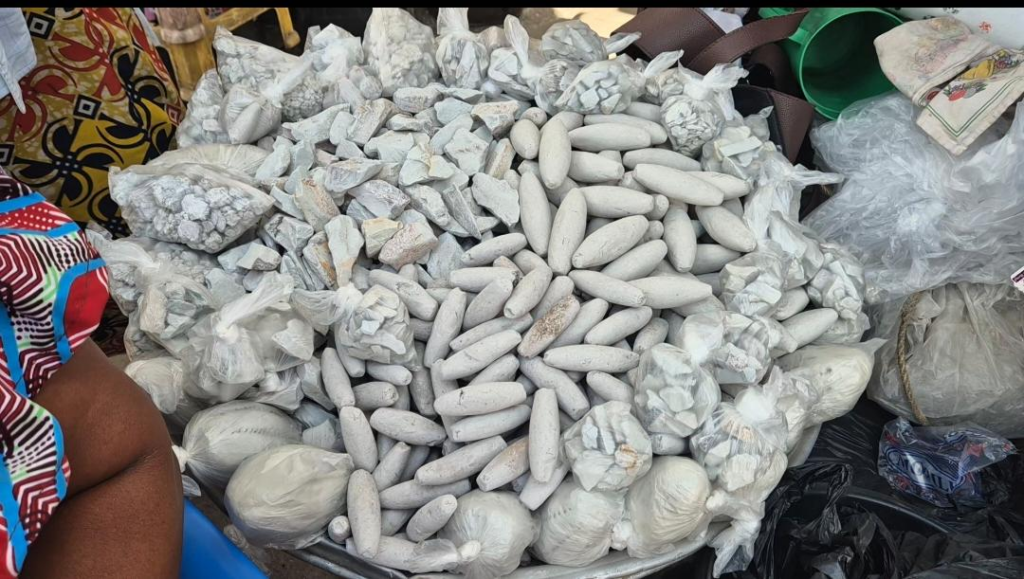
A scientific study has revealed that geophagic clay products sold across major markets in Kumasi contain lead concentrations nearly 60 times higher than international safety limits, raising urgent public health concerns about a practice widely observed among pregnant women in Ghana.
The research, conducted by Dr Albert Kobina Mensah and his team at the Soil Research Institute of the Council for Scientific and Industrial Research (CSIR-SRI) and published in the Journal of Chemistry, examined 40 baked, ready-to-eat samples of the clay — locally known as “Shire” or “Ayilor” — collected from eight markets across the Kumasi Metropolis, including Abuakwa, Asafo, Bantama, Central Market, Edwenease, Krofrom, Kwadaso and Tanoso.
The findings were alarming. Total lead concentration in the samples measured 17.7mg per kilogram — nearly 60 times the safety limit of 0.3mg/kg set by the Food and Agriculture Organisation (FAO) and the World Health Organisation (WHO). Elevated levels of cadmium, iron, copper, arsenic, nickel, zinc and manganese were also detected.
Geophagy, the deliberate consumption of soil or clay, remains a common cultural practice in Ghana. Pregnant women who consume the clay cite reasons including the alleviation of nausea, throat irritation and heart discomfort during pregnancy. Dr Mensah suggested that the clay’s high iron content may partly explain the craving. “Women who are pregnant lose a lot of blood, so when they eat it, the iron replenishes the haemoglobin and also increases the red blood cells,” he explained.
However, the toxic elements present in the clay far outweigh any nutritional benefit. “Even though you’re eating to get iron, you’re getting arsenic too,” Dr Mensah cautioned. “The disadvantages will overshadow the advantages. The point is not about the elements that matter but the ones that don’t.”
The health implications of prolonged consumption are severe. “Clay-Pb-rich soil can cause serious issues with the kidneys, liver, and heart,” the research warned, noting that exposure to lead — even at low levels — presents a significant cancer risk. The researchers described cadmium, arsenic, mercury and lead as carcinogenic elements that “the body does not need in any form.”
The study’s authors are calling for public education campaigns targeting pregnant women and further investigation into the origins of the clay sold on Ghanaian markets. “Government and health organisations should initiate educational campaigns to inform communities, especially pregnant women, of the potential impact of this practice,” the researchers recommended. “Further research is also needed to ascertain the various origins of this. The research must go beyond the market and see the source where it came from.”
The findings add to a growing body of evidence questioning the safety of geophagic practices across West Africa and highlight the need for regulatory oversight of a product that is widely sold and consumed without any form of quality control.
Image Source: MYJOYONLINE