Rafael Nadal Opens Up About a Career Defined by Pain, Passion and 22 Grand Slam Titles
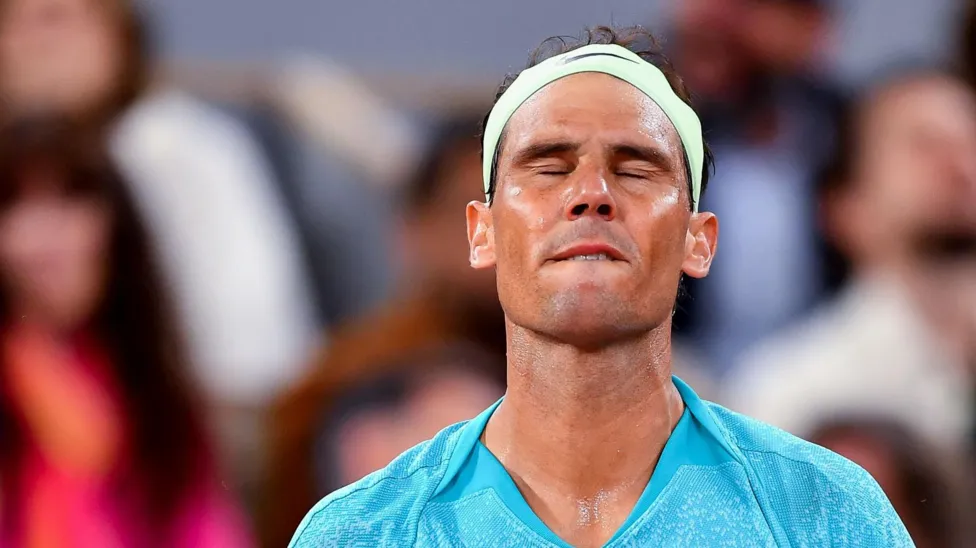
Rafael Nadal’s career was one of the most extraordinary in the history of professional sport — and also one of the most painful. In a revealing new Netflix series, the retired Spanish tennis great has spoken candidly about the physical toll that accompanied his 22 Grand Slam singles titles, the second-highest total ever achieved by a male player.
Between his first French Open victory in 2005 and his retirement in 2024, Nadal competed as part of the celebrated “Big Three” alongside Roger Federer and Novak Djokovic. Yet behind the trophies and the triumphant celebrations lay a story of chronic injury, dangerous medical decisions and psychological anguish.
The root of Nadal’s suffering was a rare degenerative condition called Mueller-Weiss syndrome, diagnosed after he broke his left foot during his Madrid Open final victory in 2005 — the same year he burst onto the scene by winning the French Open at his first attempt, aged 19. The condition, caused by what specialist Dr Ernesto Maceira described as “abnormal forces that act on an immature bone,” was attributed to Nadal’s intense childhood training under his uncle Toni.
“I had to stay over-positive, over-determined, always ready to try to find a solution to keep being competitive,” Nadal told the BBC World Service’s Sporting Witness programme. “The key was that the suffering was less than my passion and my happiness for what I was doing.”
A specialist insole allowed Nadal to continue competing, but it came at a devastating cost. The altered biomechanics destroyed his left knee — “the tendon basically had a hole in it,” he recalled — and the heavy reliance on anti-inflammatories to manage pain caused intestinal damage. “I have two small perforations in my intestines,” Nadal revealed, “that can come from too many painkillers.”
At the 2022 French Open, Nadal asked a doctor to put the sensory nerve in his foot to sleep with targeted anaesthetic injections. He had no feeling in his foot — and won a record 14th Roland Garros title. “He doesn’t feel his foot, and he’s winning this?” marvelled seven-time Grand Slam champion John McEnroe. “What are you going to tell me next? He’s going to play blindfolded, and he’s going to win it, too?”
The Netflix series also sheds light on Nadal’s psychological struggles. The relentless pressure of elite competition led to compulsive behaviour so severe that he sought professional psychiatric help. “If I didn’t have a bottle of water in my hand, I couldn’t swallow, and I would choke on my own saliva,” he disclosed. “I knew it was anxiety, but I couldn’t find a solution.”
That process eventually led Nadal to add former Spanish world number one Carlos Moya to his coaching team in 2016, a decision that contributed to his uncle Toni’s departure. “Maybe I needed my head to hear a different message,” Nadal explained. The change proved transformative: between 2017 and his retirement, Nadal won eight further Grand Slam titles.
“I lived the last years of my career with a little more sense of freedom,” he said.
Nadal’s willingness to endure such extremes raises uncomfortable questions about the price of sporting greatness — and whether the systems around elite athletes do enough to protect them from themselves. His 22 Grand Slams stand as a monument to determination. They also stand as a warning.
Image Source: MYJOYONLINE