At 24, Ewurabena Quartey Is Redefining What It Means to Be a Funeral Undertaker in Ghana's Central Region
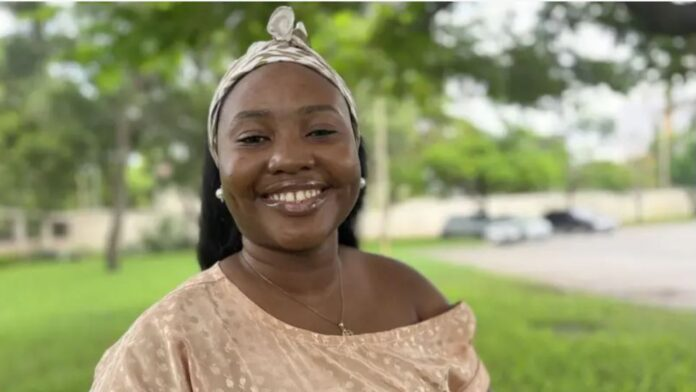
At 24 years old, Ewurabena Quartey has spent seven years doing work that most Ghanaians would not consider, let alone pursue as a vocation. She is the youngest funeral undertaker in the Central Region — a mortician, a hearse driver, and a woman who has chosen to build her life around the quiet, demanding rituals of preparing the dead for their final journey.
Her bedroom sits just seven steps from the mortuary where she works. It is a proximity that would unsettle many, but for Quartey, it is simply the geography of her daily reality.
“People die at any time. When they do, families are often too afraid to keep the body at home until morning,” she explains. “So around midnight or 2am, someone can knock on your door to say they have brought a body.”
A Career Born From Purpose, Not Circumstance
Quartey studied Hospitality Management at the tertiary level, but found her calling in the funeral industry while still a teenager. Over seven years, she has built expertise in body preparation, preservation, and the delicate art of helping grieving families navigate one of life’s most difficult moments.
Her mission, she says, is straightforward: helping families give their loved ones a dignified farewell. It is work that demands technical skill, emotional resilience, and a willingness to confront what most people spend their lives avoiding.
“Sometimes people arrive with their eyes open because their families were too afraid to close them. Others come with their mouths still open. That is the scary part,” Quartey says. “Apart from that, you do not really see anything disturbing.”
Challenging Stigma, One Shift at a Time
The challenges Quartey faces extend well beyond the physical demands of her profession. Societal stigma is a constant companion. People express surprise that she is educated, that she speaks fluent English, that she dresses well. Friends of hers face scrutiny for associating with someone who works in a mortuary.
“You can be a mortician and smell nice. You can be a mortician and speak good English,” she says with quiet defiance. “People think those of us who work in the mortuary have no right to dress well or present ourselves properly. But we have every right to do everything that everyone else does.”
The stigma extends to her personal life. “Sometimes when someone asks if I am in a relationship and I say yes, the reaction suggests they feel I have no right to have one,” she reveals.
Rituals of Respect
Quartey approaches her work with a deep sense of reverence for the dead. She follows practices rooted in respect — knocking before entering a room where a body lies, offering apologies if she accidentally steps on or mishandles a body during washing or turning.
“Respect extends beyond knocking,” she explains. “If you step on them, say sorry. If you make a mistake while bathing or turning, say sorry.”
She believes in the existence of ghosts, though she says she has never encountered one. “Sometimes you go to pick up a body and transport it somewhere, find no place to sleep, so you sleep in the car. You will not see any ghosts,” she says. “I believe they exist but have never seen one. I sleep well, wake well, nothing happens to me.”
An Unpredictable Livelihood
The financial realities of funeral undertaking are as unpredictable as death itself. Business fluctuates wildly — good weeks bring more than five bodies, while quiet stretches can see an entire month pass without a single case. It is a rhythm that demands financial discipline and patience.
Yet Quartey remains committed. In a society where young women are often channelled into a narrow set of career paths, she has carved out a space that is entirely her own — one that combines technical skill, compassion, and an unflinching willingness to sit with mortality.
Her story is a reminder that purpose does not always arrive in conventional packaging. Sometimes, it knocks on your door at 2am.
Image Source: MYJOYONLINE