Benin Coup Plot Leader Hides in Togo
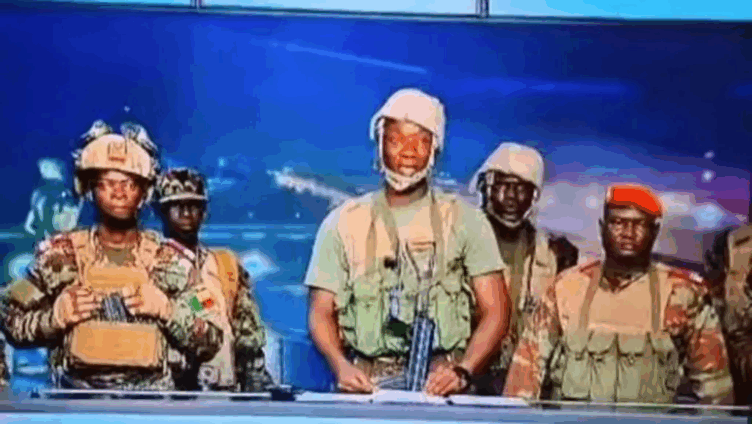
Benin’s government is seeking the extradition of Lt Col Pascal Tigri, the alleged leader of Sunday’s failed coup, as it emerged he has taken refuge in neighbouring Togo.
A senior government official, speaking anonymously to the BBC, revealed that authorities know Tigri is in Lomé, the Togolese capital, and near the residence of President Faure Gnassingbé. “We don’t know how to explain this but we will make an official extradition request and see how the Togolese authorities will react,” the official stated.
The attempted overthrow of President Patrice Talon’s government was swiftly thwarted following a request for intervention from Benin to regional power, Nigeria. Nigerian fighter jets were deployed to dismantle the mutineers at a military base and state television offices.
The crisis unfolded on Sunday when soldiers announced a seizure of power on national television, sparking gunfire near the presidential palace. The Beninese government maintains the coup attempt was carried out by a small group within the National Guard – a relatively new unit focused on combating terrorism and bolstered with recent investments.
“The National Guard is a recent creation within our army, initiated by President Talon as part of our fight against terrorism. It is a land forces unit equipped with significant resources, following major investments in recent years, and its personnel are well trained,” government spokesman Wilfried Léandre Houngbédji explained to the BBC.
According to Houngbédji, President Talon authorized Ecowas to conduct airstrikes to prevent an attack on Cotonou’s airport, a crucial infrastructure point. “This led to the strategy of carrying out targeted airstrikes to immobilise their equipment, including the armored vehicles they threatened to use,” he added.
The rebel soldiers cited concerns over the deteriorating security situation in northern Benin, where the army has faced losses against jihadist groups linked to Islamic State and al-Qaeda spreading from Niger and Burkina Faso. Their statement also highlighted grievances over the neglect of fallen soldiers and their families, as well as cuts to healthcare services – including kidney dialysis – and increased taxes.
The attempted coup adds to a growing wave of instability in West Africa, following recent military takeovers in Guinea-Bissau, Burkina Faso, Guinea, Mali and Niger. Regional bloc Ecowas has strongly condemned the coup attempt in Benin and has deployed troops from Nigeria, Ghana, Sierra Leone, and Ivory Coast to reinforce security at key locations within the country.
This deployment signals a firm stance from Ecowas against further interference in democratic governance. Nigeria described the incident as a “direct assault on democracy.”
While initial reports indicated French special forces assisted in quashing the rebellion, Houngbédji clarified to the BBC that France’s support primarily consisted of intelligence gathering. Dieudonne Djimon Tevoedjre, head of Benin’s Republican Guard, had stated that “French special forces were sent from Abidjan, used for mopping up operations after the Beninese army had done the job.”
The failed coup comes ahead of Benin’s presidential elections scheduled for April, where President Talon, who has endorsed Finance Minister Romuald Wadagni as his successor, is expected to step down after completing his second term. The opposition faced setbacks in October when its main candidate was barred from running by the electoral commission.
Meanwhile, pro-Russian social media accounts reportedly celebrated the news of the coup attempt, according to BBC Monitoring, reflecting a broader trend of Russian influence in the Sahel region. Burkina Faso, Mali and Niger, having recently exited Ecowas, have formed the Alliance of Sahel States.
Image Source: MYJOYONLINE