Ghanaian students abroad to hold global forum on national development
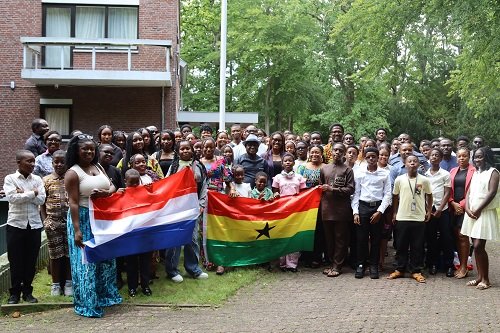
Ghanaian students pursuing higher education across the globe are set to convene virtually for the inaugural Ghana Diaspora Students Forum (GDSF), an initiative aimed at channeling their collective expertise and networks toward the nation’s development agenda.
Organized by the National Union of Ghana Students (NUGS) chapters in Germany, the United Kingdom and China, the forum, themed “Pathways, Ecosystems and Diaspora as Development,” will serve as a platform for dialogue on academic mobility, career prospects, research collaboration, entrepreneurship and the strategic role of Ghanaian scholars abroad in shaping the country’s future.
A joint statement issued by the organizing NUGS bodies and shared with the Ghana News Agency emphasized that the forum would move beyond the traditional focus on remittances to position the diaspora as active partners in national progress. “By bringing students, alumni, government, industry, research institutions and civil society into a single room, the forum treats the diaspora not as a resource to be tapped but as a partner in shaping national outcomes,” the statement read.
The event is slated to feature a keynote address by Kofi Okyere-Darko, Director of the Diaspora Affairs Office at the Office of the President, who will outline Ghana’s policy priorities and the anticipated contributions of students and young graduates abroad. “Our diaspora represents one of the country’s most educated and globally connected constituencies, yet discussions about its contribution have largely centered on remittances,” said Simeon Mede, the General Secretary of NUGS Germany. “The GDSF is designed to shift that framing.”
Additional speakers include Raymond Høptner, a member of the State Parliament of Rhineland-Palatinate in Germany, and Pastor Daniel Amoateng, founder of the Young Professionals Business Network (YPBN).
A panel discussion, moderated by broadcast journalist Kwaku Asante, will bring together experts from academia, research institutions, industry and student leadership to examine student leadership, international collaboration, technical and vocational education, and industry-university partnerships. The panel aims to dissect how international education can be transformed into sustainable development outcomes for Ghana.
Organizers anticipate that the forum will yield a communiqué containing actionable recommendations for policymakers, educational institutions, student associations and development partners. They hope the GDSF will become an annual fixture, fostering stronger collaboration among Ghanaian student unions worldwide and establishing a sustained channel for engagement and policy dialogue.
“We are not just looking for a one-off event,” Mede added. “Our vision is to create a recurring platform where the diaspora can continually contribute to Ghana’s development trajectory.”
The forum comes at a time when Ghana is seeking to leverage its human capital abroad to drive innovation and economic growth. With thousands of Ghanaian students enrolled in universities across Europe, Asia and the Americas, the potential for knowledge transfer and investment is significant.
However, challenges remain, including the brain drain phenomenon and the need for effective policies to retain talent or encourage return migration. The GDSF aims to address these issues by fostering a sense of belonging and investment in the homeland among the diaspora youth.
Recent data from the Ghana Immigration Service indicates that over 15,000 Ghanaian students were pursuing tertiary education abroad in 2025, with the United Kingdom, United States and Germany hosting the largest cohorts. The forum seeks to harness this intellectual capital, which has often been overlooked in national development strategies that prioritize natural resource extraction.
By focusing on the diaspora’s intellectual and social capital, the GDSF aligns with Ghana’s broader ambition to transition toward a knowledge-based economy. The initiative also complements government efforts to strengthen ties with the diaspora through institutions like the Diaspora Affairs Office.
As the nation grapples with economic challenges and seeks sustainable development pathways, the engagement of its global student community represents a promising avenue for innovation and inclusive growth. The GDSF marks a step toward recognizing and mobilizing this vital segment of Ghana’s human capital.
The National Union of Ghana Students, with its international chapters, has been at the forefront of advocating for student welfare and national development. By organizing the GDSF, NUGS Germany, UK and China are extending their mandate to include diaspora engagement as a core component of their mission.
Forum organizers have partnered with various Ghanaian institutions, including the Office of the President and select universities, to ensure the discussions are grounded in the country’s developmental needs. The event is also supported by several corporate sponsors who recognize the value of investing in the next generation of Ghanaian leaders.
In the lead-up to the forum, a series of webinars and workshops have been held to prepare participants and generate interest among the diaspora community. Registration for the virtual event is open to all Ghanaian students and recent graduates abroad, with organizers expecting several hundred attendees.
Image Source: MYJOYONLINE