Ghana's World Cup Dream Ends as Arias Fires Colombia into Last 16
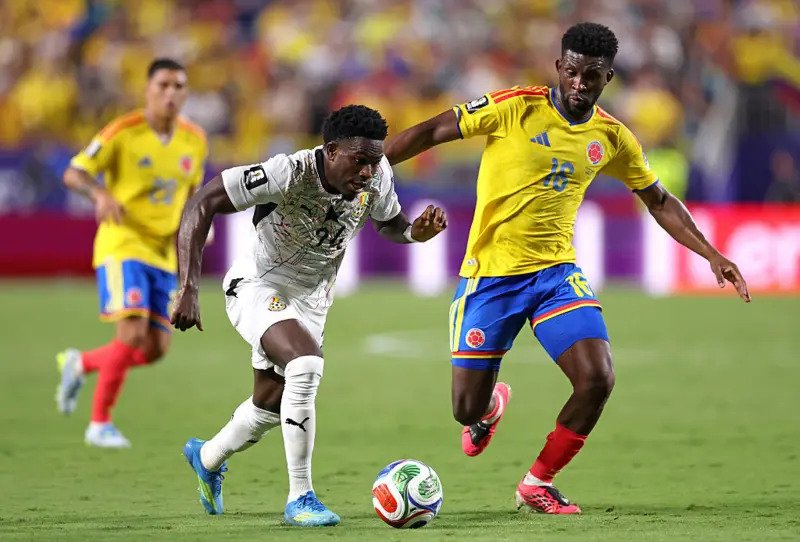
Ghana’s 2026 FIFA World Cup campaign came to an end in the Round of 32 with a 1-0 defeat to Colombia, as an early goal from Jhon Arias proved sufficient for the South Americans to advance.
The Black Stars, who had entered the tournament with aspirations of making a deep run, began the match with intent. In the opening minutes, Thomas Partey unleashed a powerful long-range effort that tested the Colombian goalkeeper, though the shot drifted narrowly wide of the target.
However, the game’s complexion changed early when Colombia were forced to make an adjustment after striker Jhon Córdoba succumbed to a groin injury, paving the way for Luis Suárez to enter the fray. Shortly thereafter, Ghana suffered a blow of their own as right-back Marvin Senaya, who had initially attempted to play through a hamstring issue, was replaced by Alidu Seidu before the quarter-hour mark.
The turning point arrived just moments after Suárez’s introduction. The Colombian forward delivered a pinpoint cross from the left flank to an unmarked Jhon Arias, who calmly side-footed the ball into the back post in the 14th minute to give his side the lead.
The goal shifted the momentum firmly in Colombia’s favor as they controlled large spells of the first half, while Ghana struggled to carve out clear-cut opportunities. Lawrence Ati Zigi, Ghana’s goalkeeper, kept his side in the contest with an outstanding save just before halftime, pushing away a powerful header from Johan Mojica that threatened to double the visitors’ advantage.
The second half began with Ghana seeking to regain control, but their efforts were repeatedly thwarted by a disciplined Colombian defensive setup. Antoine Semenyo produced the Black Stars’ best attacking moment of the period, bursting into a dangerous position on the left and driving a low cross across the face of goal, only to find no teammate in position to apply the finishing touch.
Colombia, meanwhile, continued to threaten on the break. Luis Díaz thought he had doubled the lead shortly after the restart, only for the offside flag to deny him. Moments later, the winger found himself through again, this time legally, but Lawrence Ati Zigi produced another important save to preserve Ghana’s hopes.
With time running out, head coach Otto Addo looked to inject fresh energy into his side. Elisha Owusu and Abdul Fatawu replaced Kwasi Sibo and Inaki Williams midway through the second half before Ernest Nuamah and Prince Adu were introduced in another attacking reshuffle.
Despite the changes, the Black Stars were unable to break down a well-organized Colombian defense. The South Americans continued to create chances of their own, with Davinson Sánchez heading tamely at Ati Zigi from a corner before substitute Juan Quintero came close with a long-range strike that flashed just wide of the post.
As the clock ticked down, Ghana pushed forward in search of a late equaliser but struggled to trouble Colombia’s goalkeeper Camilo Vargas throughout the contest. The Black Stars’ final forays lacked the cutting edge needed to breach the visitors’ backline.
In the end, Arias’ first-half strike proved decisive as Colombia secured a narrow victory to progress to the last 16, where they will face Switzerland. Ghana’s World Cup journey concludes with a single goal scored in the tournament, leaving the Black Stars to reflect on a campaign that fell short of expectations and prompting questions about the team’s readiness for the highest stage.
The result underscores the fine margins that often determine success or failure in World Cup knockout matches, as a single moment of individual brilliance from Arias was enough to separate two evenly matched sides.
For Ghana, the exit raises concerns about the team’s ability to perform under pressure in major tournaments. The Black Stars have a storied history in African football, having reached the quarter-finals in 2010, but have struggled to replicate that success in recent World Cup appearances. The tactical adjustments made by Coach Addo during the match demonstrated a willingness to adapt, but the lack of a cutting edge in front of goal ultimately proved costly.
Looking ahead, Ghana will need to address issues of consistency and finishing if they hope to compete with the elite nations on the world stage. The experience gained from this tournament, however painful, will be invaluable for the next generation of players as they prepare for future campaigns.
The disappointment was palpable among Ghanaian fans, who had turned out in numbers to support their team. As the final whistle blew, the reality of an early exit sank in, prompting soul-searching about the direction of the national team program.
For African football as a whole, the result serves as a reminder of the challenges faced by continental teams in navigating the complex and highly competitive World Cup arena. While individual brilliance can decide matches, sustained success requires collective strength, tactical flexibility, and mental resilience — areas where Ghana will need to improve if they are to realize their ambitions on the global stage.
Image Source: MYJOYONLINE