Flood Prevention in Accra Requires Accountability, Waste Management, and Public Education

The recent floods in Accra have laid bare a fundamental truth: preventing floods is not merely about heavy rainfall but about good planning, effective waste management, and consistent enforcement of the law.
Writing in his capacity as a Health and Safety Professional, Edward Debrah argues that reducing future flooding requires focus on four key actions:
First, decision-makers must be held accountable for approving developments in flood-prone or unauthorised areas. Unchecked construction in wetlands, waterways, and other sensitive areas exacerbates flooding by removing natural drainage and absorption capacity.
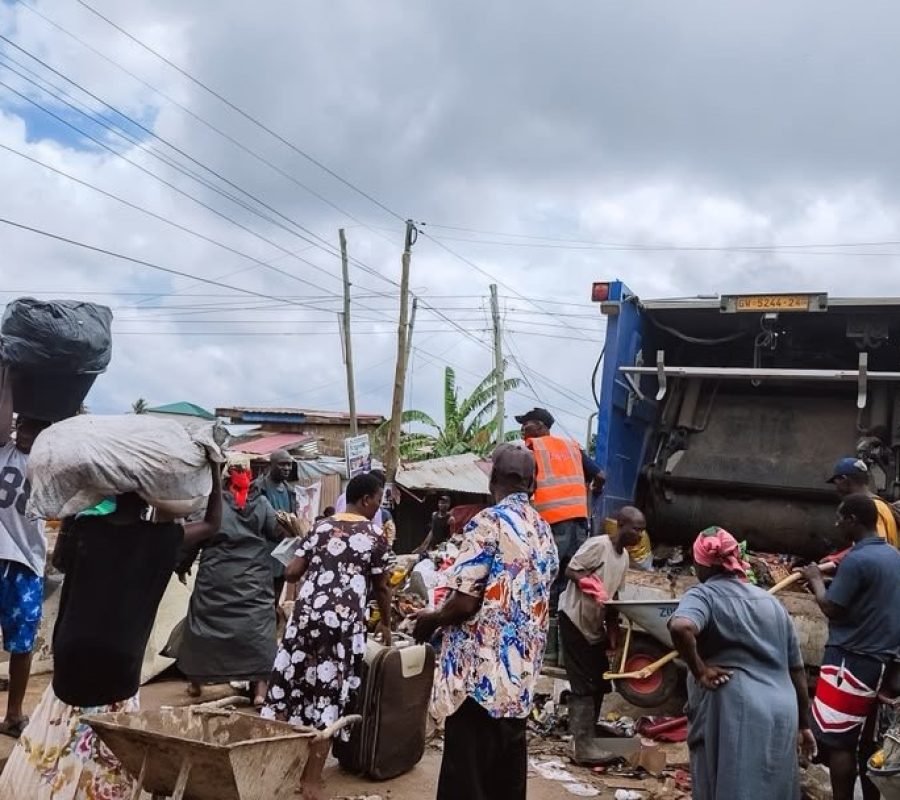
Second, waste management must be improved by placing bins and skips in accessible locations and ensuring they are emptied regularly to prevent drains from becoming blocked. Plastic waste, sachets, and other debris routinely choke Accra’s drainage systems, turning manageable rains into devastating floods.
Third, drains must be kept clear through routine desilting, and planning and environmental laws must be enforced consistently and fairly. This includes removing illegal structures from waterways and sanctioning those who dump refuse in gutters.
Fourth, the public must be educated through nationwide flood and waste management campaigns delivered in Ghana’s major written and taught languages. Communities need to understand how their actions contribute to flood risk and what they can do to mitigate it.
“Flood prevention is a shared responsibility,” Debrah writes. “With stronger governance, cleaner communities, regular maintenance, and informed citizens, Ghana can build more resilient cities while protecting lives, property, and the environment.”
His analysis moves beyond the simplistic narrative of rain versus infrastructure, highlighting how human decisions—where we build, how we dispose of waste, whether we enforce existing laws—amplify or mitigate natural hazards. The June 2026 floods that claimed nine lives and displaced hundreds were not merely acts of nature but the culmination of years of neglected planning, poor waste practices, and uneven law enforcement.
The path forward requires coordinated action across sectors. Metropolitan assemblies must enforce zoning regulations. Waste management authorities need resources and logistics to maintain clean drainage systems. Traditional leaders and community groups can mobilise local efforts to keep waterways clear. And national campaigns must shift public behaviour from indiscriminate dumping to responsible waste disposal.
As climate change increases the frequency and intensity of extreme rainfall events, Accra’s vulnerability will only grow without systemic change. The solutions are known; what’s needed is the political will and societal commitment to implement them.
Image Source: MYJOYONLINE