Sahel Extremist Groups Advance Toward Ghana, CDS Warns of Growing Security Threat
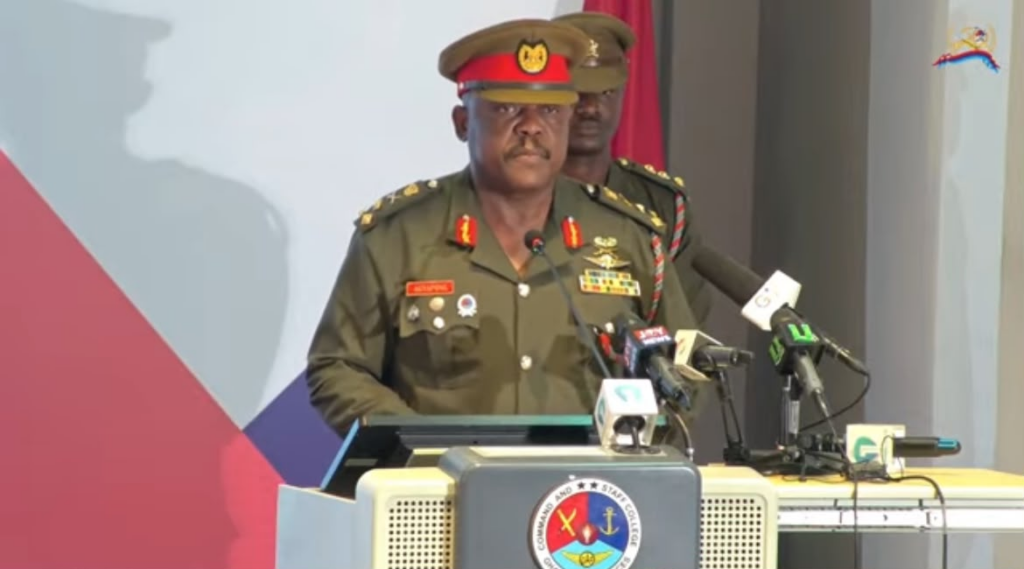
The Chief of Defence Staff, Lt. Gen. William Agyapong, has issued a stark warning: violent extremist groups operating in the Sahel region have extended their influence into northern West Africa and are now probing further south toward Ghana, raising serious security concerns for the country’s northern frontier.
Speaking on behalf of the Deputy Defence Minister at the 50th Anniversary Republic Day Public Lecture held at the Ghana Armed Forces Command and Staff College in Teshie, Lt. Gen. Agyapong described the regional security environment as having changed “dramatically,” demanding urgent and coordinated responses from Ghana and its partners.
“They have already penetrated the northern belt of our neighbours to the north and are probing further south. Indeed, some of our compatriots have fallen victim,” he said, referencing recent attacks in the sub-region, including the killing of Ghanaian traders in Titao.
The CDS also raised alarm over growing maritime insecurity in the Gulf of Guinea, stating that criminal networks operating at sea are increasingly linked to broader transnational organised crime systems that overlap with extremist financing and logistics. He cited incidents of robbery at sea, including attacks on fishermen where outboard motors are stolen and victims left stranded, describing this as a serious threat to Ghana’s blue economy and coastal livelihoods.
Ghana, he stressed, is geographically positioned between two converging security threats — violent extremism from the Sahel to the north and maritime crime in the Gulf to the south — a reality that must be treated as a “planning priority” rather than an alarmist claim.
“This is not an alarmist observation. It is a planning reality that requires our full attention,” he cautioned.
The CDS disclosed that the government is undertaking significant retooling of the Ghana Armed Forces as part of broader efforts to strengthen border security, maritime surveillance and overall operational readiness. He further urged policymakers, security experts and academia to deepen collaboration, stressing that Ghana’s security outcomes will depend on the quality of strategic thinking produced in forums such as the Command and Staff College.
Lt. Gen. Agyapong also used the occasion to call on military officers in training to develop not only tactical competence but also strategic and ethical clarity, noting that modern threats often exploit governance gaps, community grievances and ungoverned spaces rather than conventional battlefield confrontations.
He concluded by highlighting the Command and Staff College’s 50-year legacy of producing senior military leaders across Africa, saying the institution must evolve further to anticipate and shape emerging security threats, not merely respond to them.
Image Source: MYJOYONLINE