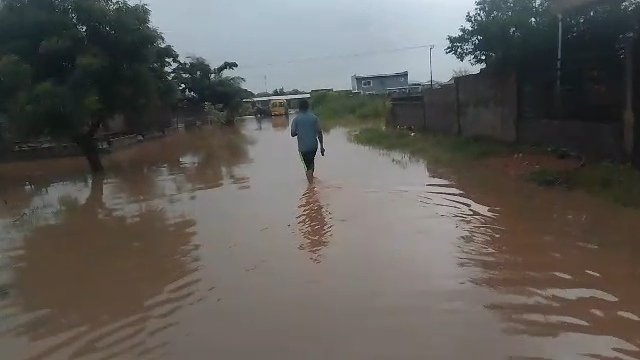
Torrential rains on Monday, June 29, 2026, have left several communities within the Dawhenya Township heavily flooded, displacing some residents and trapping others in their homes. The flooding has exposed severe infrastructure deficits and raised urgent calls for long-term solutions to prevent recurring disasters.
Mr Moses Kutor, the Assembly Member for North Dawhenya, told the Ghana News Agency (GNA) that he, together with officials of the National Disaster Management Organisation (NADMO), had been on the ground since 0330 hours monitoring the situation and coordinating rescue efforts. He described the flooding as severe and called for urgent structural interventions to prevent recurring disasters.
The devastation has affected several communities across the area, including the Miotso enclave, Adote, and the Dawhenya Township itself. Rescue operations were concentrated around the Lighthouse enclave, where emergency teams worked to rescue residents trapped in their rooms by rising floodwaters.
Mr Kutor emphasized that while the rainfall was intense, human activities had significantly worsened the flooding. He pointed out that the construction of buildings on natural waterways has obstructed natural drainage, and cautioned residents against disposing of refuse into drains and waterways during rainfall, noting that such practices contribute to blockages and exacerbate flooding.
He highlighted the area’s infrastructure deficit, explaining that many affected communities lack engineered drainage systems, causing stormwater to flow directly onto roads and residential areas. This absence of proper drainage infrastructure turns heavy rainfall into a destructive force that inundates homes and disrupts daily life.
Mr Kutor advised residents living in flood-prone communities to prioritize their safety whenever heavy rains occur, stating: ‘If you find yourself or your structure on a waterway, you shouldn’t stay in the room when it rains. You should vacate the place.’ He pledged to continue engaging the Ningo-Prampram District Assembly and other relevant authorities to advocate for the construction of proper drainage systems to mitigate future flooding.
The situation in Dawhenya reflects a broader challenge facing many peri-urban and rural communities in Ghana, where rapid development often outpaces the provision of essential infrastructure. Without significant investment in drainage systems and enforcement of regulations against building on waterways, flood disasters will continue to displace residents and cause property damage.
As climate change intensifies rainfall patterns, the need for resilient infrastructure becomes increasingly critical. The floods in Dawhenya serve as a wake-up call for authorities to prioritize sustainable urban planning and invest in drainage systems that can withstand extreme weather events, protecting lives and livelihoods in vulnerable communities.
Image Source: GHANA BUSINESS NEWS