UTAG-UCC rejects GTEC promotion harmonisation plan, cites threats to university autonomy
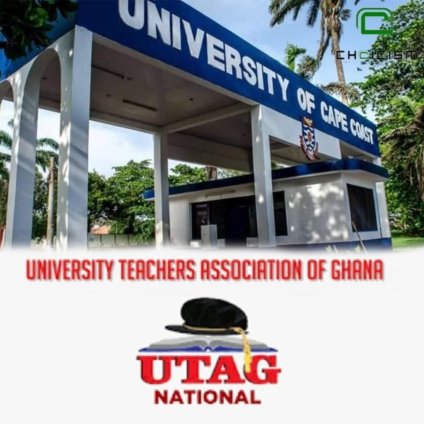
The University Teachers Association of Ghana’s University of Cape Coast branch (UTAG-UCC) has formally repudiated a proposed policy by the Ghana Tertiary Education Commission (GTEC) seeking to establish uniform promotion guidelines for academic staff throughout Ghana’s public university system, condemning the measure as an unlawful overreach that imperils the foundational principle of institutional autonomy.
In a meticulously reasoned statement issued on June 29, 2026, UTAG-UCC asserted that the GTEC harmonization initiative operates well beyond the scope of authority conferred upon the commission by the Education Regulatory Bodies Act, 2020 (Act 1023). This statutory framework expressly circumscribes GTEC’s mandate to the regulation of academic standards, the facilitation of quality assurance mechanisms, the coordination of national tertiary education policy, and the promotion of best practices across institutions — pointedly omitting any empowerment to dictate or standardize internal governance procedures, particularly those pertaining to faculty appointments and promotions.
The association underscored that, under the extant legal architecture governing Ghana’s public universities, the sovereign authority to determine the advancement and recruitment of academic personnel resides inviolably with university councils and academic boards. UTAG-UCC emphasized that any external encroachment upon this constitutionally protected domain not only contravenes legislative intent but also jeopardizes the hard-earned independence that enables universities to pursue their distinctive educational visions without unwarranted bureaucratic intrusion.
Moreover, UTAG-UCC challenged the very premise upon which the harmonization proposal rests, contending that observable variations in promotion criteria among universities are not administrative inconsistencies to be eradicated, but rather thoughtful adaptations to divergent institutional mandates, pedagogical philosophies, and structural realities. The association argued that comprehensive universities, specialized colleges, and technical institutions each cultivate unique academic identities necessitating tailored evaluation frameworks capable of recognizing excellence within their respective contexts. Imposing a singular, standardized model, UTAG-UCC warned, would inevitably suppress this vital diversity, compelling dissimilar institutions to conform to alien metrics that fail to capture the nuances of their specific educational missions.
The association further cautioned that such a uniform approach risks distorting the intrinsic relationship between scholarly achievement and institutional values, potentially incentivizing conformity over innovation and compromising the sector’s capacity to nurture the varied forms of intellectual contribution essential to national development. By disregarding the contextual specificity of academic work, the proposal threatens to undermine the very qualities that distinguish Ghana’s higher education landscape and enrich its collective scholarly output.
In light of these concerns, UTAG-UCC exhorted GTEC to abandon its pursuit of regulatory standardization and instead concentrate its efforts on confronting the genuine crises undermining tertiary education quality and accessibility nationwide. The association pointed to pressing challenges such as chronic deficits in faculty staffing, alarmingly high student-to-lecturer ratios that impede effective instruction, and deteriorating physical infrastructure that compromises both learning environments and research capabilities — issues that demand substantive investment and policy attention rather than procedural realignment.
Reiterating its confidence in the existing promotion system’s basic adequacy, UTAG-UCC declared that ‘the system is not broken and does not require this form of intervention,’ advocating for evolutionary reforms grounded in institutional expertise and collaborative dialogue rather than top-down mandates that disregard the nuanced realities of campus governance.
Consequently, the association demanded the immediate rescission of the proposed harmonization framework and called upon the national government and the Ministry of Education to unequivocally reaffirm and safeguard the constitutional autonomy of universities in all matters concerning academic appointments, promotions, and internal governance. UTAG-UCC further proclaimed its refusal to engage in any consultative process predicated upon the tacit acceptance of what it unequivocally denounced as an ‘illegal and anti-academic policy,’ insisting that meaningful dialogue must proceed from a foundation of mutual respect for statutory boundaries.
This stance resonates with prior objections raised by UTAG’s Kwame Nkrumah University of Science and Technology branch (UTAG-KNUST), which had earlier characterized the proposal as inadequately substantiated and lacking in persuasive justification. The alignment of criticism across multiple university branches reflects a deepening apprehension within the academic faculty regarding the potential consequences of unchecked regulatory expansion.
The unfolding debate illuminates a critical fault line in Ghana’s tertiary education sector between the aspiration for nationwide coherence and the imperative of preserving institutional self-determination. As policymakers, educators, and administrators grapple with these competing priorities, the resolution of this controversy will likely exert profound influence over the evolving equilibrium between regulatory oversight and university autonomy in shaping the future direction of Ghana’s higher education ecosystem.
The association pointed to pressing challenges such as chronic deficits in faculty staffing, a concern echoed in recent government efforts to address teacher shortages in Islamic schools (/govt-to-recruit-550-arabic-teachers-to-tackle-staffing-gap-in-islamic-schools).
Image Source: MYJOYONLINE