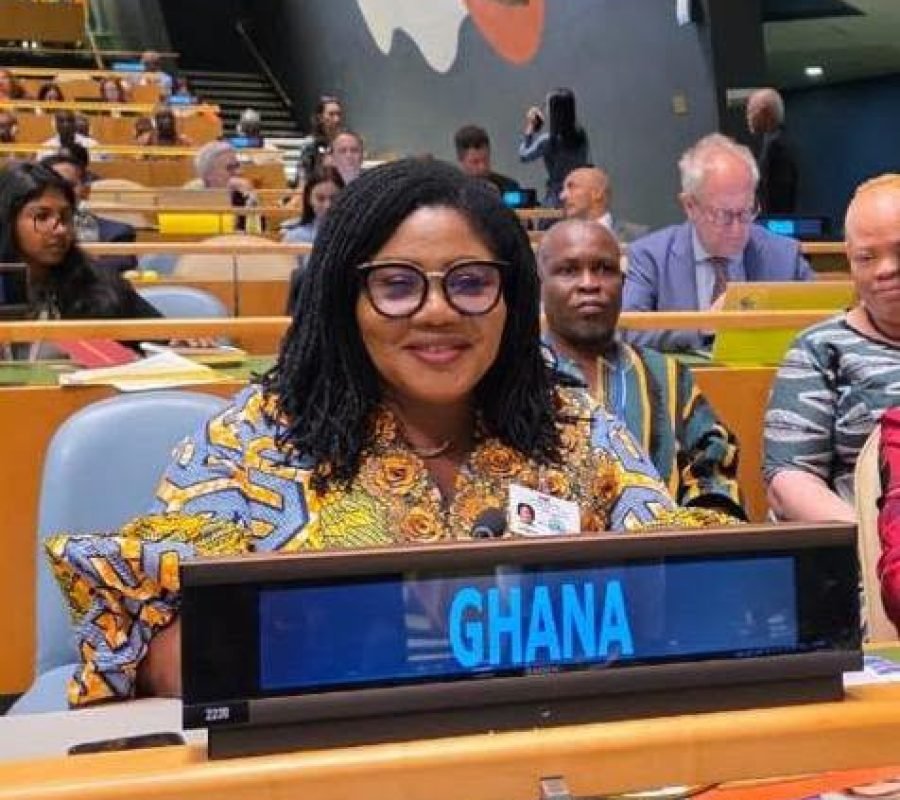
"I was sad when Otto Addo was sacked" – Grace Ashly

The recent dismissal of Otto Addo as head coach of Ghana’s Black Stars has sparked reflection among the nation’s football supporters, with gospel musician Grace Ashly adding her voice to the conversation. In a candid interview on Joy FM’s Showbiz A-Z, Ashly expressed disappointment over the decision, revealing that she had hoped the Ghana Football Association (GFA) would augment Addo’s technical team rather than relieve him of his duties—a perspective that underscores a broader debate about how best to support national team leadership during transitional periods.
Ashly, who has composed and performed cheer songs for the Black Stars since 2006, recounted her reaction to the news while abroad, stating she felt the timing of the dismissal—coming shortly after a loss to Germany in an international friendly—was premature. “I was at Stuttgart when the issue happened and I felt so sad honestly. Even if they would sack him that should have happened after our match with Austria, not Germany. And I was expecting that if there should have been something which I don’t know, they should have called Coach Addo and told him they wanted to add someone to him so that the two of them can handle the team,” she said. Her comments suggest a preference for compensatory support over outright removal, reflecting a belief that coaching struggles often stem from systemic gaps that could be addressed through targeted assistance.
Despite her personal disappointment, Ashly acknowledged the GFA’s prerogative to make decisions it believes serve the team’s best interests, noting that authorities may have acted in good faith even when outcomes fall short of public expectations. This nuanced stance—critical yet not dismissive—highlights the delicate balance between holding institutions accountable and recognizing the complexity of managerial decisions in high-stakes environments.
The GFA’s subsequent appointment of Portuguese coach Carlos Queiroz signals a shift in strategy as the team prepares for the 2026 FIFA World Cup. Queiroz, whose resume includes stints with Real Madrid and the Iranian national team, brings a wealth of experience that Ashly hopes will translate into tangible progress on the pitch. While she remains uncertain about the specifics of Queiroz’s approach, Ashly affirmed her continued support for the Black Stars, emphasizing her desire to see the team advance beyond the group stage and achieve success at the upcoming global tournament.
Ashly’s perspective adds a layer to the ongoing discourse about leadership in Ghanaian football, particularly the tension between patience and performance-driven decision-making. Her advocacy for additive support over substitutionary moves invites consideration of alternative frameworks for addressing coaching challenges—such as mentorship programs, technical committees, or interim advisory roles—that could provide stability without sacrificing accountability. As the Black Stars embark on their World Cup campaign under new leadership, the conversation sparked by figures like Ashly reminds stakeholders that sustainable success often hinges on both strategic clarity and empathetic stewardship of the human elements involved.
Image Source: MYJOYONLINE