President Mahama Launches Three International Panels to Advance Global Reparations Agenda
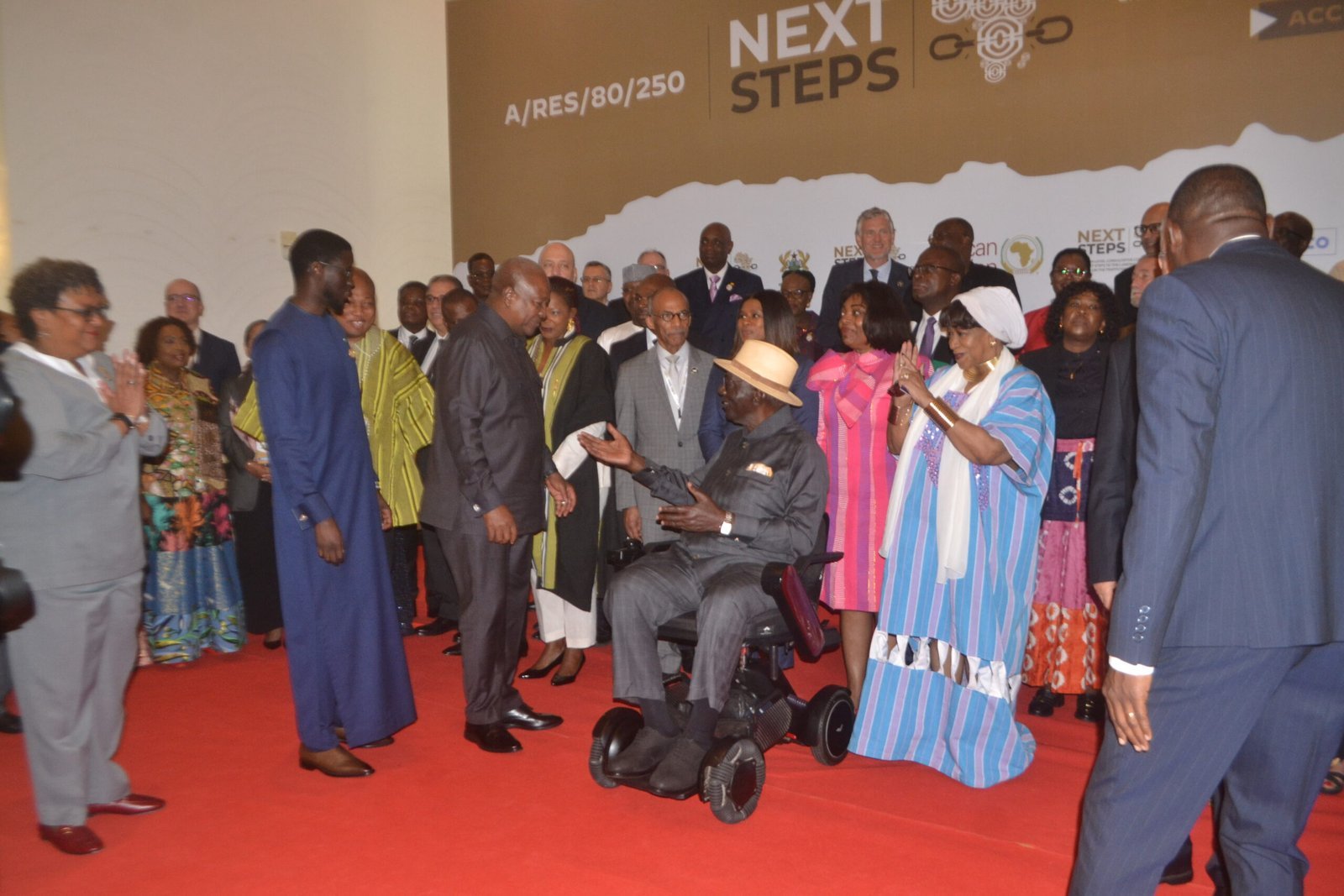
President John Dramani Mahama opened the Next Steps Consultative Conference in Accra on Wednesday, announcing the formation of three high-level international committees designed to translate the growing global momentum behind reparatory justice into concrete action.
The panels — a Global Advisory Panel on Reparatory Justice, an Expert Panel on the Restitution of Cultural Artefacts, and a Global Legal Panel on Reparatory Justice — represent the most significant institutional response yet to the United Nations General Assembly resolution that acknowledged the lasting impact of the trans-Atlantic slave trade.
“The conference is a historic moment in humanity’s effort to confront one of the gravest injustices in history and chart a path towards justice, reconciliation and healing,” President Mahama told delegates gathered in the capital. “History has called on the present generation to complete a conversation that began centuries ago but remained unfinished.”
The Global Advisory Panel will comprise current and former heads of state, eminent public figures, and thought leaders tasked with providing strategic direction and fostering international dialogue. The Expert Panel on the Restitution of Cultural Artefacts brings together specialists in cultural heritage, archaeology, and museum studies to support the return of sacred objects, archives, and historical artefacts to their communities of origin. The Global Legal Panel draws on distinguished jurists and legal scholars to explore legal pathways grounded in international law.
The conference attracted an extraordinary roster of participants, underscoring the depth of international interest in the reparations agenda. Former President John Agyekum Kufuor, Senegal’s President Faye, Barbados Prime Minister Mia Mottley, Namibian President Dr Netumbo Nandi-Ndaitwah, and Liberian President Joseph Nyuma Boakai were all present, alongside Nobel laureate Professor Wole Soyinka, CARICOM Reparations Commission chair Professor Sir Hilary Beckles, and Dr Julius Garvey, son of the Pan-African pioneer Marcus Garvey.
Sir Hilary Beckles described the gathering as a watershed, noting that for the first time a unified global voice on reparatory justice had emerged. He traced the current moment to what he called a global awakening in African consciousness and pointed to the symbolic “Door of Return” in Ghana as representing a renewed sense of identity for the global African diaspora. The Jamaican reggae musician Gramps Morgan, who recently revealed through DNA testing that 46 percent of his ancestry traces to Ghana, has been among those championing the reparatory justice cause at the conference.
Foreign Minister Samuel Okudzeto Ablakwa framed the UN resolution as a major milestone in restoring the dignity of Africans and people of African descent, arguing that reparatory justice has gained unprecedented momentum and now constitutes a legitimate global concern requiring serious engagement and practical solutions.
President Mahama was careful to frame the reparations discourse not as an exercise in assigning blame but as one of healing. “Our pursuit of reparatory justice is not about reopening old wounds but about healing through truth, justice and understanding,” he said. “The goal is reconciliation grounded in truth, not division.” He added that while present generations cannot be held personally responsible for the trans-Atlantic slave trade, they bear a duty to address its lasting effects.
In a notable emphasis, the President placed women and girls at the centre of the reparatory justice framework, arguing that their experiences during slavery have been historically marginalised and must be brought to the forefront of truth-telling, memorialisation, and redress.
The conference aims to produce a practical international roadmap covering truth-telling, memorialisation, research, restitution, and other measures addressing the enduring consequences of the slave trade. The newly formed panels are expected to begin work immediately, strengthening collaboration among governments, regional bodies, and international institutions as the agenda moves from recognition to implementation.
Image Source: GHANAIAN TIMES