Ghana Needs Up to 90,000 Teachers but Can Only Hire 7,000, Education Minister Tells Parliament
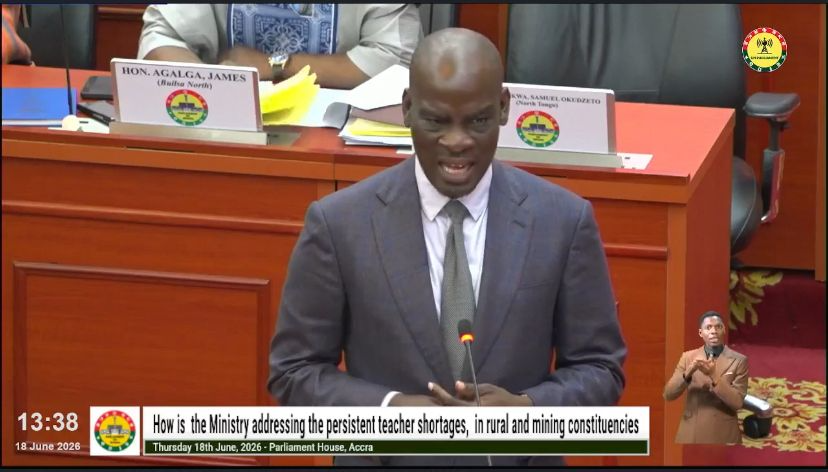
Ghana faces a staggering shortfall of between 50,000 and 90,000 teachers across its education system, yet the government has budgetary clearance to recruit only 7,000 this year — a mismatch that Education Minister Haruna Iddrisu laid bare before Parliament on Thursday.
The gap, Mr Iddrisu told legislators, stems not from a lack of qualified candidates but from the country’s tight fiscal position. “There is a difference between need and what I have budgetary approval for,” he said. “My need for teachers is between 50,000 and 90,000, but I had clearance for 7,000, and that is what I am making do with.”
A System Expanded Faster Than Its Staffing
The deficit has been driven in part by structural reforms that have broadened the demand for educators. The creation of the Commission for Technical and Vocational Education and Training (CTVET) and the reconstitution of the Ghana Education Service (GES) mean that new teachers must now be allocated across basic schools, senior high schools, and a growing network of technical and vocational institutions.
“The country has evolved and we have undertaken reforms that will benefit education in the foreseeable future,” Mr Iddrisu explained. “We now have the Commission for Technical and Vocational Education and Training and the Ghana Education Service, and so when we are recruiting, we allocate teachers for TVET and GES.”
The shortfall comes at a time when Ghana is already struggling to accommodate surging secondary school enrollment. The World Bank recently approved a $300 million financing package to help dismantle the double-track system in senior high schools, a stopgap arrangement born out of the same capacity gap that now plagues teacher staffing. Without the teachers to fill classrooms, even that investment risks falling short of its goals.
The Human Cost of a Recruitment Bottleneck
The consequences of the mismatch extend well beyond government balance sheets. Thousands of trained, unemployed graduates from teacher training colleges find themselves in limbo — qualified to teach but locked out by recruitment caps dictated by the national budget. Education stakeholders have described the 7,000-post recruitment drive as a drop in the ocean.
High student-to-teacher ratios remain a persistent concern across Ghana’s public schools, particularly in rural and peri-urban areas where staffing challenges are most acute. When a single teacher is responsible for dozens of pupils, learning outcomes inevitably suffer, perpetuating cycles of underachievement that the education system claims to be working to break.
Finding the Money
Mr Iddrisu did not outline a specific roadmap for closing the funding gap, but his remarks underscore a broader challenge facing the government: how to reconcile ambitious education reforms with fiscal discipline. Expanding the mandate of TVET and GES without matching staff recruitment risks building institutions that exist on paper but lack the human capital to function effectively.
The minister’s testimony also raises questions about whether the 2027 national budget, expected in November, will contain provisions ambitious enough to begin narrowing the shortfall. For the moment, 7,000 teachers must do the work of tens of thousands — a burden that falls, ultimately, on the children sitting in overstuffed classrooms across the country.
Image Source: MYJOYONLINE