ECOWAS Pushes AfCFTA Implementation With $151m Investment and Airport Tax Cuts
The Economic Community of West African States is moving decisively from negotiation to execution on the African Continental Free Trade Area, committing $151 million to regional development and ordering a 25 per cent reduction in airport taxes across member states in a bid to unlock the continent’s long-stymied trade potential.
The investment, mobilised through the World Trade Organisation and partner institutions, is part of a broader five-pillar strategy designed to bring the AfCFTA’s promise from policy documents into the daily reality of West African traders, farmers and manufacturers. The strategy places particular emphasis on micro, small and medium enterprises, women traders and young entrepreneurs — groups that have historically been shut out of formal cross-border commerce.
Dr Ngozi Okonjo-Iweala, Director-General of the WTO, underscored the urgency of the moment. She noted that more than 30 per cent of Africa’s exports remain low-value raw products, a pattern that has barely shifted in decades. “We need to focus on value addition and higher productivity, especially amid global supply disruptions and geopolitical tensions,” she said, urging African countries to use their natural resources to support industrialisation rather than exporting them unprocessed.
The numbers tell a stark story. Intra-African trade currently accounts for roughly 10 per cent of the continent’s total commerce, compared with approximately 60 per cent in other major global regions. Africa’s share of world trade remains below one per cent — a figure that the AfCFTA, which creates a single market of about 1.5 billion consumers, is meant to transform.
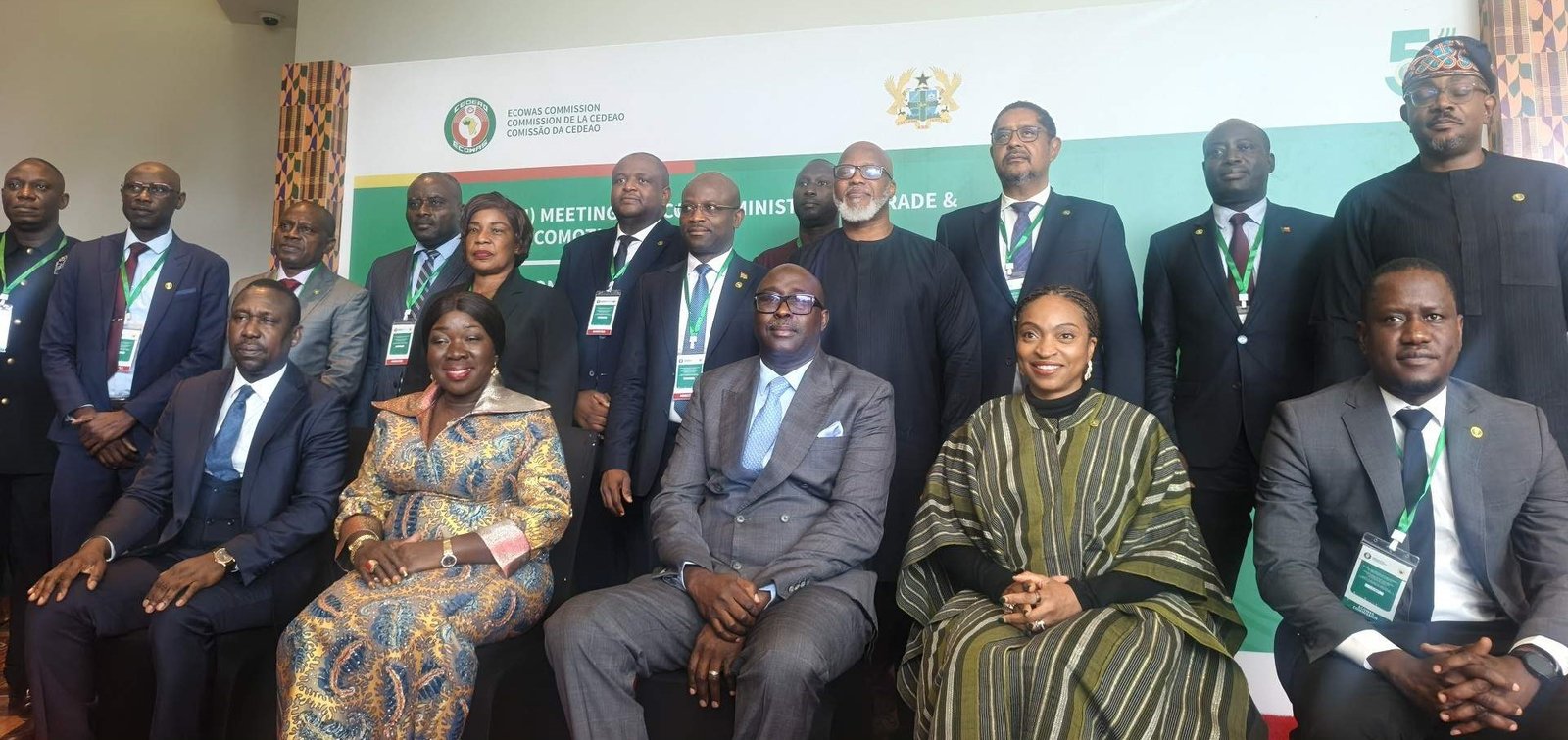
Ghana’s Minister of Trade, Agribusiness and Industry, Elizabeth Ofosu-Adjare, called for the meeting to produce practical results with clear timelines and targets. She identified non-tariff barriers — delays at borders, inconsistent regulations and bureaucratic bottlenecks — as the single biggest obstacle to free trade in the region, describing them as “a monster” that must be urgently addressed through digitalisation.
The five-pillar strategy adopted by ECOWAS covers infrastructure development, including roads, railways and maritime transport; the construction of modern storage facilities at border posts to reduce agricultural losses; harmonised customs procedures and digital trade facilitation; and the establishment of a Regional Capital Market Authority to unify financial regulations and enable access to regional bonds for infrastructure financing.
Kolawole Adebowale Sofola, Director of Trade at the ECOWAS Commission, said the strategy was designed to ensure that AfCFTA benefits all citizens, not merely large corporations with the resources to navigate complex trade regimes. Targeted programmes for MSMEs and grassroots awareness campaigns form a central pillar of the approach.
For Ghana, which hosts the AfCFTA Secretariat in Accra, the push carries particular significance. The country has positioned itself as a champion of continental trade integration, and the latest commitments from ECOWAS signal that the bloc is serious about translating that leadership into measurable outcomes.
Image Source: GHANA BUSINESS NEWS