Ntim Fordjour Demands Accountability Over Ghana’s Declining Global Peace Index Ranking
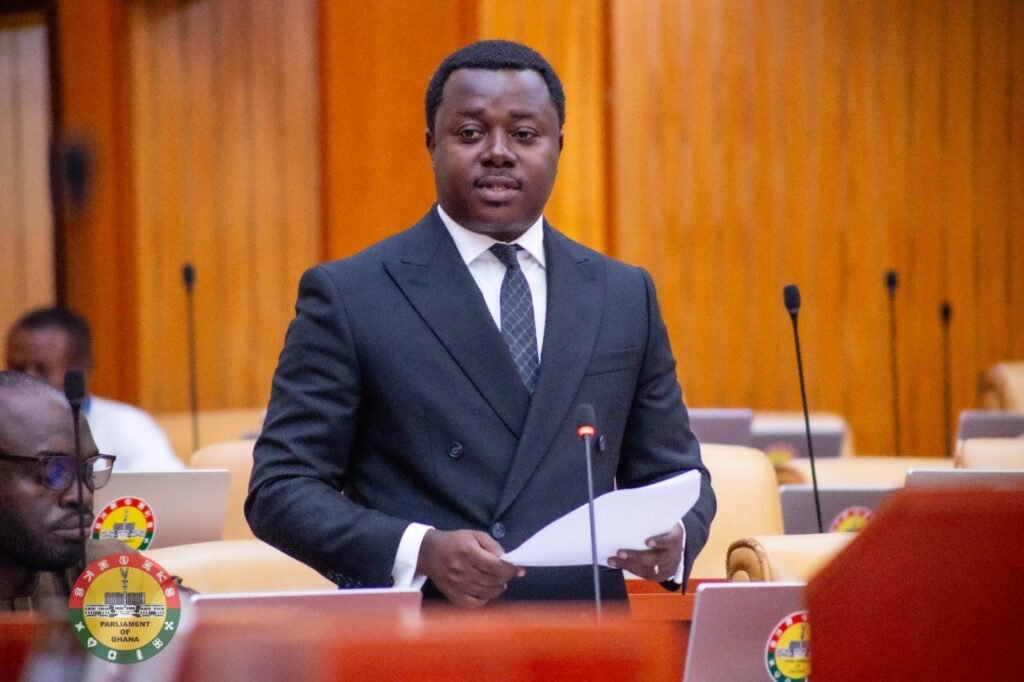
Ghana’s standing on the Global Peace Index has declined sharply enough to prompt a direct challenge from the opposition benches, with a senior parliamentarian demanding that the Mahama administration account for what he describes as a dangerous deterioration in national security.
Rev. John Ntim Fordjour, the Ranking Member of Parliament’s Defence and Interior Committee and Member of Parliament for Assin South, took to social media on Monday to voice his alarm at the country’s falling position in the annual global ranking.
“Very sad and dangerous trend in Ghana’s insecurity,” Fordjour wrote on X, formerly Twitter. “Why is our peace and security fast deteriorating according to the Global Peace Index, under President Mahama and NDC?”
The MP, a member of the opposition New Patriotic Party, called for accountability in security sector governance, insisting that those responsible for managing Ghana’s police, military and intelligence institutions owe the public a clear explanation for the decline and a concrete plan to reverse it.
“We demand accountability in our security sector governance,” he wrote. “This requires urgent attention.”
The Global Peace Index, compiled annually by the Institute for Economics and Peace, ranks countries across three broad domains: the level of societal safety and security, the extent of ongoing domestic and international conflict, and the degree of militarisation. Ghana has historically ranked among the most peaceful nations on the African continent, a reputation the country has leveraged in its diplomacy and its pitch to foreign investors.
A sustained decline in the index carries consequences that extend well beyond the symbolic. Investor confidence, tourism revenues and even the cost of sovereign borrowing can be affected by perceptions of instability. For a government that has made economic recovery its defining project, a worsening peace ranking is a signal that cannot easily be dismissed.
Fordjour’s intervention also reflects a broader political dynamic. Security governance has become an increasingly contested terrain between the ruling National Democratic Congress and the opposition NPP, with each side accusing the other of politicising the security services or failing to resource them adequately. Concerns about safety have also surfaced in other domains, including university campuses where a series of student deaths since 2024 has raised difficult questions about institutional responsibility.
The Mahama administration has yet to respond publicly to Fordjour’s specific claims about the Global Peace Index. Government officials have in the past pointed to ongoing security sector reforms and increased budgetary allocations as evidence of their commitment to public safety, but critics argue that the gap between spending and outcomes remains too wide.
What is not in dispute is the urgency. Ghana’s reputation as a beacon of stability in a region that has seen its share of coups, insurgencies and political upheaval is a national asset — one that successive governments have worked to cultivate and protect. If the Global Peace Index data reflects a genuine shift rather than a methodological anomaly, the implications for governance, investment and social cohesion demand more than partisan rhetoric.
Fordjour has placed the issue on the public agenda. Whether the government chooses to engage with the substance of his challenge — or dismiss it as opposition posturing — will say as much about the state of Ghana’s democracy as the index itself.
Image Source: MYJOYONLINE