World Cup Cooling Breaks Should Be Decided Game by Game, Says Van Dijk
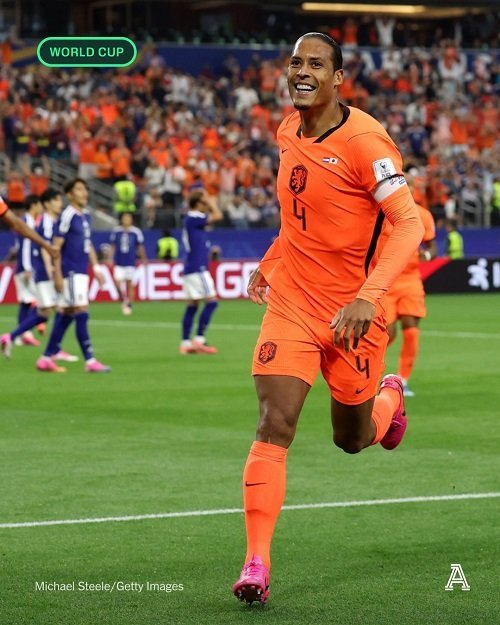
Virgil van Dijk has added his voice to the growing chorus of criticism over FIFA’s mandatory cooling breaks at the 2026 World Cup, arguing that the three-minute pauses should be decided on a game-by-game basis rather than imposed uniformly across every match.
The Netherlands captain spoke after his team’s 2-2 draw against Japan on Sunday, expressing frustration with the blanket policy that has become one of the tournament’s most divisive talking points. His comments echo concerns raised by players, coaches, and pundits alike — that the breaks, ostensibly designed to protect players from extreme heat, are disrupting the rhythm of matches and serving as little more than a vehicle for advertising.
A Question of Necessity
FIFA introduced the mandatory hydration breaks as a safety measure, citing the expected extreme temperatures across host nations the United States and Mexico during the northern hemisphere summer. Each half of every World Cup match now includes a three-minute pause at approximately the 30-minute mark, during which players are required to take on fluids and cooling measures.
Van Dijk does not dispute that heat can be a genuine hazard. His objection is more nuanced: the breaks should be calibrated to actual conditions rather than applied as a one-size-fits-all mandate.
“Hydration breaks are a bit interesting, because I was obviously watching almost all the games up until today, and every time going to commercial is a bit … Not really that I like it,” the defender said. “If it’s really hot, obviously, it would be good to put them in. But I think you have to look at it in every game, separately, in my opinion.”
Tactical Implications
Beyond the commercial concerns, coaches and analysts have noted that the cooling breaks have introduced a significant tactical dimension to matches. The three-minute pause gives coaching staffs time to review footage, send down tactical adjustments, and reorganise formations — something that would be impossible during normal play.
Former Chelsea Women’s manager Emma Hayes has been among the most vocal critics on this front. She argued that football’s beauty lies partly in its continuity — the fact that, unlike American sports such as the NBA or NFL, the game flows without regular interruptions that allow coaches to intervene.
“One of the beautiful things about football has always been that there is one break,” Hayes said. “It’s not like the NBA or NFL… it’s a coach’s game this World Cup, and you’ll have analysts sending down three or four clips with tactical adaptations.”
Germany coach Julian Nagelsmann inadvertently illustrated the point after his side’s match, noting that the three-minute pause had helped his team regroup tactically after conceding an equaliser. Carlo Ancelotti, managing Brazil, similarly used a cooling break during the match against Morocco to shift Lucas Paqueta into a more central role, a change that helped Brazil regain momentum.
Commercial Motivations
The suspicion that the breaks serve commercial interests as much as medical ones has been persistent throughout the tournament. Former Arsenal and England striker Ian Wright was blunt in his assessment.
“I just feel like it’s another way to get adverts into it… they’ve used the fact it’s for the players and for the hydration, not for me,” Wright said.
The concern is not unfounded. Each cooling break provides a natural window for broadcasters to cut to advertisements — a valuable commodity in a tournament that generates billions in television revenue. Whether the breaks are genuinely driven by player welfare or by commercial imperatives remains a matter of debate.
A Broader Conversation
The cooling break controversy touches on a wider tension in modern football between tradition and innovation, between the sport’s organic rhythms and the commercial pressures that increasingly shape its structure. The 2026 World Cup, the first to feature 48 teams and the first to span three countries, has already been a laboratory for change. Mandatory cooling breaks are simply the latest experiment.
Van Dijk’s suggestion — that each match’s conditions should determine whether a break is necessary — strikes a reasonable middle ground. A Group E clash between Ivory Coast and Ecuador in Philadelphia may face different temperature realities than a match played in the cooler climes of Seattle or Toronto. Treating every game identically, regardless of actual weather conditions, risks undermining both the integrity of the competition and the viewer experience.
As the tournament progresses, the debate is unlikely to fade. If anything, it will intensify as the stakes rise and the margins between victory and defeat narrow. Whether FIFA will heed the criticism — or whether the breaks will become a permanent fixture of the modern World Cup — remains to be seen.
Image Source: GHANAIAN TIMES