Queiroz Makes History as First Coach to Lead Five Nations at Consecutive World Cups
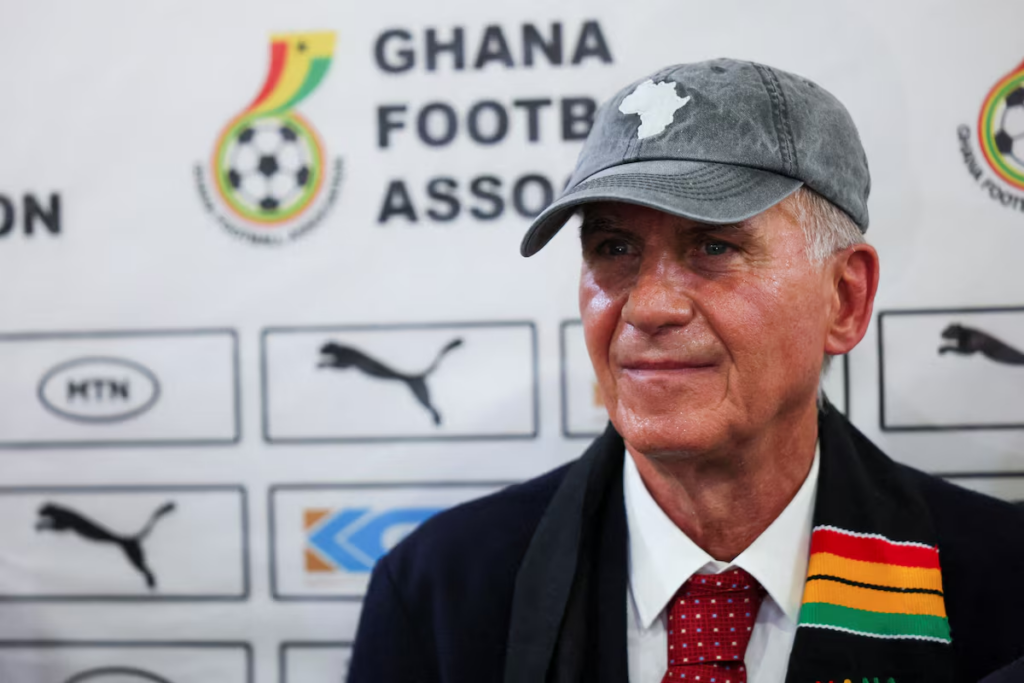
When Carlos Queiroz takes his place in the dugout for Ghana’s opening Group L fixture against Panama in Toronto on Wednesday, the 73-year-old Portuguese manager will etch his name into the record books as the first coach to lead a national team at five consecutive FIFA World Cups.
The achievement spans nearly two decades of elite international management, beginning with Portugal at the 2010 tournament on home soil and continuing through three successive campaigns with Iran in 2014, 2018, and 2022. His appointment as Black Stars head coach in April, replacing the dismissed Otto Addo, placed him on course for a fifth consecutive appearance, a feat no other manager in the tournament’s 96-year history has accomplished.
“I am prepared for this,” Queiroz said upon accepting the role. “I bring 40 years of experience to every decision that will be made.”
The record is all the more remarkable given the breadth of Queiroz’s career. Before entering the senior international arena, he had already established himself as one of the most influential figures in Portuguese football, guiding the country’s Under-20 side to back-to-back World Cup titles in 1989 and 1991, campaigns that launched the careers of Luis Figo, Paulo Sousa, and Joao Pinto, and laid the groundwork for Portugal’s emergence as a European powerhouse.
His subsequent career took him through some of the most demanding environments in world football. A brief and turbulent spell at Real Madrid in 2008-09 was followed by a long and largely successful tenure with Iran, during which the team qualified for three consecutive World Cups and became a respected force in Asian football. He also served as assistant manager to Sir Alex Ferguson at Manchester United, an experience he has cited as formative in his understanding of squad management at the highest level.
In Ghana, Queiroz inherits a squad navigating significant off-field challenges. The [refusal of a Canadian entry visa to midfielder Thomas Partey](/ghana-launches-diplomatic-challenge-against-canada-over-partey-visa-refusal) has left the Black Stars scrambling to resolve a diplomatic dispute barely 48 hours before their opening match. The Ghanaian government has released GHc76 million to fund the national team’s World Cup campaign, signalling the political weight attached to the country’s performance in Toronto.
The Group L opener against Panama represents a critical juncture for both Queiroz and the Black Stars. Ghana are seeking to restore credibility after a series of disappointing results under previous management, while Queiroz himself will be measured not merely by the historical distinction of his fifth World Cup, but by whether he can translate decades of accumulated wisdom into tangible results on the pitch.
His reputation precedes him in complex ways. The Portuguese press has lauded him as a visionary who institutionalised youth development in his home country, with the sports newspaper A’Bola writing that Queiroz “deserves to be remembered for something deeper, the construction of a culture that still endures.” Yet his touchline demeanour has drawn sharper assessments. Former Manchester United captain Roy Keane once quipped that Queiroz “had the personality of a dead fly,” a characterisation that belies the fierce competitiveness that has kept the Portuguese manager at the forefront of international football for over four decades.
As Ghana prepare for their opening match, the weight of history sits on Queiroz’s shoulders. The World Cup has a way of rendering individual milestones secondary to collective outcomes, and for the Black Stars, nothing less than a strong showing will justify the investment and expectation that has accompanied this appointment. For Queiroz, however, the mere act of being here, five tournaments running, across three continents and four different nations, is itself a testament to extraordinary longevity in a profession that devours its practitioners.
Image Source: MYJOYONLINE