US Extradition of Convicted Former MASLOC Chief Hands Ghana a Historic Cross-Border Justice Win
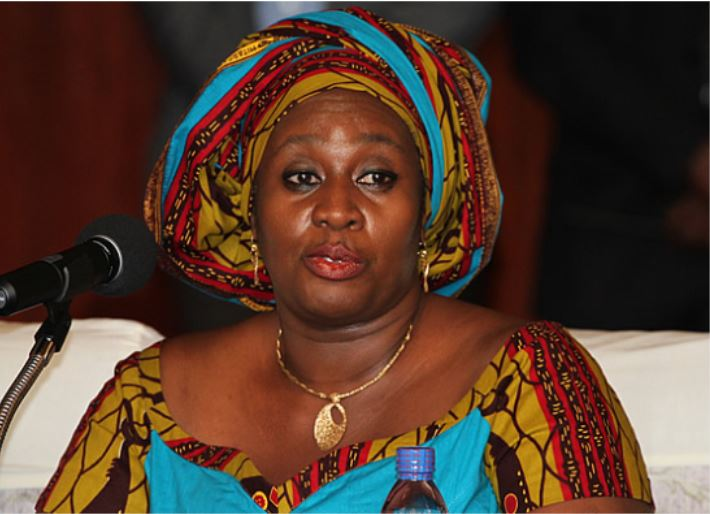
The extradition of Sedina Tamakloe Attionu, the former head of Ghana’s Microfinance and Small Loans Centre (MASLOC), from the United States marks a watershed moment in the country’s long and often frustrating pursuit of cross-border justice. Attionu, who served as Chief Executive Officer of the state-backed microfinance programme between 2013 and 2016, arrived at Accra International Airport on Tuesday, June 9, 2026, escorted from Washington Dulles International Airport on United Airlines flight UA 996. She was immediately detained by waiting state security operatives.
Her return ends a multi-year escape that began when she failed to return to Ghana after a court-approved medical trip to the United States. Following her landing, Felix Kwakye Ofosu, Spokesperson for the presidency of John Dramani Mahama, confirmed the state’s immediate next steps: “Officials of the Ghana Police Service and the Ghana Prisons Service have taken into custody and are making the necessary preparations for her to begin her sentence.”
Attionu’s legal troubles culminated in 2024 when an Accra High Court convicted her in absentia on more than 70 counts of stealing, money laundering, and conspiracy. The court determined that her actions had inflicted a financial loss of nearly GH¢90 million on the public treasury, prompting a mandatory 10-year prison sentence. The systemic breakdown, however, occurred much earlier — in 2021, when the court permitted her to travel to the United States for medical attention. By failing to return, Attionu exposed how easily compassionate judicial provisions can be converted into mechanisms of escape.
To understand why this case has sparked such intense national outrage, one must look beyond the headline figures and examine the institution Attionu was entrusted to lead. MASLOC was explicitly designed as a state safety net to inject micro-credit, small loans, and economic liquidity into the most vulnerable, informal tiers of the domestic economy. The programme was meant to reach small-scale market women, traders, and rural entrepreneurs — the very people who form the backbone of Ghana’s grassroots economy but who rarely have access to formal banking services.
The U.S. Embassy in Ghana underscored the magnitude of the crime, noting that Attionu was convicted of offences including the embezzlement of more than US$6 million equivalent in Ghanaian taxpayer funds. When an executive siphons millions from an institution meant for the marginalised, the damage extends far beyond the balance sheet. It cripples local wealth distribution, widens inequality, and erodes public faith in state welfare programmes that millions of Ghanaians depend upon.
Her return into maximum-security custody sends a deliberate signal from the Mahama administration: exploiting state resources intended for marginalised populations will carry severe, non-negotiable legal consequences. The diplomatic engineering required to secure this extradition also marks a shift in West African-American law enforcement relations, challenging the historical status of Western jurisdictions as comfortable havens for fugitive officials and their assets.
In a public statement, the U.S. Embassy in Ghana praised the operation, calling it a demonstration of “the strong law enforcement partnership between Ghana and the United States and a shared commitment to accountability.” The case is likely to set a precedent for future cooperation between Ghanaian and American authorities in tracking and repatriating fugitives who flee across borders to evade justice.
For ordinary Ghanaians, the extradition represents something more personal: a rare instance in which a powerful figure has been held to account for crimes against the public purse. Whether this case signals a genuine turning point in the country’s fight against elite impunity, or remains an isolated enforcement action, will depend on the consistency with which authorities pursue similar cases in the months and years ahead.
Image Source: MYJOYONLINE