In the Dark: The Security Risk Ghana Is Ignoring at Elubo
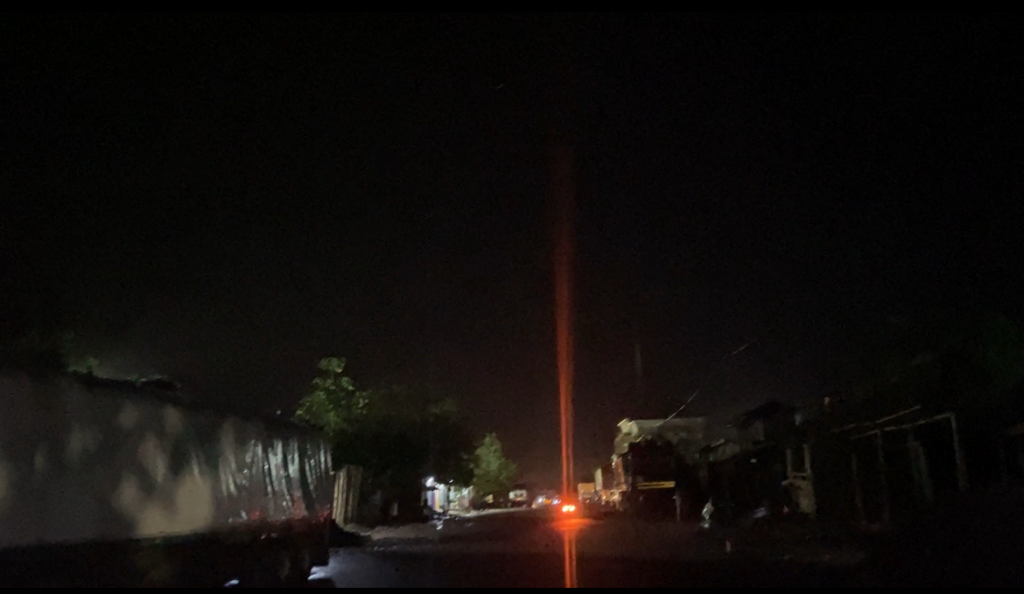
When night falls on Elubo, a major border town in Ghana’s Western Region, the darkness is not merely an inconvenience. It is a security vulnerability that the state has allowed to persist for decades, with consequences that reach far beyond the inconvenience of navigating unlit streets.
Elubo, located within the Jomoro Municipal District along the boundary between Ghana and Côte d’Ivoire, has a settlement population of nearly 24,000 people. It is one of Ghana’s busiest border crossings, a hub for trade, transit, and the daily movement of people and goods between two nations. Yet the town has operated for years without functional streetlights. The only illumination comes from the homes and market stalls of residents who can afford it, leaving the vast majority of streets in complete darkness after sundown.
The consequences are not abstract. Kwame Amponsah, a motor rider who has lived in Elubo for 25 years, puts it plainly: “I have never seen working streetlights. Look at Côte d’Ivoire. Look at how Noe, the next town, has light. The government only fixed the streetlights on the bridge to Noe and left us in darkness.”
His frustration is shared by many residents who feel as though their town has been written off. Regina, a vendor at the Elubo station, says the term “streetlight” is unfamiliar to her because the only lights she has ever known are those inside her own home.
But the absence of lighting at Elubo is more than a story of neglected infrastructure. It is a national security concern that demands urgent attention.
Effective border security depends on three pillars: visibility, presence, and control. Darkness undermines all three. When security personnel cannot see clearly, their ability to detect unauthorised movement is severely compromised. CCTV cameras, even when installed, produce footage that is too grainy and unclear to identify faces, number plates, or suspicious activity. Patrols slow down, officers avoid poorly lit areas, and the psychological deterrent of a visible security presence evaporates entirely.
Research by the Organisation for Economic Co-operation and Development supports this assessment. Studies on border governance consistently show that improved infrastructure and stronger state visibility in frontier communities contribute to better security outcomes, increased intelligence gathering, and reduced smuggling and trafficking.
Police officers in Elubo have reported an increase in smuggling and illegal crossings at night through unauthorised routes — a direct consequence of the surveillance gaps that darkness creates. The causal chain is straightforward: poor lighting leads to reduced visibility, which weakens surveillance, which emboldens illicit activity, which erodes the rule of law at Ghana’s western frontier.
The irony is that the neighbouring Ivorian town of Noe, just across the bridge, is well-lit. The contrast is visible to every resident of Elubo, and it feeds a sense of abandonment that successive governments have done little to address.
Ghana has invested heavily in border security in other parts of the country, yet a major crossing point with nearly 24,000 residents remains in the dark. The situation at Elubo is a reminder that national security is not only about military deployments and intelligence operations. Sometimes it begins with something as basic as a functioning streetlight.
Image Source: MYJOYONLINE