Anti-LGBTQ Bill Still Faces Scrutiny Before Presidential Assent, Mahama Says at Chatham House
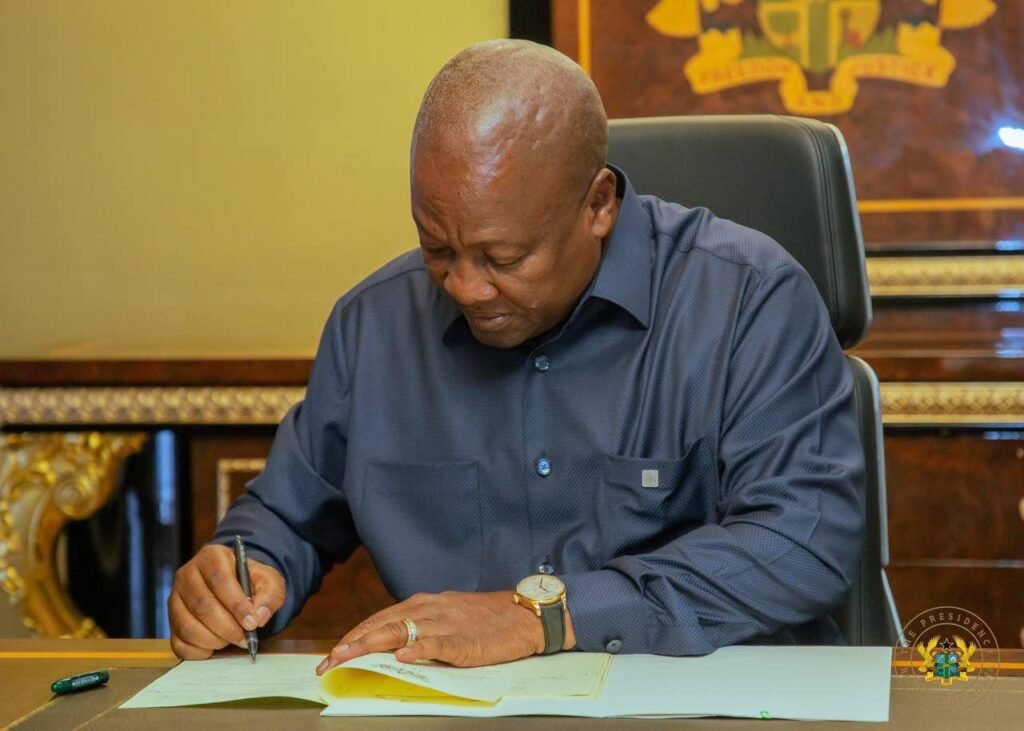
President John Mahama has signalled that the recently passed Human Sexual Rights and Family Values Bill will not receive his signature in a hurry, telling an audience at Chatham House in London that the legislation faces further legal and constitutional scrutiny before it can become law.
Speaking on the first day of Pride month, Mahama outlined the multiple stages the bill must still navigate after Parliament passed it on May 29, 2026. “There’s still quite a while to go,” he said, tempering expectations that presidential assent is imminent.
The President explained that the bill originated as a private member’s motion rather than a government bill, which means it will now be subject to rigorous legal and constitutional review by the Presidency. “Once the president gets it, you go through it because you’re not part of the discussion in Parliament,” Mahama told the London audience. “The legal counsel in the Presidency and the Attorney General would sit on it and make sure that everything is in order before the president is advised to assent.”
Mahama also pointed to two specific procedural issues that have been raised regarding the bill’s passage: the lack of a quorum when Parliament voted, and what he described as lapses in the parliamentary process. Earlier on the same day, Speaker of Parliament Alban Bagbin described the Friday passage of the bill as a surprise, saying he believed it was only supposed to be laid for consideration. The Speaker has called parliamentary leadership to a crunch meeting to clarify what transpired during the vote.
“I just got some communication that the Speaker was reading a statement to address the issue of the lapses in the passage of the bill,” Mahama said, indicating that the procedural questions are being taken seriously at the highest levels of government.
The President noted that he retains the option to refer the bill to the Council of State if significant concerns emerge during the review process. “If there are issues, substantial issues that are raised, the president would return the bill to Parliament indicating exactly what the issues are,” he said — a statement that suggests the government is keeping its options open rather than rushing to sign the legislation into law.
The bill, which criminalises same-sex relationships and advocacy for LGBTQ+ rights, has been the subject of intense debate both domestically and internationally. The Minority in Parliament has alleged that the bill was diluted through extensive amendments, stripping it of key provisions during the legislative process.
Outside Parliament, private legal practitioner Oliver Barker-Vormawor has claimed the bill was passed with only 34 members present, falling below the constitutional quorum requirement. He has called on Mahama to withhold assent. Supporters of the bill, including Akwatia MP Bernard Bediako, have dismissed such concerns, arguing that parliamentary procedures presume a quorum unless formally challenged.
Meanwhile, Majority Leader Mahama Ayariga has taken a harder line, warning individuals engaged in LGBTQ+ practices to “change your ways now” and insisting that once the bill receives presidential assent, they will face the full force of the law.
Mahama’s remarks at Chatham House suggest that the Presidency is determined to ensure the bill withstands constitutional scrutiny before it is signed — a cautious approach that may disappoint both supporters eager for swift enactment and opponents hoping the bill will be quietly shelved.
Image Source: MYJOYONLINE